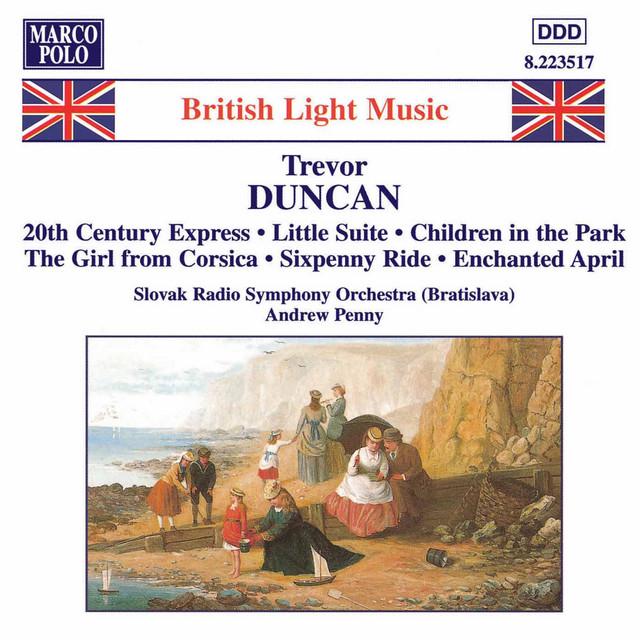
Trevor Duncan

Classical
Classical Crossover
 Viberate Rank: 345262
 Viberate Rank: 345262
 Monthly ListenersFollowers
 Subscribers
 Followers
 Followers
 FansTop Spotify Songs
| Track | 7-Day Streams | |
|---|---|---|
1 | 3.60K | |
2 | 974 | |
3 | 708 | |
4 | 303 | |
5 | 232 |
Top YouTube VideosMonthly ListenersFeatured in Playlists| Playlist | Followers | |
|---|---|---|
1 |  Jazz Noir / Dark Jazz Paolo | 14.64K |
2 |  Angry fast classical music for studying Ava Rose <3 | 12.98K |
3 |  Homeland: Carrie Mathison Inspired Music E | 7.63K |
4 |  Fargo - soundtrack seasons 1 - 5 your own kind of music | 7.07K |
5 |  Share the Joy Bahram | 5.98K |
Audience| City | Monthly Listeners | |
|---|---|---|
1 | | 240 |
2 |  | 223 |
3 | | 199 |
4 |  | 153 |
5 |  | 128 |
See full performance history, audience data, playlist activity, rankings, comparisons, and more in Viberate music analytics. Start with a free trial, then continue with a paid plan.
Trevor Duncan’s Spotify BioTrevor Duncan is one of the most successful composers of light classical music of the late-twentieth century. Born Leonard Charles Treblico in 1924, he learned to play by ear; a violin course and one class each on harmony and counterpoint constituted his only formal training, his real education coming from library books and scores that he studied on his own. He joined the BBC at 18 as a production assistant, but was drafted into the Royal Air Force soon after. He returned to the BBC in 1948 and became a master in the art of broadcasting music, particularly the placing of microphones for optimal results. His composing career began with a short piece called Vision in Velvet, for which he chose the composer pseudonym Trevor Duncan. As a BBC employee, he was precluded by station rules from getting his music broadcast on the network; instead, he wrote for publishers who needed scores to accompany newsreels and feature films (and later, television). He left the BBC in 1956, established as a… composer for three different publishers, and in 1959 enjoyed his first chart hit with The Girl From Corsica. The latter became a BBC staple and a hit single in the hands of the Ron Goodwin Orchestra. The March from his Little Suite was heard for years as the title theme for the British series Dr. Finlay's Casebook, and was also used very heavily for decades in America on radio and television in various capacities. Duncan's most obvious influence was American pop composer David Rose, manifested in the bold, clear string writing of his pop-oriented works, but he has also written beautiful pastoral works -- recalling the music of Vaughan Williams and Peter Warlock -- and unsettling, dissonant music evocative of dark futures and conflict. Duncan's music can be heard in various films, specifically written for them in the case of Joseph Losey's thriller Finger of Guilt, or "tracked" in from his existing library, as with Grip of the Law, immortalized as the title music of the notoriously inept (but incredibly popular) chiller Plan 9 From Outer Space. His work has been heard in such children's television shows as Marvel Super-Heroes, Space Angel, and Diver Dan, and in classics like the BBC's Quatermass and the Pit. His output also features serious concert music, including the Sinfonia Tellurica. In the 1990s, he turned his attention to writing for the theater.
Viberate is a music analytics platform built for A&Rs, artist managers, labels, booking agents, marketers, and artists.
It helps music professionals track artist growth, analyze audience data, monitor playlist activity, compare artists, follow song performance, and identify opportunities across the music market.
Public artist pages provide a free preview of selected artist data. Paid plans provide access to deeper analytics, historical data, charts, comparisons, playlist tools, exports, alerts, reports, and additional professional features.
Yes. Public Viberate artist pages provide selected artist analytics and music data for free.
Viberate also offers a 7-day free trial of the full platform. A credit card is required to start the trial. The trial includes access to the complete product so users can test deeper artist analytics, historical views, playlist insights, comparisons, charts, exports, alerts, and reporting features before choosing a paid plan.
Viberate provides artist analytics across streaming, playlists, social media, video, radio airplay, songs, and audience markets.
Users can analyze Spotify performance, Spotify and Apple Music playlists, YouTube activity, TikTok and Instagram growth, radio spins, song performance, audience locations, demographics, rankings, and overall artist momentum.
Artist profiles also connect to music charts, similar artists, and comparison tools, helping users benchmark performance and evaluate artists in context.
Viberate updates key artist and track data daily.
For followed artists and tracks, selected data is refreshed multiple times per day. This helps teams monitor playlist changes, streaming movement, audience growth, releases, and campaign performance with more current data.
Update frequency can vary depending on the metric and data source.
Yes. Viberate lets users compare up to five artists side by side across streaming, social media, audience, and engagement metrics.
Users can compare fanbase growth, audience demographics, locations, Spotify performance, social metrics, and other artist data over selected time periods.
Artist comparison can be used for A&R scouting, benchmarking, booking decisions, campaign planning, and evaluating artists with similar audiences or market positions.