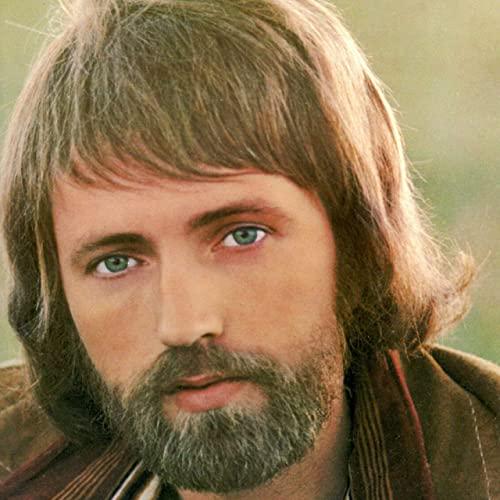
Tommy James

Rock
Pop Rock
Mainstream Pop
 Viberate Rank: 38665
 Viberate Rank: 38665
 Monthly ListenersFollowers
 Subscribers
 Followers
 Followers
 FansTop Spotify Songs
| Track | 7-Day Streams | |
|---|---|---|
1 | 29.54K | |
2 | 1.72K | |
3 | 1.43K | |
4 | 724 | |
5 | 696 |
Top YouTube Videos| Video | 7-Day Views | |
|---|---|---|
1 | 47.64K | |
2 | 15.85K | |
3 | 12.82K | |
4 | 7.71K | |
5 | 6.96K |
Monthly ListenersFeatured in Playlists| Playlist | Followers | |
|---|---|---|
1 | Classic Rock Greatest Hits Scott Pruden | 341.38K |
2 | Trevor Johnston | 110.25K |
3 |  Breaking Bad Nicholas Walsh | 46.95K |
4 | 70s Classic Rock eRN364z | 46.30K |
5 | Soft Rock and Pop: 60s, 70s, 80s dachweiler | 25.09K |
Audience| City | Monthly Listeners | |
|---|---|---|
1 | | 1.26K |
2 |  | 1.24K |
3 | | 833 |
4 | | 824 |
5 | | 795 |
See full performance history, audience data, playlist activity, rankings, comparisons, and more in Viberate music analytics. Start with a free trial, then continue with a paid plan.
Tommy James’ Spotify BioFew stars had a better run on the pop charts in the '60s than Tommy James. As the leader of his group the Shondells, James had a strong, expressive voice and a way with upbeat pop tunes with a solid rock & roll punch. He crafted superior AM pop/rock tunes like "Hanky Panky," "I Think We're Alone Now," "It's Only Love," and "Mony Mony." Then, as psychedelia worked its way into mainstream acceptance later in the decade, James kept up with the times on the hits "Crimson and Clover" and "Crystal Blue Persuasion." And when he stepped out as a solo artist in the early '70s, he adopted a more mature and soulful (but still radio-friendly) style with "Draggin' the Line" and "I'm Comin' Home." Like Paul Revere and the Raiders, Tommy James and the Shondells weren't considered very hip in their heyday, but their best and most popular work never lost an audience, and after a long layoff from recording, James emerged with new albums such as 2006's Hold the Fire and 2019's Alive, which found him… embracing contemporary pop styles, with electronic instruments and elements of dance-pop and hip-hop.
Tommy James was born Thomas Gregory Jackson in Dayton, Ohio, on April 29, 1947. When Tommy was 11 years old, his family moved to Niles, Michigan and a year later, he formed his first band with three friends from school, the Echoes. Three years later, the Echoes had evolved into a group called the Tornadoes, which featured Tommy on vocals and guitar, Larry Coverdale on guitar, Larry Wright on bass, Mike Finch on saxophone, and Nelson Shepard on drums. Tommy worked after school at a record shop, and through his job he met Bud Ruiter, who worked in record distribution and operated a small label, Northway Sounds. Ruiter offered to record a single of Tommy's band, and "Judy" b/w "Long Pony Tail," credited to Tom and the Tornadoes, was released in 1962 and became a regional hit. There was no immediate follow-up, and by 1964 Mike Finch and Nelson Shepard had dropped out of the band, while keyboardist Craig Villeneuve and drummer Jim Payne came on board. A disc jockey in Niles, Jack Deafenbaugh, was starting a record label, and he asked James and the band if they were interested in working with him. Adopting a new name, the Shondells, the group cut "Pretty Little Redbird" b/w "Penny Wishing Well" for the newly minted Snap Records. The single attracted little notice, but after hearing a rock & roll band from the area called the Spinners (no relation to the popular R&B vocal group) play a tune called "Hanky Panky" (which the Spinners had learned from another local band, who in turn had found the tune of the B-side of a rare single by the Raindrops), Tommy thought it would be a good fit for the Shondells. "Hanky Panky" became the A-side of their second Snap single, and it sold well in Michigan, but Deafenbaugh wasn't able to break the record outside of the Mitten State and by the end of 1965, the Shondells had broken up.
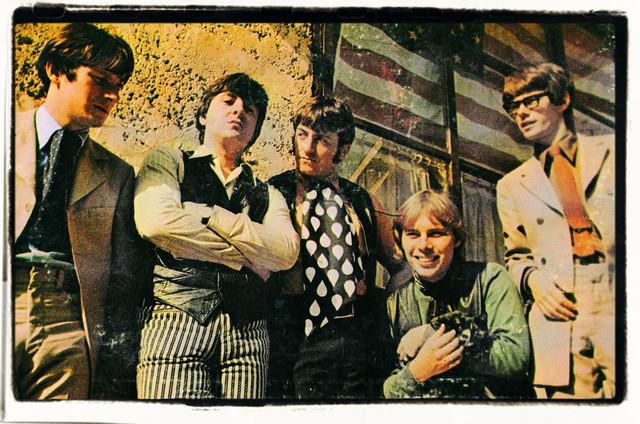
In April 1966, much to his surprise, James discovered that "Hanky Panky" had belatedly become a hit in Pittsburgh, where a disc jockey had found a copy of the Shondells' single in a used record shop, spun it at some dances, and found that the kids went crazy for it. After 80,000 bootleg copies were sold in the Pittsburgh area, James struck a deal with Roulette Records, run by veteran music business figure Morris Levy, and the "Hanky Panky" single was reissued nationally, becoming a number one hit. Tommy, now using the stage name Tommy James, suddenly needed a band, and he recruited a Pittsburgh-based combo called the Raconteurs to be the Shondells. This edition of the Shondells included Joe Kessler on guitar, Ron Rosman on keyboards, Mike Vale on bass, George Magura on saxophone, and Vinnie Pietropaoli on drums. James soon swapped out Kessler for guitarist Eddie Gray, Peter Lucia replaced Vinnie Pietropaoli behind the drums, and after George Magura moved on, they opted not to recruit a new sax player. The first two singles for the group now called Tommy James and the Shondells were modestly successful -- "Say What I Am" rose to number 21 on the singles charts, while "It's Only Love" peaked at number 31 -- but in March 1967, they scored another blockbuster hit with "I Think We're Alone Now," which rose to number four and spent twelve weeks on the charts. Another chart success, "Mony Mony," followed in May 1968. While producers and songwriters Richie Cordell and Bo Gentry had a hand in most of the Shondells' post-"Hanky Panky" hits, James became more eager to write and produce his own material, and in December 1968, "Crimson and Clover," which James produced and co-wrote, became one of his biggest hits, spending 15 weeks on the singles charts, two of them at number one.
James was enjoying major chart success and was given plenty of freedom to experiment in the studio, but he wasn't getting much in the way of royalties; while Roulette Records had the marketing muscle to get James' music heard, the label and Morris Levy were connected to the Genovese crime family, and like many Roulette artists, James discovered that demanding too much from Levy was bad for one's long term health and safety. (In 2011, James published a memoir about his career and his dealings with Levy entitled Me, the Mob, and the Music: One Helluva Ride with Tommy James & the Shondells.) Despite this, his fame was at its peak and in 1968 he did a tour stumping with presidential candidate Hubert Humphrey to support his campaign and encourage young people to vote. Tommy James and the Shondells would score four Top 40 singles in 1969 (two of them, "Sweet Cherry Wine" and "Crystal Blue Persuasion," rose to the Top Ten) and toured extensively, though they passed on an invite to play the Woodstock Music and Art Fair (James' booking agent supposedly described the offer as "a stupid gig on a pig farm in upstate New York.")
In 1970, after several years of constant recording and live work, James and his band decided to take a break. This led to James and the Shondells amicably parting ways; several of the musicians would form a band called Hog Heaven who released an album on Roulette in 1971. Meanwhile, James dabbled in producing other artists, and was at the controls for "Tighter, Tighter," a Top Ten hit for the band Alive and Kicking. James released a self-titled debut album in 1970, and scored a hit with his second LP, 1971's Christian of the World, a spiritually oriented effort that included the song "Draggin' the Line," which rose to number four on the singles charts. 1971 also saw the release of My Head, My Bed & My Red Guitar, a country-accented project that was recorded in Nashville. Between personal problems and a protracted effort to escape his contract with Roulette Records, it would be five years before James would record again, when he struck a deal with Fantasy Records and released 1976's In Touch, which included his recording of "Tighter, Tighter." After 1977's Midnight Rider, James left Fantasy for the RCA-distributed Millennium Records, which released the album Three Times in Love in late 1979. The title track became James' first Top 40 hit since 1971, peaking at number 19.
James spent most of the '80s pursuing interests other than music, but in 1988, Morris Levy was found guilty of extortion and his music empire went up for sale. The well-respected reissue label Rhino Records purchased the Roulette catalog, which led to a series of reissues of his work with the Shondells as well as his solo material. Unlike Levy, the management at Rhino were happy to pay their artists, and James began regularly receiving royalty checks for the first time in his career. The success of Rhino's reissues of James' music along with continued radio play of his hits and covers by major artists (including Billy Idol's version of "Mony Mony" and Joan Jett's take on "Crimson and Clover") convinced him to begin recording again, and in the '90s he formed his own label, Aura Records, which brought out a steady stream of archival material and new recordings of old hits as well as fresh albums such as 1995's A Night In … Big City, 2006's Hold the Fire, and 2008's I Love Christmas, the latter featuring a reunion with the Shondells on the title track. James continued to tour regularly, and his recordings of the 2000s and 2010s found him exploring new creative avenues, exploring electronic arrangements influenced by contemporary pop on 2006's Hold the Fire and collaborating with rapper Tone Z on 2019's Alive. ~ Mark Deming, Rovi
Viberate is a music analytics platform built for A&Rs, artist managers, labels, booking agents, marketers, and artists.
It helps music professionals track artist growth, analyze audience data, monitor playlist activity, compare artists, follow song performance, and identify opportunities across the music market.
Public artist pages provide a free preview of selected artist data. Paid plans provide access to deeper analytics, historical data, charts, comparisons, playlist tools, exports, alerts, reports, and additional professional features.
Yes. Public Viberate artist pages provide selected artist analytics and music data for free.
Viberate also offers a 7-day free trial of the full platform. A credit card is required to start the trial. The trial includes access to the complete product so users can test deeper artist analytics, historical views, playlist insights, comparisons, charts, exports, alerts, and reporting features before choosing a paid plan.
Viberate provides artist analytics across streaming, playlists, social media, video, radio airplay, songs, and audience markets.
Users can analyze Spotify performance, Spotify and Apple Music playlists, YouTube activity, TikTok and Instagram growth, radio spins, song performance, audience locations, demographics, rankings, and overall artist momentum.
Artist profiles also connect to music charts, similar artists, and comparison tools, helping users benchmark performance and evaluate artists in context.
Viberate updates key artist and track data daily.
For followed artists and tracks, selected data is refreshed multiple times per day. This helps teams monitor playlist changes, streaming movement, audience growth, releases, and campaign performance with more current data.
Update frequency can vary depending on the metric and data source.
Yes. Viberate lets users compare up to five artists side by side across streaming, social media, audience, and engagement metrics.
Users can compare fanbase growth, audience demographics, locations, Spotify performance, social metrics, and other artist data over selected time periods.
Artist comparison can be used for A&R scouting, benchmarking, booking decisions, campaign planning, and evaluating artists with similar audiences or market positions.