The Jacks

R&B
Contemporary R&B
Soul
 Viberate Rank: 347555
 Viberate Rank: 347555
 Monthly ListenersFollowers
 Subscribers
 Followers
 Followers
 FansTop Spotify SongsTop YouTube VideosMonthly ListenersFeatured in Playlists
| Playlist | Followers | |
|---|---|---|
1 |  1950's/Early 1960's Playlist Anthony Battaglia | 25.93K |
2 | Top 100 Doo Wop Hits 1953-1964 Hunter Pratt | 19.93K |
3 |  WWOZ 90.7 FM (New Orleans Radio) Bryson Whitney | 6.48K |
4 | CWW Larry Little | 5.26K |
5 |  Solid Gold Oldies 50's- 70's Brian Salvador | 4.00K |
Audience| City | Monthly Listeners | |
|---|---|---|
1 | | 72 |
2 | | 45 |
3 | | 36 |
4 | | 30 |
5 | | 25 |
See full performance history, audience data, playlist activity, rankings, comparisons, and more in Viberate music analytics. Start with a free trial, then continue with a paid plan.
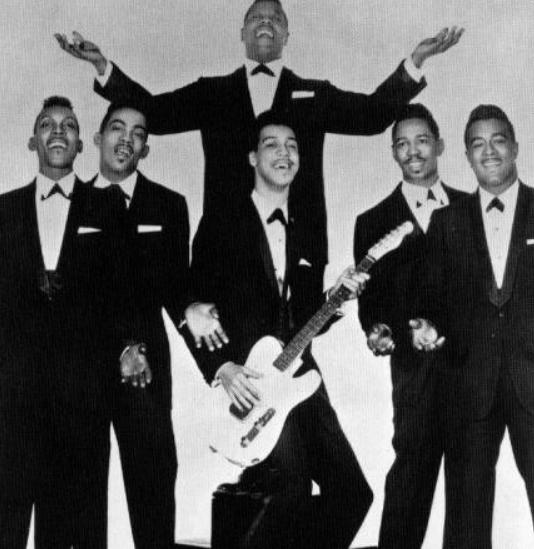
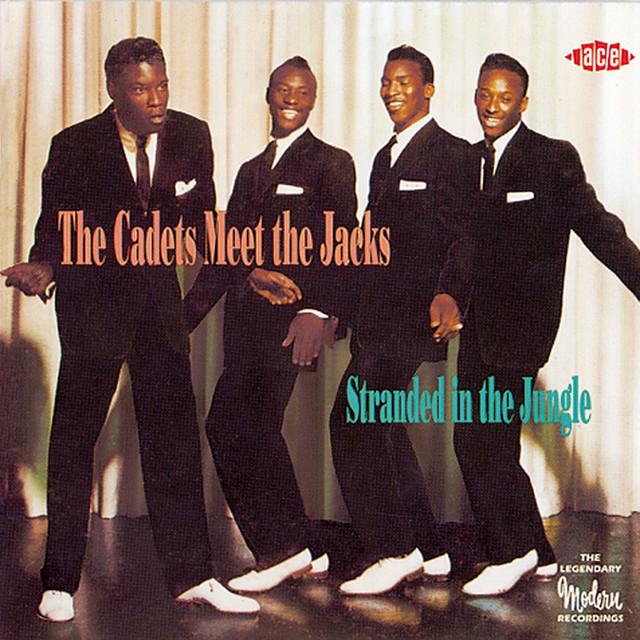
The Jacks’ Spotify BioThe Los Angeles-based Jacks were so good at covering popular hits of the day that their versions were often equal to (if not better than) the original versions. They were versatile in R&B, jump tunes, ballads, calypso songs, and recorded some of the greatest early rock & roll songs ever, including "Stranded in the Jungle" (released in June of 1956, and charting at number four R&B/number 15 pop). Mostly, though, the Jacks are remembered for recording under two names simultaneously: as the Jacks (for Modern) and the Cadets (for RPM). Each group had its own hits and each with a slightly different sound and musical direction.
The Jacks/Cadets began as a gospel group during the late '40s in Los Angeles, under the guidance of former Dixie Hummingbirds' baritone Lloyd McGraw. In 1954, McGraw joined up with first tenor Austin "Ted" Taylor, lead and second tenor Aaron Collins (brother of Betty and Rosie Collins, who recorded as the Teen Queens), tenor Willie Davis, and Will "Dub" Jones (lead and… bass), who possessed a stratospheric falsetto. The band on most of the group's sessions was lead by tenor saxophonist Maxwell Davis.
It was Modern's Joe Bihari who came up with the idea of having one group with a split personality, envisioning the Jacks as a ballad harmony group utilizing the writing talents of Aaron Collins and the Cadets as an up-tempo and novelty song quintet who mostly covered other acts' material. As a rule, either Dub Jones or Aaron Collins sang lead on the Cadets recordings, while tenor Willie Davis fronted the Jacks.
In late 1954, the quintet -- as the Cadets -- recorded a version of Nappy Brown's "Don't Be Angry" and a calypso-flavored cover of "Rolling Stone," which outsold the original by Excello's Marigolds. Later, the Cadets issued their third single, "I Cried," backed up singer Dolly Cooper on "My Man," Young Jessie on "Mary Lou," and Richard Berry on "Jelly Roll" and "God Gave Me You."
By the summer of 1955, the Cadets had released "Annie Met Henry," a single that fell in line with the whole "Annie" craze created in the aftermath of Hank Ballard & the Midnighters' big hit "Work With Me Annie," which had been released some 16 months earlier and was still going strong. The public was quickly tiring of the whole "Annie" phenom, however, so DJs flipped over the 45 and gave the B-side, "So Will I," the push instead.
The Cadets' next Modern release was "Do You Wanna Rock," an exciting up-tempo revision of the Drifters' big R&B hit (number two) "Whatcha Gonna Do." The song also had a big impact on Hank Ballard and provided the format for Chubby Checker's "The Twist." It was the Cadets' next single, the buoyant "How Soon," that scored the regional airplay and sales.
In early 1956, Prentice Moreland replaced Ted Taylor (although he only recorded with the group on three early songs, he didn't usually perform with them), who had left the group for a solo career as a solo blues vocalist. By February, the Cadets had moved on to new cover material, including Elvis Presley's "Heartbreak Hotel" and the Willows' "Church Bells May Ring." Around this time, Aaron Collins brought his two little sisters, Rosie and Betty, to Joe Bihari with an original song called "Eddie My Love." By the spring, the Teen Queens had the number two R&B record in America with "Eddie," which also charted number 14 on the pop chart.
One day, Bihari and arranger Maxwell Davis handed the group a beautiful ballad titled "Why Don't You Write Me?," the original of which -- by the Feathers -- was soon to be issued on the Showtime label. They quickly did a cover; the Feathers' original came out in the fourth week of April 1955 and the Jacks' copy came out one week later (on the Modern affiliate RPM). The flipside, Charlie Calhoun's "Smack Dab in the Middle," was actually cut as being by the Cadets and wound up on their first LP. Even though it was recorded by the same group, it was listed as being by the Cadets in keeping with the "two groups in one" philosophy.
The Jacks' "Why Don't You Write Me?" hit the R&B charts on August 6th, and jumped up to number three R&B by September; it even managed to cross over to the pop charts to reach number 82, charting before the Cadets charted with their outlandish cover of "Stranded in the Jungle." When the ballad side began to break big in the pop field, Bihari immediately bumped the B-side and a second pressing was hastily issued with a ballad on the flipside, "My Darling."
The instant that Bihari heard the Jay Hawks' "Stranded in the Jungle," a rough and ragged original that had been waxed first, then heard the version done by his own act, the Cadets, while in the studio, he knew that his group's was far superior. He quickly pressed up copies and got them to radio stations in strong regional markets across the country and into stores in those areas, before the Jay Hawks' even had a chance to make a move themselves. Released in June of 1956, the song shot up the charts, to number four R&B/number 15 pop.
What would prove to be Prentice Moreland's only Cadets/Jacks recording session provided the group with a catch phrase of their own; he delivered the line "Great googly-moogly, let me outta here," on "Stranded in the Jungle." It was a line he had picked up from a Cincinnati DJ.
Modern tried to forced Moreland to remain with the group instead of leaving for his own solo career, but Moreland quit anyway and was replaced by former Flairs baritone Thomas "Pete" Fox. Moreland later sang with the Colts and went on to become a single artist for various labels, recording for Edsel in 1959, Del-Fi Records' subsidiary Donna in 1960, and Challenge in 1962. Lloyd McCraw also left the group around this time.
Subsequent Jacks/Cadets sides from 1956 failed to generate interest or sales for Modern, however. The Jacks tried again with a few original ballads and eventually hit with "Love Bandit," their last record of 1956, which was cut from the same cloth as "Stranded in the Jungle" and name-checked many of the outlaws and sheriffs of the Old West ("Frank James, Jesse James, and Billy the Kid....").
The Jacks never again achieved the measure of success that "Stranded" had achieved. In September of 1956, they tried again as the Cadets for "Dancin' Dan," a slightly altered version of the Dominoes big hit "Sixty-Minute Man," which featured "Dub" Jones on lead vocals. After that, they covered "Johnnie" (Johnnie Louise Richardson, later a member of the Jaynettes, of "Sally Go Round the Roses" fame) and "Joe"'s (Joe Rivers) "I'll Be Spinning," a number ten hit on the East Coast (number one in NY), distributed by Chess Records. The Cadets' quickly recorded cover version of "I'll Be Spinning" outsold the original, however, on the West Coast..
In February 1957, Modern issued Rockin' and Reelin', the Cadets' first LP, one of the very first R&B group LPs, which collected most of their previously released A and B-sides. In March, eight months after their last release and 22 months after the release of their only hit, RPM put out the Jacks' Jumpin' With the Jacks LP, which contained ten sides of which three ("You Belong To Me," "Do You Wanna Rock," and "Wiggie Waggie Woo") were released on singles by the Cadets. Another single called "Pretty Evey" was thought to be a Cadets release, and even listed incorrectly as such when it was issued in May 1957, but was actually Aaron singing lead with another obscure house group.
By this time, Bihari and Modern had given up on the Jacks part of the equation and from that point on, the group was exclusively known as the Cadets. Their last RPM single was "Ring Chimes," issued in December 1957. By the turn of the new decade, the Cadets had been ready to call it a career.
Will "Dub" Jones later became the main bass man for the mega-popular group the Coasters. Davis and Collins soon re-formed the Cadets, this time adding Thomas Miller (baritone) and George Hollis (bass), both previously of the Flares. The new Cadets signed with the Felsted label, a New York-based label headed by Walt McGuire. After two singles in 1960, they were ready to call it a career, but in name only; Randolph Jones later joined the group, substituting for Hollis on bass, and the quartet became the Peppers. They released one single, "One More Chance," on Ensign in 1961.
That year, with Hollis back on bass, the group became the Flares (different spelling this time) on Felsted. Their third single for the label, the energetic dance record "Foot Stomping, Pt. 1," went to number 25 on the pop Charts (number 20 R&B). The group then signed to Press Records for seven more singles, all of which went nowhere. A year later (in 1962), Davis and ex-Cadet McCraw teamed to form the Thorables (Titanic Records); in total, there were six more recordings by the Flares and none went anywhere. 1964 and the British Invasion pretty much brought the end of the road for the Jacks/Cadets/Flares at this point.
In the early '80s, Aaron Collins wrote songs for John Water's Hairspray. He passed away in 1998. Prentice Moreland and Lloyd McGraw have also passed away. ~ Bryan Thomas, Rovi
Viberate is a music analytics platform built for A&Rs, artist managers, labels, booking agents, marketers, and artists.
It helps music professionals track artist growth, analyze audience data, monitor playlist activity, compare artists, follow song performance, and identify opportunities across the music market.
Public artist pages provide a free preview of selected artist data. Paid plans provide access to deeper analytics, historical data, charts, comparisons, playlist tools, exports, alerts, reports, and additional professional features.
Yes. Public Viberate artist pages provide selected artist analytics and music data for free.
Viberate also offers a 7-day free trial of the full platform. A credit card is required to start the trial. The trial includes access to the complete product so users can test deeper artist analytics, historical views, playlist insights, comparisons, charts, exports, alerts, and reporting features before choosing a paid plan.
Viberate provides artist analytics across streaming, playlists, social media, video, radio airplay, songs, and audience markets.
Users can analyze Spotify performance, Spotify and Apple Music playlists, YouTube activity, TikTok and Instagram growth, radio spins, song performance, audience locations, demographics, rankings, and overall artist momentum.
Artist profiles also connect to music charts, similar artists, and comparison tools, helping users benchmark performance and evaluate artists in context.
Viberate updates key artist and track data daily.
For followed artists and tracks, selected data is refreshed multiple times per day. This helps teams monitor playlist changes, streaming movement, audience growth, releases, and campaign performance with more current data.
Update frequency can vary depending on the metric and data source.
Yes. Viberate lets users compare up to five artists side by side across streaming, social media, audience, and engagement metrics.
Users can compare fanbase growth, audience demographics, locations, Spotify performance, social metrics, and other artist data over selected time periods.
Artist comparison can be used for A&R scouting, benchmarking, booking decisions, campaign planning, and evaluating artists with similar audiences or market positions.