The Sheppards

Blues
Classic Blues
Soul
 Viberate Rank: 383485
 Viberate Rank: 383485
 Monthly ListenersFollowers
 Subscribers
 Followers
 Followers
 FansTop Spotify Songs
| Track | 7-Day Streams | |
|---|---|---|
1 | 254 | |
2 | 82 | |
3 | 66 | |
4 | 66 | |
5 | 66 |
Top YouTube VideosMonthly ListenersFeatured in Playlists| Playlist | Followers | |
|---|---|---|
1 | American Horror Story Soundtrack Nick Marsico-Morea | 16.36K |
2 |  Northern Soul ajmcdonald007 | 14.66K |
3 | Doo Wop Oldies Motown David Markoski | 9.49K |
4 |  50s love songs that make me <3 julia mckenna | 8.18K |
5 | 50s Ashley Buerkett | 7.36K |
Audience| City | Monthly Listeners | |
|---|---|---|
1 | | 53 |
2 | | 28 |
3 | | 24 |
4 | | 21 |
5 | | 19 |
See full performance history, audience data, playlist activity, rankings, comparisons, and more in Viberate music analytics. Start with a free trial, then continue with a paid plan.
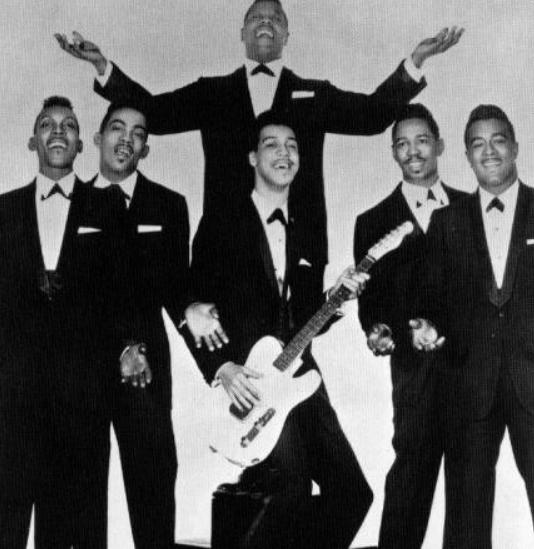
The Sheppards’ Spotify BioThe Sheppards were one of the most hard-luck soul groups ever to come out of Chicago. Led by Murrie Eskridge and Millard Edwards, the group spent ten years trying to make a lasting impression with the public, only to be thwarted, but they made some magnificent music in the process. The group was formed in 1959 by the members of two earlier groups, the Ballads and the Bel Aires (who had actually gotten a record, "Rockin' and Strollin'," released by Decca), who decided to pool their abilities under one cover -- in addition to Eskridge, who sang in a full, soulful wail, and the smoother-voiced Edwards, the members included baritone Jimmy Allen, bass Dennis Isaac, and second tenor O.C. Perkins, with Kermit Chandler playing guitar. Edwards, Perkins, and Chandler also wrote songs, providing them with a stream of originals, which helped set the group somewhat apart from most of their rivals. The sextet, taking the name the Sheppards, signed to Apex Records, a company owned by Bill "Bunky"… Sheppard (who had produced the Bel Aires' single) in late 1958. They made their debut in 1959 with "Island of Love," featuring Edwards on the lead vocal. The smoothly romantic ballad was a great showcase for the group that got into Billboard's "Bubbling Under" listings during the summer of that year. If the single's A-side was classic doo wop, the B-side, "Never Felt Like This Before," featuring Eskridge's lead vocal (sounding like a more passionate Jackie Wilson), was more representative of soul music and a much more forward-looking record. The Sheppards went on to release a handful of follow-up records on Apex, of which "Come Home Come Home" earned some airplay in the Midwest and local sales but never broke out to national audiences or chart placements. Their efforts culminated with "Tragic," an achingly beautiful ballad that got them onto American Bandstand, the biggest single piece of national exposure they had during their history -- "Tragic" became the group's best-known track and is one of those songs that, when heard, usually makes non-soul fanatics scramble to find the artist's name. By this time, the Sheppards had developed a wonderfully engaging and commercial style that should have put them in the front ranks of soul groups of their era -- "Come to Me" sounds almost more like Ben E. King/Rudy Lewis-era Drifters than the Drifters did, yet somehow it never got heard. In 1962, the group was shifted by Sheppard to his new Pam label, co-founded with Carl Davis, who had one major success to his credit with "Duke of Earl" by Gene Chandler. Their debut on the new label, "Give a Hug to Me," was successful in Chicago but never got any wide exposure outside of the city. A brief association with Vee-Jay Records didn't do anything to raise the Sheppards' profile as a recording act, and by the mid-'60s they were on Constellation Records, which reissued many of their early sides as well as several previously unissued tracks on an LP. They also got one single, "Pretend You're Still Mine," issued on OKeh during 1963, courtesy of Davis. In 1967, the group released one single, "Stubborn Heart," but by that time their style was a little too dated to have much chance of competing. It was around this time that they were reduced to a quartet, when Edwards exited to begin a solo career under the name Mill Evans, on the King label. The group had ceased to exist by the end of the decade, though their following in Chicago was sufficient to justify the release in 1980 of an LP reissue, which amazingly was named in Time magazine as one of the Top Ten LP reissues of the year. In 1994, that album, Golden Classics, was reissued by Collectables Records. ~ Bruce Eder, Rovi
Viberate is a music analytics platform built for A&Rs, artist managers, labels, booking agents, marketers, and artists.
It helps music professionals track artist growth, analyze audience data, monitor playlist activity, compare artists, follow song performance, and identify opportunities across the music market.
Public artist pages provide a free preview of selected artist data. Paid plans provide access to deeper analytics, historical data, charts, comparisons, playlist tools, exports, alerts, reports, and additional professional features.
Yes. Public Viberate artist pages provide selected artist analytics and music data for free.
Viberate also offers a 7-day free trial of the full platform. A credit card is required to start the trial. The trial includes access to the complete product so users can test deeper artist analytics, historical views, playlist insights, comparisons, charts, exports, alerts, and reporting features before choosing a paid plan.
Viberate provides artist analytics across streaming, playlists, social media, video, radio airplay, songs, and audience markets.
Users can analyze Spotify performance, Spotify and Apple Music playlists, YouTube activity, TikTok and Instagram growth, radio spins, song performance, audience locations, demographics, rankings, and overall artist momentum.
Artist profiles also connect to music charts, similar artists, and comparison tools, helping users benchmark performance and evaluate artists in context.
Viberate updates key artist and track data daily.
For followed artists and tracks, selected data is refreshed multiple times per day. This helps teams monitor playlist changes, streaming movement, audience growth, releases, and campaign performance with more current data.
Update frequency can vary depending on the metric and data source.
Yes. Viberate lets users compare up to five artists side by side across streaming, social media, audience, and engagement metrics.
Users can compare fanbase growth, audience demographics, locations, Spotify performance, social metrics, and other artist data over selected time periods.
Artist comparison can be used for A&R scouting, benchmarking, booking decisions, campaign planning, and evaluating artists with similar audiences or market positions.