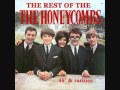
The Honeycombs

Pop
Mainstream Pop
Garage Rock
 Viberate Rank: 119544
 Viberate Rank: 119544
 Monthly ListenersFollowers
 Subscribers
 Followers
 Followers
 FansTop Spotify Songs
| Track | 7-Day Streams | |
|---|---|---|
1 | 20.95K | |
2 | 1.31K | |
3 | 272 | |
4 | 185 | |
5 | 168 |
Top YouTube VideosMonthly ListenersFeatured in Playlists| Playlist | Followers | |
|---|---|---|
1 |  Every Official UK Number 1 Ever Official Charts | 33.96K |
2 | Jaren 60 en 70 teuntje60 | 17.65K |
3 |  Heartbeat TV Series 1 - 18 Soundtrack abundantmusic | 10.11K |
4 |  The Best Sixties Party Jaystaff | 10.05K |
5 | 60s Psychedelic Trip andreas1965-71 | 8.20K |
Audience| City | Monthly Listeners | |
|---|---|---|
1 | | 1.97K |
2 |  | 1.71K |
3 | | 1.65K |
4 | | 1.38K |
5 | | 1.18K |
See full performance history, audience data, playlist activity, rankings, comparisons, and more in Viberate music analytics. Start with a free trial, then continue with a paid plan.
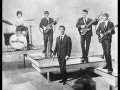
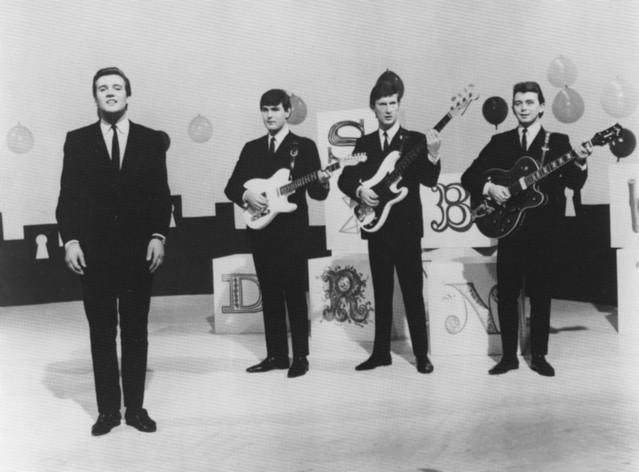
The Honeycombs’ Spotify BioRenowned for their international 1964 Top Five hit "Have I the Right," the Honeycombs possessed an impassioned edge, even by the standards of the British Invasion. Their sound was a strange combination of influences: Alan Ward's ringing, stinging lead guitar, Honey Lantree's larger-than-life drumming, Dennis D'Ell's quavering vocals, Martin Murray's rhythm guitar, and John Lantree's bass combined to mesmerizing effect. The band's singles and albums were produced by the legendary Joe Meek, who used all of his studio tricks -- including ghostly organ and compression that hits the listener like a punch in the chest -- to give the Honeycombs an unmistakable style. Although none of their other music found as much of an audience as "Have I the Right," songs such as "Color Slide" and "That's the Way" and albums like 1964's The Honeycombs and 1965's All Systems Go! range from bouncy pop to Roy Orbison-like balladry to proto-garage rock, proving there was more to their body of work than just… their smash hit.
Originally called the Sheratons, the band was formed in Hackney in 1963 by rhythm guitarist Martin Murray, a self-taught musician who formed his first group, the Black Rebels, in the mid-'50s in response to the skiffle craze dominating the U.K. charts. To round out the Sheratons, Murray enlisted vocalist Dennis D'Ell (born Dennis Dalziel) after meeting him in the bowling alley where he worked and listening to D'Ell's demos. Guitarist Allan Ward was recommended to Murray by mutual friend John Lantree, and original drummer Chris Chaplin connected with the band through an ad he placed in a local music store. Eventually, Lantree joined the group as their bassist. This lineup of the band recorded the single "Do the Blues" at Pye Studios with pop entrepreneur Les Conn, but the song failed to garner much interest.
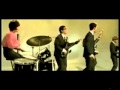
That October, Chaplin left the Sheratons to become an architect. While Murray was storing Chaplin's drums in the music room he kept above the hair salon he managed, his assistant (and John Lantree's sister) Anne Margot "Honey" Lantree fell in love with the kit. She played so passionately that Murray brought her on as the Sheratons' drummer. At the time, a female drummer was a rarity; combined with her fashionable beehive hairdo, she gave the Sheratons an attention-getting visual edge. The band played three times a week at a pub called the Mildmay Tavern, on Balls Pond Road in London's East End. In February 1964, they were lucky enough to be spotted by up-and-coming songwriters Alan Blaikley and Ken Howard, who were attracted by the crowds of teenagers they drew. Blaikley liked their sound -- a mix of R&B, rock & roll standards, and instrumentals -- and had a song to offer them. He and Howard had written a composition called "Have I the Right?" and were looking for a group to record it, and this East End quintet seemed to fit the bill. Soon after, Howard and Blaikley became the band's managers and continued to write songs for them.
The Sheratons had an upcoming audition with visionary producer Joe Meek, who was always on the lookout both for songwriters and for groups that could benefit from his expertise (previously, Murray worked at Meek's studio as a session guitarist). This March 1964 audition became the recording session for "Have I the Right?," which became a showcase for Meek's unorthodox studio techniques. With its bee-sting guitar leads, D'Ell's wobbling vocals, and Lantree's elephantine drums -- which were echoed by overdubs of the bandmembers stomping their feet on the staircase on Meek's studio at 304 Holloway Road, Islington -- the single had a truly unique sound.
"Have I the Right?" was released on Pye Records in June 1964, but not before the quintet changed their name to the Honeycombs thanks to Pye Records' managing director and later chairman Louis Benjamin. After an initial stall midway in the charts, "Have I The Right?" was picked up by the renowned pirate station Radio Caroline. By the end of August, it reached number one in England (and also, subsequently, in Australia, South Africa, and Japan as well) and number five in America. Following the single's success, the Honeycombs toured the Far East and Australia, earning a strong following in Japan in the process.
Recorded in a month, the Honeycombs' self-titled debut album (released as Here Are the Honeycombs in the U.S. on Vee-Jay's Interphon imprint) arrived in September 1964. Though it highlighted Martin Murray's superb guitar playing, Ward's distinctive lead sound, and featured Honey Lantree's vocals on "That's the Way," the band's fortunes were already waning. The week of the album's release, Murray broke his right arm and leg, and session guitarist Peter Pye took his place while he recovered. The October single "Is It Because" peaked at number 38 on the U.K. Singles Chart, and November's "Eyes'' failed to chart. In the States, Here Are the Honeycombs reached number 147 on the Billboard 200 Albums Chart, while the single "I Can't Stop" hit 48 on the Hot 100 Singles Chart. Tensions within the group led Murray to leave the Honeycombs in December 1964. He started a new band, the Lemmings, who released a single on Pye before disappearing. He then went solo with one 45 release to his credit. In the wake of his departure, Peter Pye joined as a permanent member and the group continued.
By 1965, England and America were moving past the rock & roll sound the Honeycombs were known for. Though the band scored a number 12 U.K. hit with "That's the Way," the Ray Davies-penned "Something Better Beginning" only reached number 39; in the U.S., these singles didn't make the charts. However, their popularity soared in northern Europe, Germany, and, especially, Japan and the Far East. They toured to rousing audience response and their records were soon aimed at those markets as well. This shift coincided with Howard and Blaikley's decision to move Honey Lantree from behind the drum kit and to center stage (the Pretty Things' Viv Prince stepped into the drummer's spot for live shows). In November 1965, the single "This Year Next Year," another duet between Lantree and D'Ell, appeared ahead of the Honeycombs' second album, All Systems Go! Released that December, it included a pair of covers of Ray Davies songs, one of which, "Emptiness," was apparently never recorded by anyone else. That month, the Japanese live album Honeycombs in Tokyo was issued and featured performances of "She's About a Mover," "Wipe Out," "Lucille," "Kansas City," "Goldfinger," and "What'd I Say" that captured their original act more accurately than their two studio albums did.
After 1965, Howard and Blaikley turned their attention to Dave Dee, Dozy, Beaky, Mick & Tich, who were more in sync with the post-Merseybeat/post-British beat taste of the times. The Honeycombs played the cabaret circuit and continued to release singles, including February 1966's "Who Is Sylvia," an adaptation of Franz Schubert's "An Sylvia." That April, D'Ell, Ward, and Pye left the band, with future Honeybus member Colin Boyd joining as vocalist/guitarist along with lead guitarist/vocalist Rod Butler (who later played in groups with Murray and D'Ell) and keyboardist/vocalist Eddy Spence. "It's So Hard," which was also recorded by Dave Dee, Dozy, Beaky, Mick & Tich, appeared in July. Written by Boyd, the band's final single, "That Loving Feeling," was released that September.
In the wake of Meek's February 1967 suicide, the Honeycombs disbanded. D'Ell released a pair of 45s for British CBS and Decca that same year. He later passed through bluesier, less pop-oriented bands, and, starting in the '80s, also fronted various latter-day versions of the Honeycombs. Shortly after the band's breakup, Honey Lantree had a short-lived solo career; later, she often performed with D'Ell, and only stopped playing when D'Ell died in 2005 at age 61. Lantree passed in 2018 at age 75. Murray worked as a producer and re-formed the Honeycombs with a new lineup in 2004, and ultimately re-recorded the group's songs for the 2016 set 304 Holloway Road Revisited. In the years after the band's breakup, numerous reissues and compilations appeared, including 2020's Have I the Right? The Complete '60s Albums and Singles. ~ Heather Phares & Richie Unterberger, Rovi
Viberate is a music analytics platform built for A&Rs, artist managers, labels, booking agents, marketers, and artists.
It helps music professionals track artist growth, analyze audience data, monitor playlist activity, compare artists, follow song performance, and identify opportunities across the music market.
Public artist pages provide a free preview of selected artist data. Paid plans provide access to deeper analytics, historical data, charts, comparisons, playlist tools, exports, alerts, reports, and additional professional features.
Yes. Public Viberate artist pages provide selected artist analytics and music data for free.
Viberate also offers a 7-day free trial of the full platform. A credit card is required to start the trial. The trial includes access to the complete product so users can test deeper artist analytics, historical views, playlist insights, comparisons, charts, exports, alerts, and reporting features before choosing a paid plan.
Viberate provides artist analytics across streaming, playlists, social media, video, radio airplay, songs, and audience markets.
Users can analyze Spotify performance, Spotify and Apple Music playlists, YouTube activity, TikTok and Instagram growth, radio spins, song performance, audience locations, demographics, rankings, and overall artist momentum.
Artist profiles also connect to music charts, similar artists, and comparison tools, helping users benchmark performance and evaluate artists in context.
Viberate updates key artist and track data daily.
For followed artists and tracks, selected data is refreshed multiple times per day. This helps teams monitor playlist changes, streaming movement, audience growth, releases, and campaign performance with more current data.
Update frequency can vary depending on the metric and data source.
Yes. Viberate lets users compare up to five artists side by side across streaming, social media, audience, and engagement metrics.
Users can compare fanbase growth, audience demographics, locations, Spotify performance, social metrics, and other artist data over selected time periods.
Artist comparison can be used for A&R scouting, benchmarking, booking decisions, campaign planning, and evaluating artists with similar audiences or market positions.