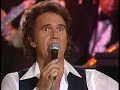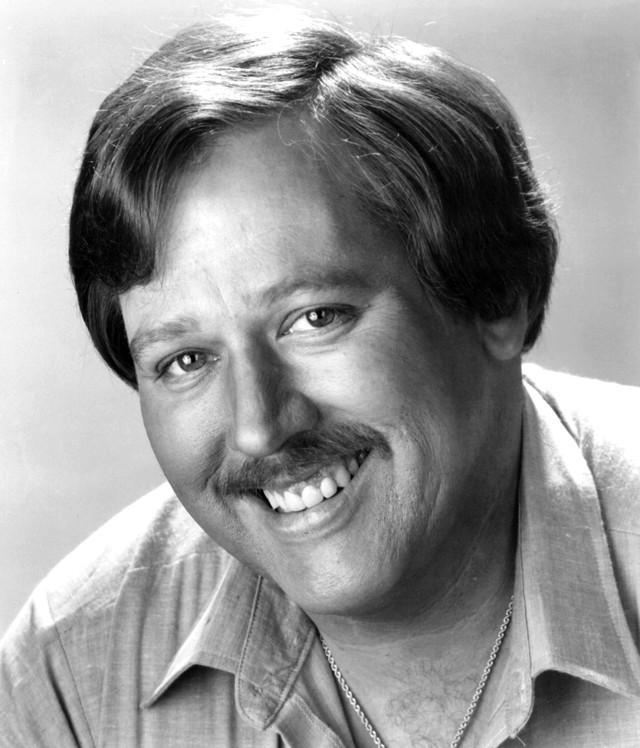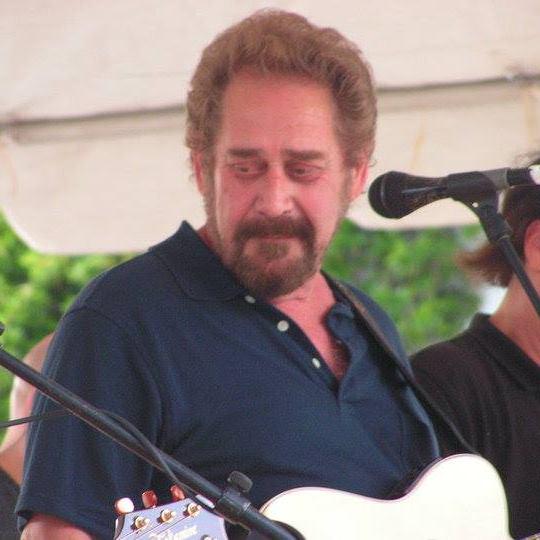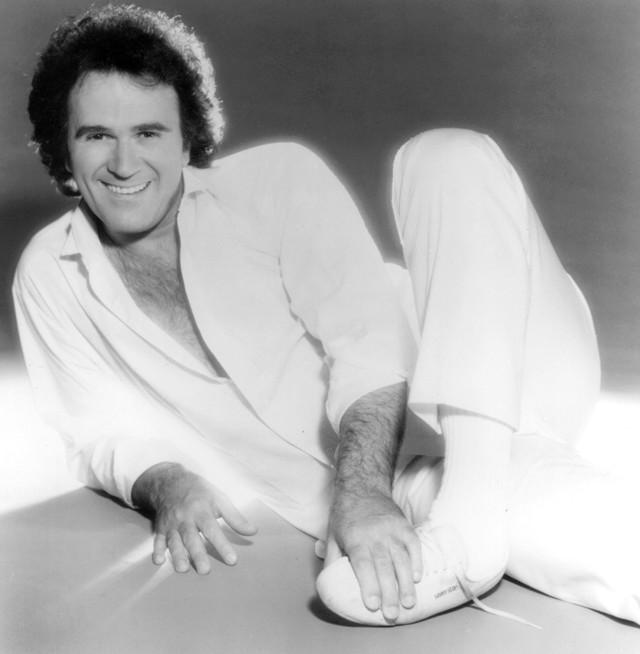
T.G. Sheppard

Country
Contemporary Country
 Viberate Rank: 31647
 Viberate Rank: 31647
 Monthly ListenersFollowers
 Subscribers
 Followers
 Followers
 FansTop Spotify Songs
| Track | 7-Day Streams | |
|---|---|---|
1 | 135.63K | |
2 | 126.73K | |
3 | 94.97K | |
4 | 52.33K | |
5 | 46.28K |
Top YouTube VideosMonthly ListenersFeatured in Playlists| Playlist | Followers | |
|---|---|---|
1 |  Country's Greatest Hits Spotify | 814.57K |
2 |  80s Country Spotify | 755.87K |
3 |  80's Country (Top 100) aly.matthews16 | 75.11K |
4 |  Old Country Classics Glenn Asbjørn B. Ovedal | 34.48K |
5 |  Classic Country (50s, 60s, 70s, 80s, 90s, 00s) Pure Country | 33.71K |
Audience| City | Monthly Listeners | |
|---|---|---|
1 | | 18.35K |
2 | | 12.47K |
3 | | 10.65K |
4 | | 9.72K |
5 | | 9.17K |
See full performance history, audience data, playlist activity, rankings, comparisons, and more in Viberate music analytics. Start with a free trial, then continue with a paid plan.
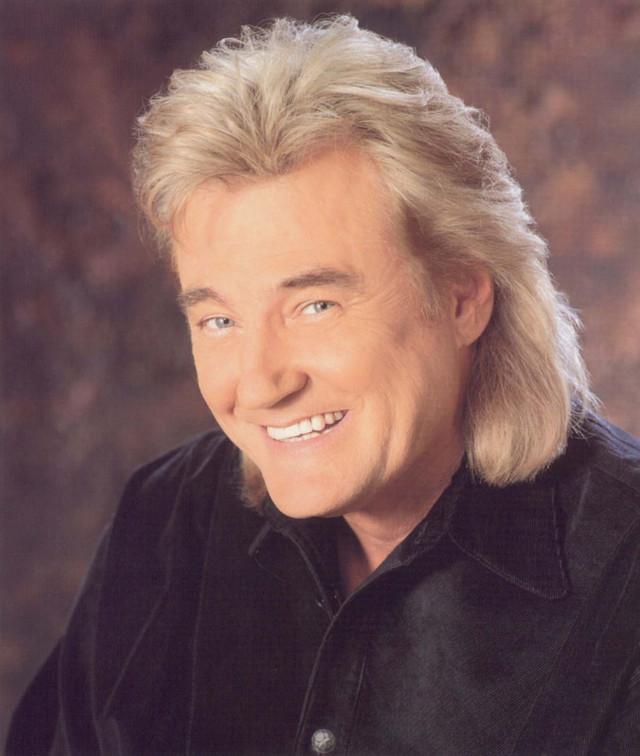
T.G. Sheppard’s Spotify BioAn assured, honey-voiced singer, T.G. Sheppard had two number one country hits right out of the gate when "Devil in the Bottle" and "Tryin' to Beat the Morning Home" both reached the pole position in 1975. Despite this strong start, Sheppard truly hit his stride later in the decade, when he found a soft, satiny setting for his warm croon. Working within the smooth contours of Urban Cowboy, Sheppard's hits in the early '80s sometimes drifted toward soft rock, particularly when he adopted a subdued disco beat on "Do You Wanna Go to Heaven" and "I Loved 'Em Every One," number one hits that emphasized his seductive undercurrents. Sheppard stayed in the Billboard Country Top Ten through the mid-'80s and once the hits dried up, he turned toward live performance, working in a theater in the Great Smoky Mountains in the '90s, then staying on the road into the 2020s. Along the way, he occasionally re-recorded his old tunes and cut new records, such as 2019's Midnight in Memphis.
A native of… Humboldt, Tennessee, Sheppard headed off to Memphis after high school, getting involved in the record business on several different levels. He tried recording as a pop artist and even signed with Atlantic Records under the name Brian Stacy, opening shows for the Beach Boys. A few years later, he took a job with a Memphis record distributor, then ended up in record promotion, where the job entailed calling radio stations and trying to persuade them to play his company's records. In that capacity for RCA, he helped break Elvis Presley's "Suspicious Minds," Perry Como's "It's Impossible," and John Denver's "Take Me Home Country Roads." After "going independent," he came across a demo tape of "Devil in the Bottle." He tried to talk a number of artists into doing the song, and when no one was interested, he decided to do it himself on Motown's fledgling country label Melody Land. Primarily a recitation, "Devil in the Bottle" became a number one hit in 1975, but within three years, the company folded, and Sheppard's career was in limbo. Connecting with record producer Buddy Killen, he signed with Warner, and starting in 1979, the two churned out some of country's best-crafted singles over a four-year period. Sheppard gradually moved away from recitations and grew significantly as a vocalist, though the press often ignored his achievements. He changed producers several times in the mid-'80s and, after a divorce in 1987, took a couple of years off for personal reflection. When he returned, Sheppard found it difficult to regain his earlier momentum.
As the nephew of the Grand Ole Opry comedian Rod Brasfield, Sheppard (born William Neal Browder, July 20, 1942) was exposed to music at a young age, and throughout his childhood, his mother gave him piano lessons. At the age of 16 he ran away from his home in Humbold, arriving in Memphis where he became a backup vocalist and guitarist in the Travis Wammack Band. During this time, he was billing himself as Brian Stacy, and that was the credit on his first singles for Sonic Records. The label dropped him after all of his records failed, and he moved to Atlantic's Atco division, where he released the rock & roll single "High School Days" in 1966. Though it didn't break nationally, it was a hit in the South, and soon he was opening for the likes of the Beach Boys and the Animals, while befriending Elvis Presley.
Instead of leading him toward a performing career, the minor success of "High School Days" made Sheppard decide to work behind the scenes in the record industry, and later in 1966 he became a record promoter for Hot Line Distributors. Initially, he worked for Stax, but he quickly became the Southern regional promoter for RCA, where he helped push records by his friend Presley, as well as John Denver. While he was working for RCA, he also founded his own production and promotion company, Umbrella Productions. While working at promotion for Umbrella in 1972, he discovered a song by Bobby David called "Devil in a Bottle." Every record company he directed it to over the next year-and-a-half turned the song down, so he decided to record a version himself. Eventually, he convinced Motown's developing country subsidiary Melody Land to license the record. Deciding to use T.G. Sheppard as his performing name, the vocalist released the record in the fall of 1974. "Devil in the Bottle" unexpectedly climbed to number one early in 1975, followed shortly by another number one single, "Tryin' to Beat the Morning Home." Later in the year, "Another Woman" reached number 14, and "Motels and Memories" peaked at number seven, establishing Sheppard as a promising artist. Shortly after the release of "Motels and Memories," Motown was sued by a Los Angeles church over the right to use the name "Melodyland," and the label had to change its name to Hitsville. Sheppard had four other hit singles on Hitsville -- including a cover of Neil Diamond's "Solitary Man" and the number eight "Show Me a Man" (1976) -- before Motown finally decided to shut the label down.
By the time Hitsville collapsed, Sheppard was on his way to becoming a star -- Cash Box magazine named him Best New Male Artist of 1976 -- so he was immediately snapped up by Warner. Sheppard became a genuine country star on the label, partially because his sound -- a smooth fusion of R&B rhythms, pop production, and country songwriting -- became the blueprint for the urban cowboy movement that became country's most popular genre of the late '70s. After having two number 13 singles ("Mister D.J.," 'Don't Every Say Good-Bye") early in 1978, Sheppard released "When Can We Do This Again" in the summer. The single started a streak of 15 straight Top Ten hits that ran for the next five years. During that time, he had no less than ten number one singles: "Last Cheater's Waltz" (1979), "I'll Be Coming Back for More" (1979), "Do You Wanna Go to Heaven" (1980), "I Feel Like Loving You Again" (1980), "I Loved 'Em Every One" (1981), "Party Time" (1981), "Only One You" (1981), "Finally" (1982), "War Is Hell (On the Homefront Too)" (1982), and the Karen Brooks duet "Faking Love" (1982). Over those five years, his style rarely changed; every record was well-crafted, highly produced country-pop highlighted by Sheppard's smooth croon.
Sheppard continued to chart well throughout the latter half of the '80s, and between 1986 and 1987 he had a number one single and three number two records in a row ("Strong Heart," "Half Past Forever (Till I'm Blue in the Heart)," "You're My First Lady," "One for the Money") after he switched labels and signed to Columbia. However, his audience dipped dramatically in 1988, when his radio-ready sound was usurped by a number of new traditionalist performers like Dwight Yoakam, Randy Travis, and George Strait. Between 1989 and 1990, he didn't record at all, and he was dropped by Columbia. In 1991, he returned to the charts with the Curb/Capitol single "Born in a High Wind," but he didn't remain with the label long. For the remainder of the '90s, he continued to tour and play concerts across the country.
Sheppard continued to focus on live performances throughout the 2000s, occasionally stepping into the studio to re-record his old songs. He started to branch out on his records of the 2010s, first releasing the gospel collection Because You Love Me in 2012, then the duets album Legendary Friends & Country Duets in 2015. Sheppard devoted himself to soul on his 2019 album Midnight in Memphis. ~ Tom Roland, Rovi
Viberate is a music analytics platform built for A&Rs, artist managers, labels, booking agents, marketers, and artists.
It helps music professionals track artist growth, analyze audience data, monitor playlist activity, compare artists, follow song performance, and identify opportunities across the music market.
Public artist pages provide a free preview of selected artist data. Paid plans provide access to deeper analytics, historical data, charts, comparisons, playlist tools, exports, alerts, reports, and additional professional features.
Yes. Public Viberate artist pages provide selected artist analytics and music data for free.
Viberate also offers a 7-day free trial of the full platform. A credit card is required to start the trial. The trial includes access to the complete product so users can test deeper artist analytics, historical views, playlist insights, comparisons, charts, exports, alerts, and reporting features before choosing a paid plan.
Viberate provides artist analytics across streaming, playlists, social media, video, radio airplay, songs, and audience markets.
Users can analyze Spotify performance, Spotify and Apple Music playlists, YouTube activity, TikTok and Instagram growth, radio spins, song performance, audience locations, demographics, rankings, and overall artist momentum.
Artist profiles also connect to music charts, similar artists, and comparison tools, helping users benchmark performance and evaluate artists in context.
Viberate updates key artist and track data daily.
For followed artists and tracks, selected data is refreshed multiple times per day. This helps teams monitor playlist changes, streaming movement, audience growth, releases, and campaign performance with more current data.
Update frequency can vary depending on the metric and data source.
Yes. Viberate lets users compare up to five artists side by side across streaming, social media, audience, and engagement metrics.
Users can compare fanbase growth, audience demographics, locations, Spotify performance, social metrics, and other artist data over selected time periods.
Artist comparison can be used for A&R scouting, benchmarking, booking decisions, campaign planning, and evaluating artists with similar audiences or market positions.