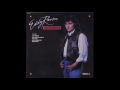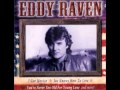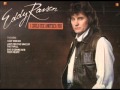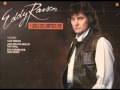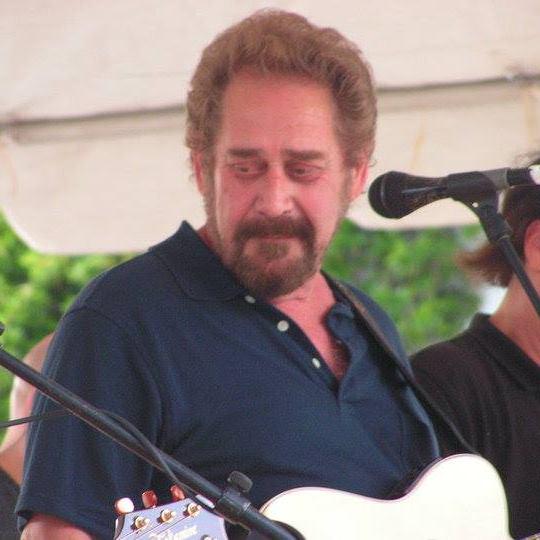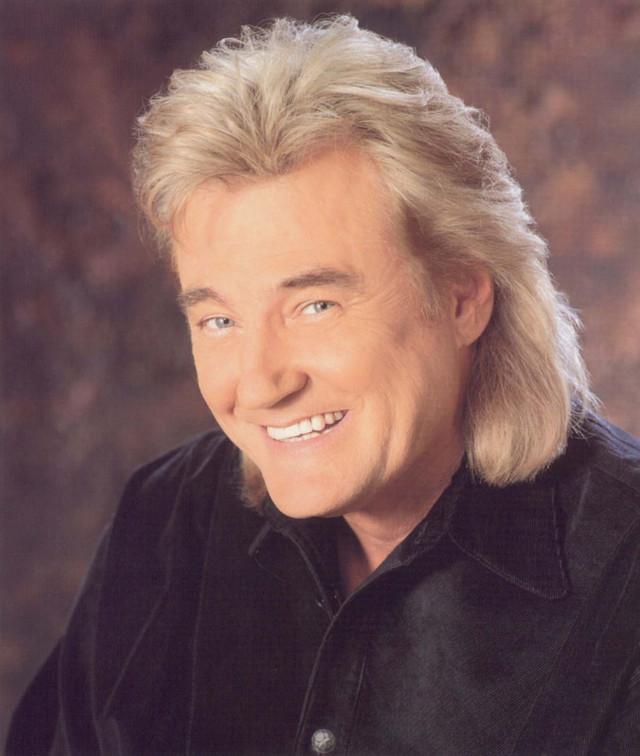
Eddy Raven

Country
Contemporary Country
Mainstream Pop
 Viberate Rank: 64237
 Viberate Rank: 64237
 Monthly ListenersFollowers
 Subscribers
 Followers
 Followers
 FansTop Spotify Songs
| Track | 7-Day Streams | |
|---|---|---|
1 | 73.54K | |
2 | 22.86K | |
3 | 17.98K | |
4 | 15.49K | |
5 | 12.10K |
Top YouTube VideosMonthly ListenersFeatured in Playlists| Playlist | Followers | |
|---|---|---|
1 |  80s Country Spotify | 755.87K |
2 |  Dirt Road | New Country Music 2026 tout | 94.29K |
3 |  80's Country (Top 100) aly.matthews16 | 75.11K |
4 | MUSICA COUNTRY SUPER EXITOS yeshua | 65.79K |
5 |  Out in the Open Ben Kretchman | 64.64K |
Audience| City | Monthly Listeners | |
|---|---|---|
1 | | 7.67K |
2 | | 5.76K |
3 | | 4.87K |
4 | | 4.31K |
5 | | 3.24K |
See full performance history, audience data, playlist activity, rankings, comparisons, and more in Viberate music analytics. Start with a free trial, then continue with a paid plan.
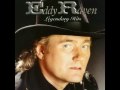
Eddy Raven’s Spotify BioBorn Edward Garvin Futch, it's no wonder that his name was changed by a record executive to Eddy Raven on his very first single, released on tiny Cosmo Records in the late '60s. Numerous influences made his music almost indescribable: the Cajun sounds of his native Louisiana, the blues influence from working with Johnny Winter, the rock & roll of his idol, Elvis Presley, and the pure country of the Grand Ole Opry. Befriended by Jimmy C. Newman, Raven made the first of many trips to Nashville in 1970, though he didn't move permanently for a couple of years. Signed to a publishing deal with Acuff-Rose, he wrote songs for Don Gibson and Roy Acuff, among others, and started making records himself in 1974. Despite the acclaim of his peers, Raven didn't actually earn a hit record as a recording artist until 1981, with the release of his Desperate Dreams album. After he lost his recording contract in a 1983 consolidation involving Elektra and Warner, Raven took the next year to realign his… business. The Oak Ridge Boys earned a hit at that time with his song "Thank God for Kids," and Raven came out of his forced vacation strong, signing with RCA and gaining his first number one single with "I Got Mexico." For the next half-dozen years, Raven remained a consistent staple of country radio: frequently adventurous, always listenable.
Raven began playing music when he was a child in Lafayette, Louisiana, joining a garage rock band when he was 13 years old. Three years later, his family moved to Georgia, where Raven landed a job working in a radio station. He also managed to cut his own song, "Once a Fool," for the local independent label Cosmo. The record was released under the name "Eddy Raven," and Edward Futch used that moniker as his stage name from that day forward. In 1963, the family moved back to Lafayette, and Raven began working in a record shop called La Louisianne. The store's owner had a label of the same name, and Raven cut several records for the label, including his 1969 debut album, That Cajun Country Sound.
Jimmy C. Newman happened to hear That Cajun Country Sound and was impressed enough to land Raven a publishing deal with Acuff-Rose. Following the record's release, Raven began singing for Jimmie Davis' band. By 1971, other artists had begun recording Raven's songs, with Don Gibson taking "Country Green" into the Top Five; Gibson also recorded "Touch the Morning," while Jeannie C. Riley covered "Good Morning, Country Rain" and Roy Acuff sang "Back in the Country." Soon, Raven had gained a reputation as a songwriter and a performer within Nashville, and once Don Gant of Acuff-Rose became an A&R man for ABC Records, Eddy had a record deal of his own in 1974. For the next two years, he had a series of minor hits for the label, highlighted by the number 27 "Good News, Bad News" in 1975. He left the label in 1978, staying with Monument for one year before signing with Dimension the following year. None of his singles for either label were big hits, and he left Dimension in 1981.
Later in 1981, he signed with Elektra, where he had his first big hit with the number 13 "I Should've Called." Over the next two years, Raven had three Top 20 singles for Elektra, setting the stage for his breakthrough into the Top Ten in 1984. After spending 1983 resolving legal and managerial problems, Raven signed with RCA Records, releasing "I Got Mexico" in the spring. The single was a big hit, becoming not only his first Top Ten single, but his first number one hit. For the remainder of the decade, he had a string of Top Ten hits for the label, including the number one singles "Shine, Shine, Shine" (1987), "I'm Gonna Get You" (1988), and "Joe Knows How to Live" (1988). He left RCA for Universal in 1989, and he had two number one singles for the label, "In a Letter to You" and "Bayou Boys." Once Universal collapsed in 1989, he moved to their parent company, Capitol, but his records for the label were largely ignored because radio was beginning to program newer artists instead of veterans like Raven. Right for the Flight, his 1991 album for Capitol, was his last for a major label. Starting in with 1994's Wild Eyed and Crazy, he recorded for independent labels, and over the next decade he cut records relatively steadily -- Cookin' Cajun, a duet album with Jo-El Sonnier, came out in 1996, Living in Black and White appeared in 2001, Knowin' How to Live was released in 2005 -- and he toured into the 2010s. In 2017, he returned to recording with All Grassed Up, a collaboration with Carolina Road. ~ Tom Roland, Rovi
Viberate is a music analytics platform built for A&Rs, artist managers, labels, booking agents, marketers, and artists.
It helps music professionals track artist growth, analyze audience data, monitor playlist activity, compare artists, follow song performance, and identify opportunities across the music market.
Public artist pages provide a free preview of selected artist data. Paid plans provide access to deeper analytics, historical data, charts, comparisons, playlist tools, exports, alerts, reports, and additional professional features.
Yes. Public Viberate artist pages provide selected artist analytics and music data for free.
Viberate also offers a 7-day free trial of the full platform. A credit card is required to start the trial. The trial includes access to the complete product so users can test deeper artist analytics, historical views, playlist insights, comparisons, charts, exports, alerts, and reporting features before choosing a paid plan.
Viberate provides artist analytics across streaming, playlists, social media, video, radio airplay, songs, and audience markets.
Users can analyze Spotify performance, Spotify and Apple Music playlists, YouTube activity, TikTok and Instagram growth, radio spins, song performance, audience locations, demographics, rankings, and overall artist momentum.
Artist profiles also connect to music charts, similar artists, and comparison tools, helping users benchmark performance and evaluate artists in context.
Viberate updates key artist and track data daily.
For followed artists and tracks, selected data is refreshed multiple times per day. This helps teams monitor playlist changes, streaming movement, audience growth, releases, and campaign performance with more current data.
Update frequency can vary depending on the metric and data source.
Yes. Viberate lets users compare up to five artists side by side across streaming, social media, audience, and engagement metrics.
Users can compare fanbase growth, audience demographics, locations, Spotify performance, social metrics, and other artist data over selected time periods.
Artist comparison can be used for A&R scouting, benchmarking, booking decisions, campaign planning, and evaluating artists with similar audiences or market positions.