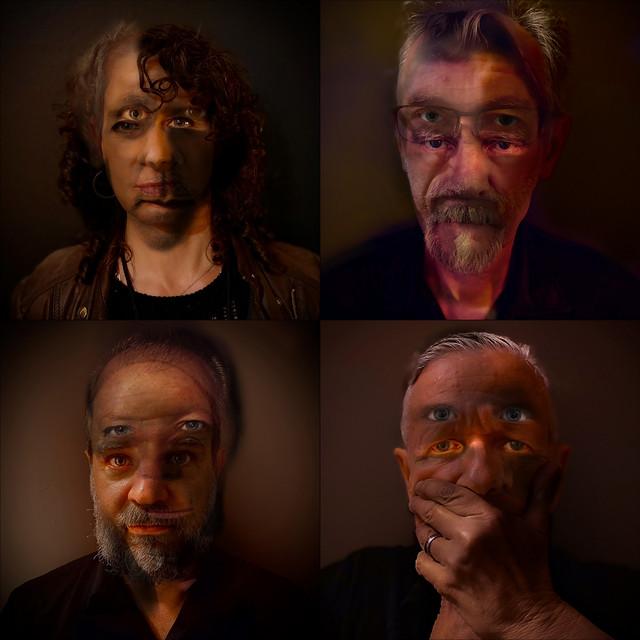
Swans

Rock
Alternative Rock
Noise Rock
 Viberate Rank: 23024
 Viberate Rank: 23024
 Monthly ListenersFollowers
 Subscribers
 Followers
 Followers
 FansTop Spotify Songs
| Track | 7-Day Streams | |
|---|---|---|
1 | 30.65K | |
2 | 17.16K | |
3 | 14.25K | |
4 | 9.18K | |
5 | 8.00K |
Top YouTube Videos| Video | 7-Day Views | |
|---|---|---|
1 | 7.32K | |
2 | 6.26K | |
3 | 4.52K | |
4 | 4.22K | |
5 | 2.69K |
Monthly ListenersFeatured in Playlists| Playlist | Followers | |
|---|---|---|
1 |  Superman Official Playlist Spotify | 131.25K |
2 |  Dark and Furious Spotify | 128.07K |
3 |  Post-Rock Spotify | 70.37K |
4 |  Indie Music Worldwide - Multi-Genre Megamix indiemusicpromo | 55.10K |
5 |  Twin Peaks Vibes 📺 maddie f | 36.93K |
Audience| City | Monthly Listeners | |
|---|---|---|
1 |  | 3.83K |
2 | | 3.10K |
3 | | 2.89K |
4 | | 2.79K |
5 |  | 2.39K |
See full performance history, audience data, playlist activity, rankings, comparisons, and more in Viberate music analytics. Start with a free trial, then continue with a paid plan.
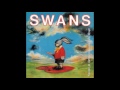
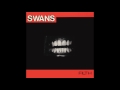
Swans’ Spotify BioOne of the most uncompromising bands, Michael Gira's Swans make music that alternates between bleak, brutal noise-rock and dark, ambient, moody folk coupled with intense live performances. Emerging from the downtown New York no wave scene, the group's confrontational shows supported dissonant, repetitive records including 1983's Filth. The dirge-like industrial of 1986's Greed introduced a more atmospheric sound as well as the addition of vocalist/songwriter Jarboe. 1991's White Light from the Mouth of Infinity was significantly more melodic and elaborately produced, even as the group's concerts remained spectacles. They disbanded in 1997 following Soundtracks for the Blind. Gira re-formed Swans in 2010. This incarnation, easily as uncompromising, produced the group's most commercially successful work, the mammoth To Be Kind, in 2014. Gira returned Swans to an alternating lineup in 2017, subsequently working with a revolving cast on 2019's leaving meaning. and 2023's The Beggar, both… less intense than their previous post-reunion work but similarly hypnotic and experimental.
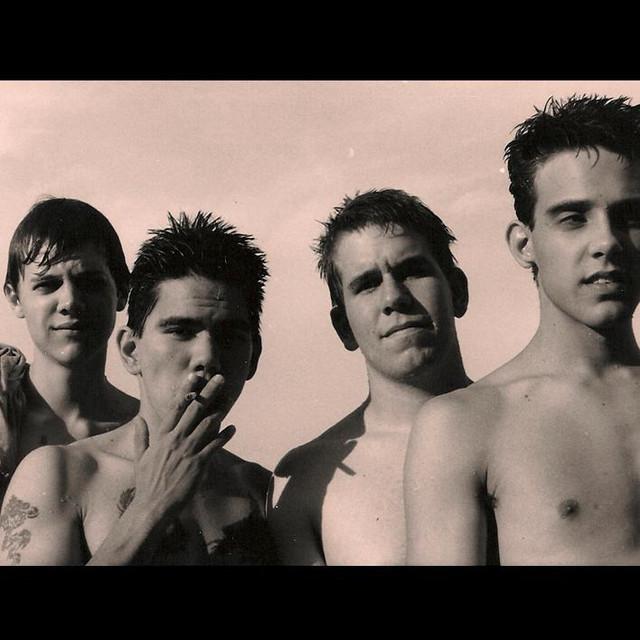
Swans were born on the Lower East Side during the heyday of New York's no wave reaction to punk rock. Led by guitarist, vocalist, and songwriter Michael Gira, the group was formed after the demise of his first New York outfit, Circus Mort. Swans' first lineup consisted of Gira, guitarist Sue Hanel, and drummer Jonathan Kane. The trio played with kindred spirits Sonic Youth and made some rudimentary recordings that showcased the abrasive, percussively assaultive sonics Swans were later identified with. These initial sides surfaced on the Body to Body, Job to Job compilation. A different lineup included Kane, guitarist Bob Pezzola, and Daniel Galli-Duani on saxophone; they released a self-titled EP in 1982. The personnel changed again for the band's powerful debut, Filth, issued in 1983 on Germany's Zensor imprint. It included Gira, Kane, guitarist Norman Westberg, bassist Harry Crosby, and percussionist/drummer Roli Mosimann.
Swans began to garner an audience in Europe. Kane left after Filth was released, and Swans, who were becoming known for their sheer musical brutality as well as Gira's lyrics about violence, extreme sex, power, rage, and the margins of human depravity (sometimes in the same song), found a cult following at home with the release of 1984's Cop. The sound was essentially the same: extreme volume, slower-than-molasses tempos, detuned guitars, distorted electronics, and overamped drums and percussion, but there were discernible traces of something approaching melody in Gira's compositions and vocalizing. Further evidence of this new "accessibility" was heard on 1985's untitled EP, which featured the provocatively titled "Raping a Slave," which later became the EP's title. Swans' touring was relentless, and while anything even approaching popularity escaped them in the United States, their European audiences grew exponentially.
The band issued the EP Time Is Money (Bastard) and the full-length Greed at the beginning of 1986, another album, Holy Money, and the A Screw EP. Holy Money marked a real change in the band's sound, though its tactics were largely the same. Two new influential presences, vocalist/keyboardist Jarboe and bassist Algis Kizys, began, albeit subtly, to shift the band's attack into something less sonically assaultive yet no less jarring emotionally. Jarboe and Kizys would remain members of Swans until the group's extended hiatus began in 1997. Jarboe, who was actually a member of the band as early as Greed, would become a settled, foil-like presence for Gira as co-lead vocalist. Her presence signified the addition of a new set of dynamics and textures to the more brutal soundscapes the band had previously put forth. That said, when called upon to do so, she was no less primal or forceful than Gira as a singer.
In 1987, the band moved to Caroline Records and issued Children of God, a double album that marked the real transition between the two sides of the band’s sound. Gira openly embraced the softer aspects being added to Swans' sonic architecture. Further evidence is provided by the formation of Gira and Jarboe’s side project, Skin (World of Skin in the United States), whose first album, Blood, Women, Roses, with Jarboe featured on lead vocals, was released in 1987. A subsequent album, Shame, Humility, Revenge, with Gira on lead vocals, was also recorded at the same time but released a year later. The German-only Swans set Real Love, a semi-official bootleg, was issued in 1987. Another double album, Feel Good Now, was issued by Rough Trade in 1988. Interestingly, despite Swans gaining attention for their own material (they regularly appeared in the pages of the British weeklies and each new release brought more laudatory ink) and even placing albums on the indie charts' lower rungs, it was ironically a single, a cover of Joy Division's immortal "Love Will Tear Us Apart," that climbed the independent charts in June, nearly topping them.
Fantastically, Swans were offered -- and signed -- a contract with major-label MCA. "Saved," their first single for the label, was almost mainstream, given the band’s roots. The subsequent album The Burning World, produced by Bill Laswell, featured another cover, this one a gorgeous reading of Blind Faith's "Can't Find My Way Home." The aggressive, savage brutality of the band’s earlier recorded sound had been almost entirely supplanted by a much more somber, elegiac, and acoustic approach to music-making, with lyrics sung (rather than shouted or screamed) in duets between Gira and Jarboe; Westberg played as much acoustic guitar as electric, Jarboe’s keyboards all but floated through the mix, and Kizys employed the upper ranges of his bass like never before. The record didn't sell enough to please MCA, however, and the band was dropped.
Swans live performances were another story. The group continued to play violent music at outrageous volumes that were punishing for audience members, and sometimes displayed shocking and provocative stage antics. Crowds only grew. With critical backlash mounting and the band attracting new listeners, Gira gambled -- or reacted, depending on whose point of view you take -- and instead of following up The Burning World with another album, he formed his own label, Young God, and spent the next few years reissuing earlier Swans material. Gira and Jarboe issued their final World of Skin album, Ten Songs for Another World, in 1990, but Swans didn’t release another album until the stellar White Light from the Mouth of Infinity in 1991. It was their most commercially viable yet adventurously experimental set to date, with myriad textures, dynamics, and sophisticated production techniques. Various forms of electronics were added to the other instruments, creating depth and dimension in the group's sound. The band toured the album in front of their largest audiences yet. In 1992, Swans issued the full-length Love of Life and the live set Omniscience.
In 1993 Jarboe released her first solo project, Beautiful People Ltd., in collaboration with keyboardist Lary Seven, offering an entirely different side of her mysterious multi-octave vocal persona in Swans: it was a collection of neo-psychedelic pop songs. Gira, meanwhile, wrote fiction in earnest, resulting in the publication of his first book, The Consumer and Other Stories, published by Henry Rollins' 2.13.61 Press in 1995. Swans also resurfaced with the lauded The Great Annihilator. Jarboe issued her second solo offering, Sacrificial Cake, and Gira released his first solo album, Drainland, to boot. After touring with all the new material, the band reconvened later in the year to begin recording Soundtracks for the Blind, which was issued by Young God in 1996. The band went on a final tour before Gira announced in early 1997 that Swans were finished (a subsequent live album was titled Swans Are Dead). He began a new recording project that focused on his songwriting called the Angels of Light, and continued running Young God, a label that became an innovative force in independent music. Jarboe pursued a successful solo career, often employing former members of Swans, as well as collaborating with artists including Tool's Maynard James Keenan and Jesu's Justin Broadrick, to name just two of dozens. Gira also continued writing and publishing fiction.
In 2009, news surfaced via the Young God home page that Gira might reconvene Swans for a set of songs he had written. In early 2010, the words "SWANS ARE NOT DEAD" appeared on his MySpace page. The new version of the band consisted of former as well as new members including guitarists Westberg and Christoph Hahn, drummer/percussionist Phil Puleo and drummer Thor Harris, and bassist Chris Pravdica. They recorded My Father Will Guide Me Up a Rope to the Sky, which was released in September of 2010 on Young God. The live album We Rose from Your Bed with the Sun in Our Head followed in 2012 (initially released in a handmade limited edition with bonus tracks). In August of that year, Swans released the sprawling double album The Seer, an effort that Gira claimed was 30 years in the making. He and his collaborators were hardly short on ideas by this point, and following another limited release titled Not Here/Not Now, they issued another double album, 2014's To Be Kind, which featured guest vocals from St. Vincent and Cold Specks. The album was an unprecedented success for the band, earning unanimous critical acclaim as well as unexpectedly hitting the Top 40 on both the U.S. and U.K. album charts.
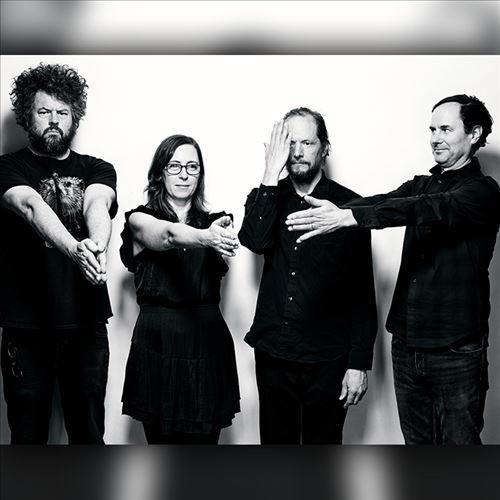
After that success, Gira announced that the forthcoming Swans tour and album would be the last by the existing lineup of the group, who would continue with a revolving cast of musicians. Following The Gate, another limited double-CD of live recordings and demos, Swans released The Glowing Man, an ambitious two-LP set, in 2016. Deliquescence, a limited double-CD of live performances featuring three pieces unavailable on studio albums, was issued in 2017. Swans went on hiatus in 2018, but Gira briefly toured with Westberg along the West Coast of the United States, performing newly written material. What Is This?, a limited fundraiser album of acoustic demos, was made available in early 2019, and full-length leaving meaning. arrived in late October. Guest musicians on the album included the Necks, Anna and Maria von Hausswolff, Ben Frost, and Baby Dee.
With the band unable to tour during the COVID-19 pandemic, Gira released an album of solo demos titled Is There Really a Mind? that was meant to help raise funds for the next Swans album. The effort proved successful enough that the band -- now made up of a mix of Angels of Light and Swans alumni, plus Frost -- were able to record at Candy Bomber Studio in Berlin. The set, titled The Beggar and released in 2023, reflected Gira's post-pandemic optimism and the band's still-evolving experimental nature. ~ Thom Jurek, Rovi
Viberate is a music analytics platform built for A&Rs, artist managers, labels, booking agents, marketers, and artists.
It helps music professionals track artist growth, analyze audience data, monitor playlist activity, compare artists, follow song performance, and identify opportunities across the music market.
Public artist pages provide a free preview of selected artist data. Paid plans provide access to deeper analytics, historical data, charts, comparisons, playlist tools, exports, alerts, reports, and additional professional features.
Yes. Public Viberate artist pages provide selected artist analytics and music data for free.
Viberate also offers a 7-day free trial of the full platform. A credit card is required to start the trial. The trial includes access to the complete product so users can test deeper artist analytics, historical views, playlist insights, comparisons, charts, exports, alerts, and reporting features before choosing a paid plan.
Viberate provides artist analytics across streaming, playlists, social media, video, radio airplay, songs, and audience markets.
Users can analyze Spotify performance, Spotify and Apple Music playlists, YouTube activity, TikTok and Instagram growth, radio spins, song performance, audience locations, demographics, rankings, and overall artist momentum.
Artist profiles also connect to music charts, similar artists, and comparison tools, helping users benchmark performance and evaluate artists in context.
Viberate updates key artist and track data daily.
For followed artists and tracks, selected data is refreshed multiple times per day. This helps teams monitor playlist changes, streaming movement, audience growth, releases, and campaign performance with more current data.
Update frequency can vary depending on the metric and data source.
Yes. Viberate lets users compare up to five artists side by side across streaming, social media, audience, and engagement metrics.
Users can compare fanbase growth, audience demographics, locations, Spotify performance, social metrics, and other artist data over selected time periods.
Artist comparison can be used for A&R scouting, benchmarking, booking decisions, campaign planning, and evaluating artists with similar audiences or market positions.