Strawberry Alarm Clock

Rock
Psychedelic Rock
 Viberate Rank: 65713
 Viberate Rank: 65713
 Monthly ListenersFollowers
 Subscribers
 Followers
 Followers
 FansTop Spotify Songs
| Track | 7-Day Streams | |
|---|---|---|
1 | 48.04K | |
2 | 7.01K | |
3 | 4.38K | |
4 | 2.51K | |
5 | 2.49K |
Top YouTube VideosMonthly ListenersFeatured in Playlists| Playlist | Followers | |
|---|---|---|
1 |  Psychedelic Rock Spotify | 1.27M |
2 |  Vietnam War Music Extra Music | 754.39K |
3 |  Alternative 60s Spotify | 360.55K |
4 |  Once Upon A Time In...Hollywood Radio Josh Gardner | 100.16K |
5 |  Witchy Songs 🔮🌙 Sarah | 97.70K |
Audience| City | Monthly Listeners | |
|---|---|---|
1 |  | 2.98K |
2 | | 2.62K |
3 | | 2.42K |
4 | | 1.85K |
5 |  | 1.63K |
See full performance history, audience data, playlist activity, rankings, comparisons, and more in Viberate music analytics. Start with a free trial, then continue with a paid plan.
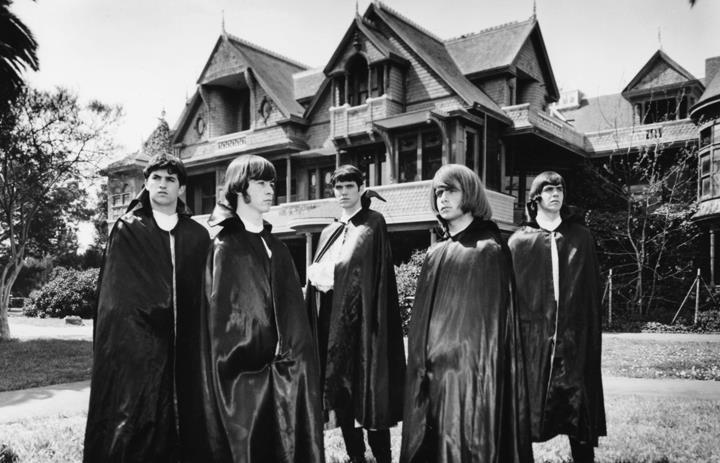
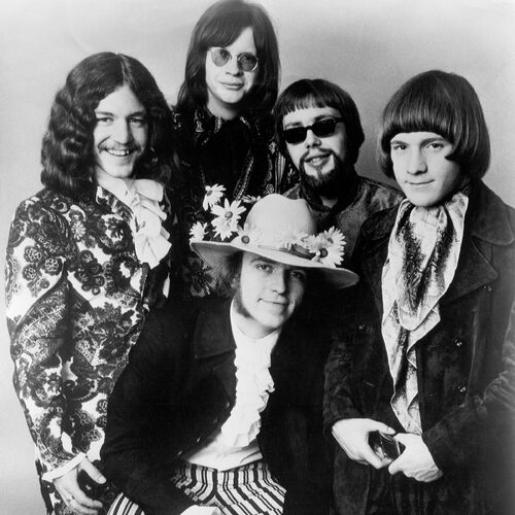
Strawberry Alarm Clock’s Spotify BioStrawberry Alarm Clock occupies a peculiar niche in the history of '60s rock. Their name is as well known to anyone who lived through the late-'60s psychedelic era as that of almost any group one would care to mention, mostly out of its sheer, silly trippiness as a name and their one major hit, "Incense and Peppermints," which today is virtually the tonal equivalent of a Summer of Love flashback. But there was a real group there, with members who had played for a long time on the Southern California band scene, who were proficient on their instruments and who sang well and generated four whole LPs of which at least three were worth hearing more than once.
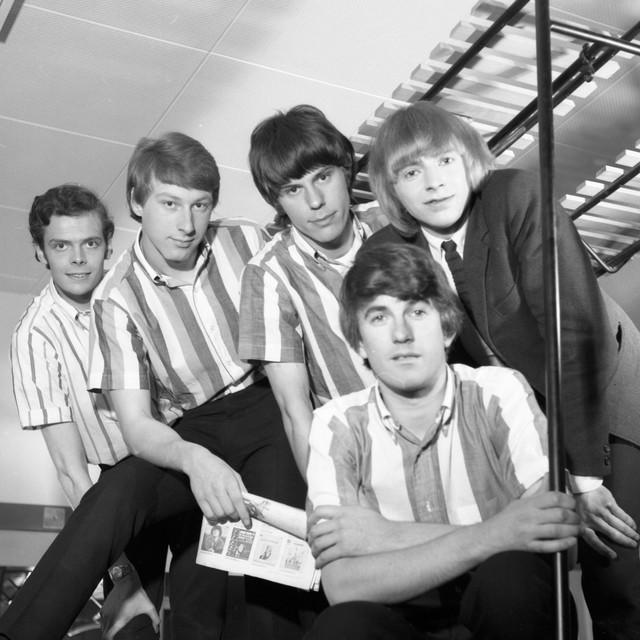
The band's origins go back to Glendale, CA, in the mid-'60s, and a group then known as the Sixpence. It was 1965 and all things British were still a selling point, so the name made as much sense as anything else. Their lineup was formed from the members of various other bands coming together, and included Lee Freeman on vocals, guitar,… and harmonica, Ed King on guitar, Gary Lovetro on bass, Gene Gunnels on drums, Mike Luciano on tambourine, and Steve Rabe on lead guitar. They mostly did covers of then-popular hits and developed a considerable following in Glendale and also in Santa Barbara, playing there so often that a lot of histories have them coming out of Santa Barbara. They were like a lot of hot local bands, good enough to pull people to their shows and always seemingly poised to make the jump to the next level. They did record, starting with an early single, "You're the One," on the Impact label and a trio of 45s that included "Hay Joe" [sic] and covers of the Who song "I Can't Explain" and the rock & roll standard "Fortune Teller" in 1966, for the tiny All-American label; with "Fortune Teller" flipped to the A-side, their third All-American single was picked up by Dot Records for national distribution. Their membership changed late that year as well, with Rabe departing and Mark Weitz joining on keyboards and vocals, sharing the lead singing chores with Freeman. They continued issuing singles on All-American into 1967, changing their name along the way to Thee Sixpence at one point.
In the spring of 1967, there was a flurry of activity going on surrounding the band. They were working out a new single, the A-side of which was to be a sneering punkish piece called "The Birdman of Alkatrash," written by Weitz. They needed a B-side, and an instrumental titled "Incense and Peppermints" -- also put together by Weitz with help from guitarist Ed King -- was duly recorded, and producer Frank Slay (who also owned a publishing company) ended up sending a tape of the track to a friend, songwriter John Carter, who had scored a modest but important hit with a song called "That Acapulco Gold," for a group called the Rainy Daze, earlier that year. He delivered the words to "Incense and Peppermints," which ended up -- under a contract he had with Slay -- credited to him and his songwriting partner, Tim Gilbert.
By this time, the band had developed enough self-confidence that they felt offended by Slay's maneuver, and neither Weitz nor Freeman was willing to throw themselves into the lyric the way they should have, especially as Carter came down to the session to oversee the recording of his lyrics. It was his choice, backed by Slay, of Greg Munford, a 16-year-old friend of the group who happened to be hanging out at the session. Such was the level of confusion that although Slay promised to put Weitz and King on the song as composers, when the producer/publisher filed the copyright registration, Carter and Gilbert were the only composers listed, although Weitz and King are credited as arrangers -- and nobody seemed overly concerned by the fact that Munford wasn't actually in the band. This was "just" a B-side, after all, that would be forgotten as soon as "The Birdman of Alkatrash" started to get airplay, if it ever did.
The single was issued on All-American, with "Incense and Peppermints" as the B-side, and a few copies seem to have gotten out credited to the Sixpence. But the group and their management became concerned over the fact that there were other, similarly named (if differently spelled) bands out there, and began thinking that a new name was called for. So the story goes, the group members were sitting around Weitz's house, trying to come up with a name, and had settled on "Strawberry," appropriated from a recent hit Beatles song. They were trying to figure out what went with "strawberry" and someone noticed a piece of household equipment that was making some noise as they sat there. "Strawberry Alarm Clock" scanned well and sounded playful enough in the tenor of the times, and the new name was in place by the middle of the summer. And at that point, with the new name affixed to the All-American 45, the single started to take on a life of its own -- literally. The All-American single actually began getting airplay, but it was the B-side, "Incense and Peppermints," that DJs were choosing and airing.
Enter Uni Records, a newly established imprint of American Decca and its parent company, MCA, who picked it up for national distribution. For a record now credited to Strawberry Alarm Clock, Uni Records was a perfect conduit, with its brightly colored label design, not that this was real factor in what people heard -- it just completed the picture.
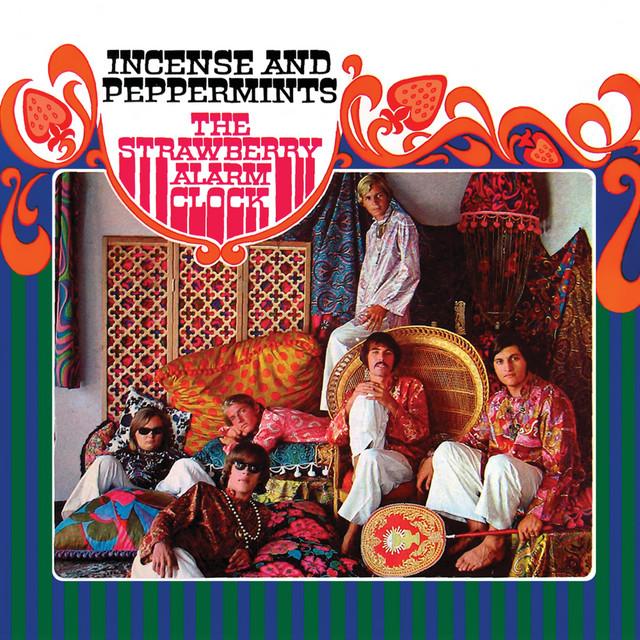
The song swept across the airwaves gradually, fueling a sales wave that built into a number one chart placement over the next three months, in November of 1967. By that time, the group had been prevailed upon to record an album around the single, even though Munford, who'd sung on the hit, wasn't in the group. The album involved a few changes in the lineup, partly growing out of the fact that the existing membership didn't have enough songs to fill an LP. They brought in 18-year-old George Bunnell, a Massachussets-born musician and songwriter who'd previously played in the Something Else and as a member of Chapter Four and the Waterfyrd Traene, and his collaborator, Ohio-born Steve Bartek, who was still in high school at the time. They brought with them a brace of songs, and Bunnell -- who also played bass -- was having trouble getting the group's bassist, Gary Lovetro, to handle the bass parts correctly, and King finally suggested that Bunnell play bass on those songs, while Bartek ended up playing flute on the album. Bunnell was so effective that all agreed that he should become a member, and he agreed after initial hesitation over abandoning his current group. Even Bartek, who was only 16, was offered a chance to join, in recognition of his contribution to the album, but because of his age he needed his parents' permission, which wasn't forthcoming.
Thus, Strawberry Alarm Clock became extremely unusual (if not unique) as a band with two bass players. Additionally, drummer Gene Gunnels, who'd been with the Sixpence since 1965, then left and then returned, and who had played on "Incense and Peppermints," was gone by the time the group got around to doing the album. In his place was Randy Seol, who'd been in the band since 1966 and sang as well as played drums. And just to make the membership situation more complicated, Seol sang on "Incense and Peppermints," and Gunnels would be back to replace him on drums a couple of years later.
The Incense and Peppermints LP ended up coming out astonishingly strong, especially considering the haste with which the album was recorded, and the evolving membership during the recording process. Its number 11 chart placement (the only time one of their LPs actually charted) only affirmed the seemingly charmed nature of the group's work during the last eight months of 1967. This was partly a result of the way that the album was approached -- it was done in a hurry, on the fly, but with a rather bold creative impulse at work within that framework. In addition to the flute provided by Bartek (who also evidently played a few other instruments on the sessions), Wietz, Bunnell, King, and Seol all had credits on the album for "special effects," referring to unusual instruments (or unusual sounds from their usual instruments) that they played. In an interview with Gary James, Bunnell recalled employing several different basses as well as an array of exotic instruments in the studio, including the Vox Mando guitar, which resembled a cut-down 12-string (the instrument was immortalized by Brian Jones in a photo but was seldom actually heard on record). In all, the album proved to be one of the more delightful artifacts of the psychedelic era, a strangely compelling mix of psychedelia, sunshine pop, garage rock, and California harmony.
If the group wasn't in the front rank of rock acts, they'd certainly earned the entrée to run with them. Strawberry Alarm Clock toured nationally for the second half of 1967 and much of 1968 off the success of "Incense and Peppermints," sharing billing at various times with the likes of Country Joe & the Fish, Jimi Hendrix, and the Who; while Bunnell found the latter to be a highlight, for King it was touring with the Beach Boys and Buffalo Springfield that became the high point of his career. They also underwent some more changes. Gary Lovetro, the band's original bassist, a founding member of the group, took the money and ran -- for a 25,000 dollar buyout, he relinquished his position to Bunnell and left the music business. The five-man version of the band cut a follow-up single, "Tomorrow," a collaboration between Weitz and King that reached number 23 nationally in early 1968. The song had lots of great hooks, vocal and instrumental, with a killer feedback-soaked guitar break by King and lyrics that belonged to Weitz this time; along with the rest of the album, it also benefited from the presence of vocal coach Howard Davis, who was brought in to help the members push the harmony singing displayed on Incense and Peppermints to new levels of sophistication. On the single they sounded a bit like the Association crossed with the Who or the Creation (except that, unlike the Association, the Alarm Clock played on their own records). Despite the success of "Tomorrow," the album Wake Up...It's Tomorrow never sold as well as it should have, mostly because Uni Records was late in getting it out, a month after "Tomorrow" had started its run up the charts. The public's attention span was very limited, and 30 days was an eternity in a marketplace crowded with lots of new (and some good) music; it's the difference between individual record stores ordering one or two copies of an LP, versus five or six, and displaying them prominently or at length, versus putting them in the browsers for people to find, and listeners still having the song in mind when they find the album. It ended up selling nowhere near the quarter-of-a-million copies of the first LP, and in many ways marked the sudden downward turn in the band's fortunes.
The whole image of the group as it's been passed down might have been different if Wake Up...It's Tomorrow had sold better. "Incense and Peppermints," for all of its success, was a piece of product produced by many hands, as was the album that followed, while Wake Up...It's Tomorrow was the creation of a cohesive working band, and sounded it, even with the presence of Howard Davis working to make their singing more sophisticated. There were some exotic instruments, to be sure, and some uncredited contributions by the members -- in an interview with Gary James, King said that he played a lot of the bass parts on that record -- but it was much more an expression of the five members, complicated by the sometimes very direct (and sometimes interfering) influence of the record label, which was always looking for the most accessible, commercial sound, and also by some disagreements. Weitz revealed in an interview with Richie Unterberger that he and several of the others had strong reservations about Seol's and Bunnell's compositions, most especially "Nightmare of Percussion" and "Curse of the Witches." Still, the album did fit together in its odd way, and was more of a musicians' record than a producer's record -- and had more people heard it, they might've been remembered in subsequent years as a band and not just as an AM radio phenomenon with a funny name.
It was while working on the album that the group also got pegged for screen immortality, when they were invited to appear in and perform a song in Richard Rush's 1968 drama Psych-Out, set in San Francisco's Haight-Ashbury hippie mecca and starring Susan Strasberg, Jack Nicholson, Dean Stockwell, and Bruce Dern. Produced by Dick Clark, even that opportunity was an outgrowth of the success of "Incense and Peppermints" -- after appearing on Clark's program to mime to their hit, the group got the offer of the movie, which gave King and Freeman a fresh songwriting opportunity, in the form of "Pretty Song from Psych-Out." According to Weitz in an interview with Unterberger, King also served as a technical consultant on the movie when it came to showing Nicholson enough about how to hold and finger a guitar so that he looked as though he were really playing. The song made for one of the better moments on an otherwise already very strong album, and the movie helped shore up the group's seriousness (and their legacy) as an actual band, putting them alongside the Seeds and Boenzee Cryque.
Their record sales never rebounded, however, even with whatever help Psych-Out gave. By late 1968, they were still getting bookings based on "Incense and Peppermints" and "Tomorrow," but not what they had been. The record label, which had allowed the members some autonomy on the prior two albums with regard to songwriting and the overall approach to recording, decided to exercise a lot more control for the third album, The World in a Sea Shell. With softer harmony singing and orchestral accompaniments -- including brass flourishes -- and four songs from outside writers, this was where the Alarm Clock seemed to "sell out" as far as its fans were concerned. Making matters worse was the fact that two of the four outside songs were written by John Carter and Tim Gilbert, the two composers whose names had somehow ended up on "Incense and Peppermints" despite their not having written a note of music (and Gilbert not having written a comma); and this was becoming a sore point as the members, catching their breath after a year's furious activity, realized what two of them had lost -- suddenly, but understandably, the group became more than a little distrustful of the management and the producer who'd signed away at least 50,000 dollars in royalties for two of its members.
The album was even more irksome in its final form, the first side dominated by the outside songs, two of which were written by Carole King and Toni Stern and perfectly fine as songs -- but not really what the group was about; the whole first side sounded like the work of some pop outfit trying to sound psychedelic, and what there was of the Alarm Clock's real sound didn't get heard until the second side. By the time the smoke cleared, Randy Seol and George Bunnell -- who weren't represented on the album at all as songwriters -- had opted out, and the Alarm Clock's position with its fans was even more precarious, especially amid the maneuvering that followed. The group dismissed their longtime manager, Bill Holmes, and in retaliation Holmes organized a "new" Strawberry Alarm Clock around Seol and Bunnell, booking a tour for them and even initially ignoring a restraining order obtained by Weitz, King, and company. By the time the situation was sorted out legally, promoters were afraid to book anyone claiming to be Strawberry Alarm Clock.
The new lineup for the real band included ex-Nightcrawlers guitarist/singer Jimmy Pitman, with King shifting over on an even more permanent basis to playing bass, and, returning to his former spot, drummer Gene Gunnels, replacing interim drummer Marty Katin. The new lineup was almost a new group, in the sense that Pitman's vocals and guitar -- which was heavily blues-inflected, and just plain heavy -- completely altered their sound, and his songs were harder, louder blues-rock numbers than anything the group had ever before attempted to record or perform. This lineup went into the studio one last time on Uni's dime, the label hoping to salvage something from the chaos surrounding the band, and this time were allowed to produce themselves, with Weitz and King stepping up to that chore. And the results weren't bad -- Good Morning Starshine, as it was titled, might not have sounded too much like the Alarm Clock of "Incense and Peppermints" or even "Tomorrow," except on a couple of cuts such as "Small Package" and "Dear Joy," but it was an honest statement of who they were, and even on somewhat disjointed pieces like "Off Ramp Road Tramp," they generated a powerful sound; more to the point, if they weren't exactly making sounds that would endure for the ages, they sounded engaged and involved, which was more than one could say about most of the previous LP. The only exception was the title track, a pop standard from the musical Hair that got to number 87 before it was eclipsed by Oliver's more accessible pop-focused version.
It all proved an exercise in futility as the single failed and the group was now more hamstrung than ever, thanks to their ex-manager's chicanery. With record sales going through the floor and bookings difficult to get, there was no reason for the members to stay together, especially amid the continuing disputes and lawsuits over money. Pitman had gone by the end of 1969, to be replaced by vocalist Paul Marshall while King switched back to lead guitar, and Weitz left soon after, disillusioned with the band and the music business. A quartet version of the band carried on, picking up what bookings could be generated by the name until 1971, led by King. In a classic example of one door closing and another opening in life, it was a little later that he was invited to join Lynyrd Skynyrd, an up-and-coming Southern rock band that had opened for the Alarm Clock in its final phase, and whose lead singer, Ronnie Van Zant, he'd become friendly with. It was with Skynyrd on their classic first three LPs and the tours around them that he would finally get the reward to which his success entitled him. ~ Bruce Eder, Rovi
Viberate is a music analytics platform built for A&Rs, artist managers, labels, booking agents, marketers, and artists.
It helps music professionals track artist growth, analyze audience data, monitor playlist activity, compare artists, follow song performance, and identify opportunities across the music market.
Public artist pages provide a free preview of selected artist data. Paid plans provide access to deeper analytics, historical data, charts, comparisons, playlist tools, exports, alerts, reports, and additional professional features.
Yes. Public Viberate artist pages provide selected artist analytics and music data for free.
Viberate also offers a 7-day free trial of the full platform. A credit card is required to start the trial. The trial includes access to the complete product so users can test deeper artist analytics, historical views, playlist insights, comparisons, charts, exports, alerts, and reporting features before choosing a paid plan.
Viberate provides artist analytics across streaming, playlists, social media, video, radio airplay, songs, and audience markets.
Users can analyze Spotify performance, Spotify and Apple Music playlists, YouTube activity, TikTok and Instagram growth, radio spins, song performance, audience locations, demographics, rankings, and overall artist momentum.
Artist profiles also connect to music charts, similar artists, and comparison tools, helping users benchmark performance and evaluate artists in context.
Viberate updates key artist and track data daily.
For followed artists and tracks, selected data is refreshed multiple times per day. This helps teams monitor playlist changes, streaming movement, audience growth, releases, and campaign performance with more current data.
Update frequency can vary depending on the metric and data source.
Yes. Viberate lets users compare up to five artists side by side across streaming, social media, audience, and engagement metrics.
Users can compare fanbase growth, audience demographics, locations, Spotify performance, social metrics, and other artist data over selected time periods.
Artist comparison can be used for A&R scouting, benchmarking, booking decisions, campaign planning, and evaluating artists with similar audiences or market positions.