Steve Lawrence

Jazz
Vocal jazz
Swing
Mainstream Pop
 Viberate Rank: 73932
 Viberate Rank: 73932
 Monthly ListenersFollowers
 Subscribers
 Followers
 Followers
 FansTop Spotify Songs
| Track | 7-Day Streams | |
|---|---|---|
1 | 32.42K | |
2 | 25.76K | |
3 | 18.59K | |
4 | 9.54K | |
5 | 8.14K |
Top YouTube Videos| Video | 7-Day Views | |
|---|---|---|
1 | 26.27K | |
2 | 3.78K | |
3 | 3.70K | |
4 | 2.78K | |
5 | 1.10K |
Monthly ListenersFeatured in Playlists| Playlist | Followers | |
|---|---|---|
1 |  Old Christmas Music 🎅🏻 Sascha Mazùr | 237.39K |
2 |  autumn in new york Katy Hynek | 66.23K |
3 |  Social Distancing Distortion Matt Berninger | 35.86K |
4 |  bliss’ kitchen Bliss Lundgren | 35.46K |
5 |  Nobody Soundtrack Liam Quinn | 32.61K |
Audience| City | Monthly Listeners | |
|---|---|---|
1 |  | 5.27K |
2 |  | 3.01K |
3 |  | 2.46K |
4 | | 2.35K |
5 | | 2.09K |
See full performance history, audience data, playlist activity, rankings, comparisons, and more in Viberate music analytics. Start with a free trial, then continue with a paid plan.
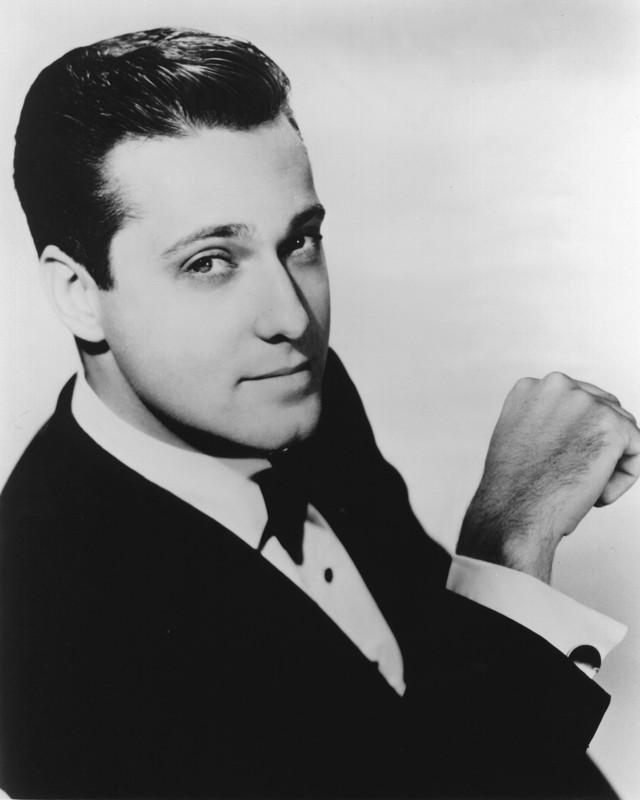
Steve Lawrence’s Spotify BioAs a solo artist and in a duo with his wife Eydie Gorme, Steve Lawrence enjoyed a successful singing career that stretched well past half-a-century. He placed hits in the best-seller charts for over 25 years and used that as the basis for becoming a nightclub and concert headliner. Starting out in the post-swing, pre-rock & roll era of the early '50s, he maintained his support for traditional pop, which found him bucking popular musical trends for much of his career. But in his maturity he could claim to be the handpicked successor to Frank Sinatra as the music's standard-bearer. Along the way, he also found time to write songs, act in films, star in Broadway musicals, and produce Emmy-winning television specials as well as hosting a few TV series.
Lawrence was born Sidney Liebowitz in the Brownsville section of Brooklyn on July 8, 1935. His father, Max Liebowitz, a house painter, was also a cantor, and Lawrence first demonstrated his talent for singing at synagogue as a child. When he… reached puberty and his voice changed, he gave up singing for a few years, but during that time he studied music, learning to play piano and saxophone. He also started writing and arranging songs. He went back to singing in high school and took lessons. He began going into Manhattan to haunt the song publishing companies located in the Brill Building, and he was soon being hired to sing on demonstration records. Taking the first names of two nephews, he changed his name to Steve Lawrence and successfully tried out for the amateur television series Arthur Godfrey Talent Scouts in 1951, winning the show's first prize. He was still only 16 years old when Dewey Bergman of King Records, hearing one of his demos, decided to sign him to a record contract in April 1952. King released eight Steve Lawrence singles over the next two years, and the second of them, a revival of the 1944 hit "Poinciana," reached the charts in June 1952. King also released his first album, Steve Lawrence, in 1953. In July of that year, he was hired to sing on a local television talk show, Tonight!, hosted by Steve Allen. Lawrence was still a regular on the show on September 27, 1954, when it moved to national broadcast five nights a week in the 11:30 p.m. to 1 a.m. slot on NBC, giving him much broader exposure. By then, he had moved from King to Coral Records, a subsidiary of the major label Decca Records. He had also begun to work with another singer on Tonight!, Eydie Gorme. In fact, his second single for Coral, released in 1954, was the first of many duo efforts with Gorme, a disc featuring Bob Merrill's "Make Yourself Comfortable" on one side and Moose Charlap and Carolyn Leigh's "I've Gotta Crow" from the musical Peter Pan on the other.
Lawrence continued to appear on Tonight! in 1955 and 1956 while also continuing to make solo records and duets with Gorme. Coral released his second LP, About That Girl, in 1955 and his third, Songs by Steve Lawrence, in 1956. But he didn't get any chart action until he covered "The Banana Boat Song" on the heels of Harry Belafonte's version in late 1956. The Belafonte original rose into the Top Five in early 1957; Lawrence's made a respectable showing in the Top 20. He quickly went the cover route again, cutting a version of the Buddy Knox record "Party Doll." Knox topped the charts in March 1957; Lawrence got into the Top Five. These hits established him as a name for disc jockeys to remember, and though he did not repeat his success, he managed to place two more singles in the charts over the course of the year, and he branched out from Tonight! to other TV appearances, singing on the General Motors Fiftieth Anniversary Show on November 17, 1957, which was recorded for an LP on RCA Victor.
Steve Allen had left Tonight! in January 1957 to concentrate on his prime-time program, The Steve Allen Show. (Tonight!, of course, went on to become The Tonight Show with successive hosts Jack Paar, Johnny Carson, and Jay Leno.) Lawrence and Gorme had also moved on. They married on December 29, 1957, in Las Vegas. Lawrence continued to place singles in the lower reaches of the charts, and in June 1958 his fourth album, Here's Steve Lawrence, also got into the charts, making the Top 20. He and Gorme were hired to host the summer replacement show for Allen, and for eight weeks in July and August, Steve Allen Presents the Steve Lawrence-Eydie Gorme Show ran on NBC on Sunday nights from eight to nine.
In the fall of 1958, at the age of 23, Lawrence was drafted into the Army for two years. He was stationed at Fort Myer, Virginia, and became the singer in the Army Band-Orchestra. The Army had no objection to his continuing to record while serving, and after issuing a final single and his fifth LP, All About Love, on Coral, he switched to ABC-Paramount Records in early 1959. His third single for the new company, "Pretty Blue Eyes," became his second Top Ten hit at the end of 1959, and its follow-up, "Footsteps," co-written by Brill Building regular Barry Mann and Hank Hunter, became his third in April 1960. ABC-Paramount promptly issued his sixth LP, Swing Softly with Me.
With the completion of his military obligation Lawrence returned to Gorme, and the couple formally launched their performing career as a duo by making club appearances together. They also recorded and released their first full-length duet LP, We Got Us, for ABC-Paramount. (They always made sure to be on the same record label.) The title track won them the 1960 Grammy Award for Best Performance by a Vocal Group. Also in 1960, ABC-Paramount issued a second LP by "Steve & Eydie," as they were often billed, Eydie Gorme and Steve Lawrence Sing the Golden Hits, which, despite its title, was not a compilation; the two were singing "golden hits" originally recorded by others. But their commitment to the label was finished, and they signed to United Artists Records before the end of the year. (The result of all this constant label switching, from King to Coral to ABC-Paramount to United Artists, with more to come, is that a dizzying number of Lawrence and Steve and Eydie compilation albums clutter the discography.)
United Artists released a couple of Lawrence LPs, The Steve Lawrence Sound and Lawrence Goes Latin, still in 1960, as well as a couple of singles. But it was Lawrence's third solo 45 for UA, "Portrait of My Love," that finally took off for him in the winter of 1961 and became his fourth Top Ten hit in May. It also earned him a Grammy nomination for Best Solo Vocal Performance, Male. In August, his Portrait of My Love LP became his second to reach the charts. Meanwhile, the single's follow-up, "My Claire de Lune," while not making much of an impression on the Hot 100, was Lawrence's first of what would ultimately be 30 recordings to reach Billboard's newly created Easy Listening chart, where it hit number 13.
Lawrence understandably jumped at the opportunity to sign his wife and himself to the prestigious Columbia Records in 1962, even though it marked his fifth label affiliation in ten years. His first couple of Columbia singles were disappointing, but the third, Brill Building songwriters Gerry Goffin and Carole King's "Go Away Little Girl," was a smash, reaching number one in January 1963 and going gold. That launched Lawrence's most successful year as a recording artist. The following month, Winners! became his third chart LP (in Cash Box magazine, it was ranked in the Top Ten, though Billboard only awarded it a peak at number 27). "Don't Be Afraid, Little Darlin'" (written by Barry Mann and Cynthia Weil), the follow-up to "Go Away Little Girl," was a Top 40 hit, as was Lawrence's next single, Goffin and King's "Poor Little Rich Girl." Then, Steve and Eydie hit the Top 40 with Goffin and King's "I Want to Stay Here." "Walking Proud," another Goffin-King song, was another Top 40 solo hit for Lawrence, and still another one, "I Can't Stop Talking About You," performed by Steve and Eydie, was in the charts in December, peaking in the Top 40 on February 8, 1964. The next day, the Beatles appeared on The Ed Sullivan Show.
The British Invasion led by the Beatles would marginalize performers like Lawrence in the charts, of course, but by the time the invasion began, he was already moving on to another phase in his career. He was in rehearsals to star in his first Broadway musical, What Makes Sammy Run?, based on the scathing novel about Hollywood written by Budd Schulberg, with songs by Ervin Drake. The show opened on February 27, 1964, to an enthusiastic response. The cast album reached number 28 in the Billboard chart, and Lawrence won the Drama Critics Circle Award for his performance, also earning a Tony nomination. While giving eight performances a week in the show, he did not slow down as a record-maker. His Academy Award Losers LP, arranged and conducted by Billy May, had come out and briefly made the charts before the musical opened in February 1964. The Top 40 was now out of the question for him, but he did manage to place two singles, "Everybody Knows" and "Yet...I Know (Et Pourtant)," in the Hot 100, as well as an Everybody Knows LP in the album chart. There was also a Steve & Eydie Christmas album, That Holiday Feeling, and an acting role in the TV movie Carol for Another Christmas in December.
Maybe it was all too much. In May 1965, Schulberg and the producers of What Makes Sammy Run? publicly criticized Lawrence for having missed 21 performances of the show since Christmas. He publicly shot back that he had been sick and that he had taken some of his absences without pay. The show closed June 12, 1965, after 540 performances. Typically, however, Lawrence was ready to move on, signing to CBS-TV for his own variety series. The Steve Lawrence Show premiered on Monday night, September 13, 1965, at ten o'clock. It lasted only until December, but there was also an album called The Steve Lawrence Show that made the charts.
Lawrence and Gorme continued to record for Columbia with diminishing commercial results, and to perform live and on television in 1966 and 1967. In late 1967, they began working on a Broadway musical that would star both of them, Golden Rainbow. The show was based on Arnold Schulman's play A Hole in the Head, which previously had been adapted into a film starring Frank Sinatra. The songs were by Walter Marks, and they included the anthemic "I've Gotta Be Me," which Lawrence recorded for a single that reached the Top Ten of the Easy Listening chart in December. (The record did not chart on the Hot 100, and a year later, Sammy Davis, Jr. would cover the song for a Top 20 pop hit, so that it came to be associated with him instead of Lawrence.) By now, Lawrence and Gorme were recording for CBS Records' newly formed Calendar subsidiary as well as Columbia.
Golden Rainbow opened on February 4, 1968, for a run of 385 performances, concluding on January 12, 1969. The original Broadway cast album was released on Calendar, for which Lawrence and Gorme also made singles in 1968, but by the end of the year they had switched to RCA Victor Records. In 1969, RCA released their last two chart LPs, a concept album (or "original albumusical," as it was billed) composed by Gordon Jenkins and called What It Was, Was Love and Real True Lovin'. There were more RCA singles and albums through 1971, when the couple moved to MGM Records. More modest-selling LPs and singles followed through 1973, including Steve & Eydie's last Hot 100 single, "We Can Make It Together," in September 1972, on which they were joined by the Osmonds. Singles deals produced releases on 20th Century, United Artists, and Warner Bros. through the end of the decade, and in 1979, they even adopted a pseudonym, Parker & Penny, to score an entry on the Adult Contemporary chart with "Hallelujah."
But if they had gone cold as a recording act, Lawrence and Gorme remained headliners on the nightclub circuit and TV stars. Thanksgiving 1975 brought the television broadcast of Our Love Is Here to Stay, their tribute to George Gershwin, the soundtrack to which was released as a two-LP set. Steve and Eydie Celebrate Irving Berlin, broadcast on August 22, 1978, won multiple Emmy Awards, including one for Outstanding Comedy-Variety or Music Program (Special or Series) that went to Lawrence as the show's co-executive producer and co-star. In 1981, Lawrence briefly returned to the record racks with Take It on Home, his first solo LP in eight years, on the tiny Applause Records label. But he spent more of his time in the '80s branching out from singing into film acting (The Blues Brothers [1980], The Lonely Guy [1984]) and television work, notably his co-hosting with Don Rickles of the 1984 series Foul-Ups, Bleeps & Blunders. In 1989, he launched the GL Music label with a new Steve & Eydie album, Alone Together, and over the years began to reissue the couple's old albums on CD.
Lawrence and Gorme opened for Frank Sinatra on his Diamond Jubilee tour of 1990-1991, marking Sinatra's 75th birthday. It cemented Lawrence's warm relationship with Sinatra, who gave Lawrence his book of arrangements upon his retirement. Lawrence used the charts to record Steve Lawrence Sings Sinatra: A Musical Tribute to the Man and His Music, which GL Music released in January 2003. The album was produced by Lawrence and Gorme's son, film composer David Lawrence. (Their younger son, Michael, had died in 1986 at 23.) By then settled in Las Vegas and accepting fewer engagements, Lawrence and Gorme nevertheless booked a series of performances in 2003 to promote the album, and their One More for the Road tour continued into 2004. In 2005, the Varèse Sarabande label found three unreleased tracks from the early years, collected his early hits, and released the collection All My Love Belongs to You. Eydie Gorme died in Las Vegas in August 2013 at the age of 84. Steve Lawrence passed away on March 7, 2024, at the age of 88. ~ William Ruhlmann, Rovi
Viberate is a music analytics platform built for A&Rs, artist managers, labels, booking agents, marketers, and artists.
It helps music professionals track artist growth, analyze audience data, monitor playlist activity, compare artists, follow song performance, and identify opportunities across the music market.
Public artist pages provide a free preview of selected artist data. Paid plans provide access to deeper analytics, historical data, charts, comparisons, playlist tools, exports, alerts, reports, and additional professional features.
Yes. Public Viberate artist pages provide selected artist analytics and music data for free.
Viberate also offers a 7-day free trial of the full platform. A credit card is required to start the trial. The trial includes access to the complete product so users can test deeper artist analytics, historical views, playlist insights, comparisons, charts, exports, alerts, and reporting features before choosing a paid plan.
Viberate provides artist analytics across streaming, playlists, social media, video, radio airplay, songs, and audience markets.
Users can analyze Spotify performance, Spotify and Apple Music playlists, YouTube activity, TikTok and Instagram growth, radio spins, song performance, audience locations, demographics, rankings, and overall artist momentum.
Artist profiles also connect to music charts, similar artists, and comparison tools, helping users benchmark performance and evaluate artists in context.
Viberate updates key artist and track data daily.
For followed artists and tracks, selected data is refreshed multiple times per day. This helps teams monitor playlist changes, streaming movement, audience growth, releases, and campaign performance with more current data.
Update frequency can vary depending on the metric and data source.
Yes. Viberate lets users compare up to five artists side by side across streaming, social media, audience, and engagement metrics.
Users can compare fanbase growth, audience demographics, locations, Spotify performance, social metrics, and other artist data over selected time periods.
Artist comparison can be used for A&R scouting, benchmarking, booking decisions, campaign planning, and evaluating artists with similar audiences or market positions.