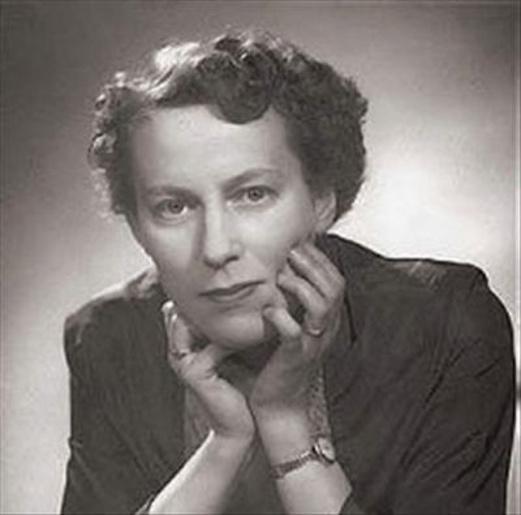
Ruth Gipps

Classical
Chamber Music
Orchestral
 Viberate Rank: 469581
 Viberate Rank: 469581
 Monthly ListenersFollowers
 Subscribers
 Followers
 Followers
 FansTop Spotify SongsTop YouTube VideosMonthly ListenersFeatured in Playlists
| Playlist | Followers | |
|---|---|---|
1 |  Classical Reading Spotify | 634.33K |
2 |  Women of Classical Spotify | 102.00K |
3 |  NPR Classical NPR Music | 14.43K |
4 |  Chill Classical unCLASSIFIED | 9.01K |
5 |  Kalm met Klassiek NPO Klassiek | 4.96K |
Audience| City | Monthly Listeners | |
|---|---|---|
1 | | 236 |
2 |  | 131 |
3 |  | 94 |
4 |  | 92 |
5 |  | 87 |
See full performance history, audience data, playlist activity, rankings, comparisons, and more in Viberate music analytics. Start with a free trial, then continue with a paid plan.
Ruth Gipps’ Spotify BioComposer Ruth Gipps was a prolific and original figure who was only sparsely appreciated during her lifetime, but she has been the subject of renewed interest in the 21st century. She was also active as a conductor and, early in her career, as a pianist and oboist.
Gipps was born February 21, 1921, in Bexhill-on-Sea, England. Her mother was a music school principal her father operated a cigarette business. Gipps started piano lessons with her mother at four, after sitting down at the piano and playing a Grieg waltz with no instruction, and was soon giving concerts. She also began composing as a child, and in 1929, she performed her own work, The Fairy Waltz, at the Brighton Festival. A publisher, Forsyth, bought it on the spot for a guinea and a half (about $65 in 2021 dollars). Gipps entered the Royal College of Music at 15, studying oboe with Harold Shepley and later Leon Goossens, piano with Arthur Alexander, and composition with Gordon Jacob and Ralph Vaughan Williams. Gipps faced… discrimination due to her gender at various points and was widely described as adopting a tough, truculent attitude in the face of it; on being told that the Brahms Piano Concerto No. 2 in B flat major, Op. 83, was too difficult for a woman, she answered that she would learn any other concerto in a month and was, in turn, told that she was impolite. At 26, she became the youngest woman up to that point to receive a British doctorate in composition, submitting The Cat, a cantata for alto, baritone, double mixed chorus, and orchestra.
In her early 30s, lingering effects from a hand injury Gipps had suffered as a preteen put an end to her career as a performer. After that, she continued to conduct but focused most of her energy on composition. Gipps wrote five symphonies, the works she herself valued most highly; they received performances and favorable notice in several publications but did not consistently enter the repertory. Gipps also composed seven concertos, a great deal of chamber music (often whimsically titled, such as The Sea-Weed Song, for English horn and piano, Op. 12c), choral music, songs, and keyboard works. Beginning in 1948, Gipps conducted the City of Birmingham Choir for many years. Gipps was the founder of the London Repertoire Orchestra (in 1955) and the Chanticleer Orchestra (in 1961); the latter focused on the work of living composers and aimed to expose young musicians to a wide variety of music. She was active as an educator, teaching at Trinity College, London (1959 to 1966) and the Royal College of Music (1967 to 1977). Gipps continued composing into old age; her Sonata for alto trombone (or horn) and piano, Op. 80, appeared in 1995. Gipps died in Framfield, Sussex, on February 23, 1999. Recordings of more than 20 of her works were in the catalog as of the early 2020s, and her music was benefiting from the increased exposure given the work of women composers. ~ James Manheim, Rovi
Viberate is a music analytics platform built for A&Rs, artist managers, labels, booking agents, marketers, and artists.
It helps music professionals track artist growth, analyze audience data, monitor playlist activity, compare artists, follow song performance, and identify opportunities across the music market.
Public artist pages provide a free preview of selected artist data. Paid plans provide access to deeper analytics, historical data, charts, comparisons, playlist tools, exports, alerts, reports, and additional professional features.
Yes. Public Viberate artist pages provide selected artist analytics and music data for free.
Viberate also offers a 7-day free trial of the full platform. A credit card is required to start the trial. The trial includes access to the complete product so users can test deeper artist analytics, historical views, playlist insights, comparisons, charts, exports, alerts, and reporting features before choosing a paid plan.
Viberate provides artist analytics across streaming, playlists, social media, video, radio airplay, songs, and audience markets.
Users can analyze Spotify performance, Spotify and Apple Music playlists, YouTube activity, TikTok and Instagram growth, radio spins, song performance, audience locations, demographics, rankings, and overall artist momentum.
Artist profiles also connect to music charts, similar artists, and comparison tools, helping users benchmark performance and evaluate artists in context.
Viberate updates key artist and track data daily.
For followed artists and tracks, selected data is refreshed multiple times per day. This helps teams monitor playlist changes, streaming movement, audience growth, releases, and campaign performance with more current data.
Update frequency can vary depending on the metric and data source.
Yes. Viberate lets users compare up to five artists side by side across streaming, social media, audience, and engagement metrics.
Users can compare fanbase growth, audience demographics, locations, Spotify performance, social metrics, and other artist data over selected time periods.
Artist comparison can be used for A&R scouting, benchmarking, booking decisions, campaign planning, and evaluating artists with similar audiences or market positions.