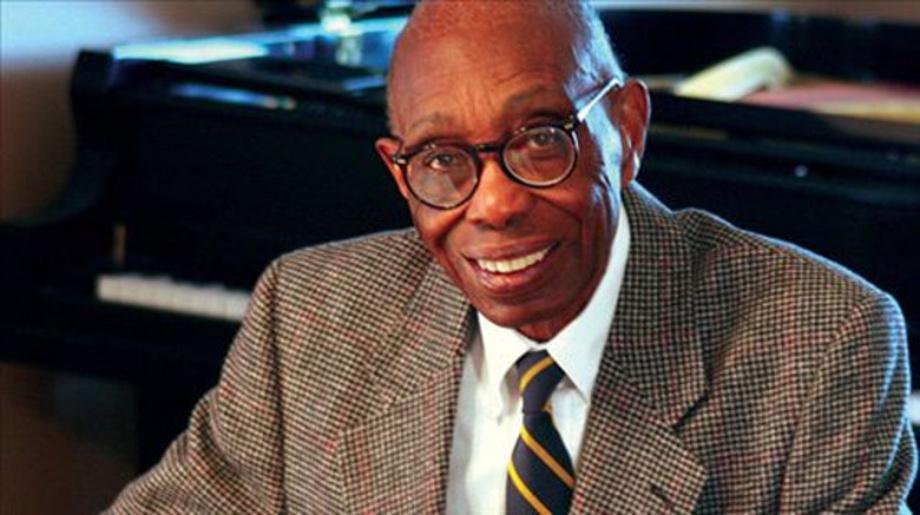
George Walker

Classical
Classical Crossover
 Viberate Rank: 334190
 Viberate Rank: 334190
 Monthly ListenersFollowers
 Subscribers
 Followers
 Followers
 FansTop Spotify SongsTop YouTube VideosMonthly ListenersFeatured in Playlists
| Playlist | Followers | |
|---|---|---|
1 |  druk soundtrack Karen Sønderborg Kristensen | 25.80K |
2 |  NPR Classical NPR Music | 14.43K |
3 |  Chamber Music for Self-Renewal synergy555 | 4.21K |
4 | Black Classical Composers Kat Fox | 3.05K |
5 |  Fest Sange Alle Kender🥂🎉 Marius Frandsen | 2.88K |
Audience| City | Monthly Listeners | |
|---|---|---|
1 |  | 176 |
2 |  | 112 |
3 |  | 94 |
4 | | 93 |
5 |  | 81 |
See full performance history, audience data, playlist activity, rankings, comparisons, and more in Viberate music analytics. Start with a free trial, then continue with a paid plan.
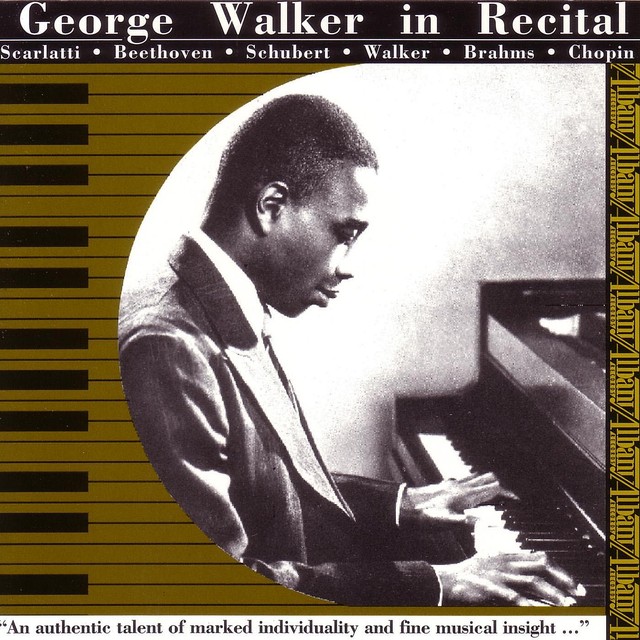
George Walker’s Spotify BioAlthough he started out as a highly promising concert pianist in a grand style (some of his most prominent concerts featured concertos by Tchaikovsky, Rachmaninov, and Brahms), George Walker was writing substantial music from his mid-twenties. By the time he was 40, he had solidly established himself as a flexible, fully contemporary composer and it is on his large catalog of works produced from the early '50s to about 2010 that his reputation will rest.
He studied piano throughout childhood, going on to obtain degrees in performance from Oberlin (Bachelor of music, 1941) and the Eastman School of Music (Doctor of musical arts, 1957). He also studied at the Curtis Institute and with Nadia Boulanger at the American Conservatory, Fontainbleau. His teachers included Rudolf Serkin; Robert Casadesus; Mieczyslaw Horszowski; and in chamber music, Gregor Piatigorsky and William Primrose.
Walker seemed destined for a fine career at the keyboard. He won acclaim with his Town Hall debut in New York… in 1945 and was the first black musician to play there. Also that year, he was the first African American instrumentalist to win the Philadelphia Orchestra auditions, which led to a performance of Rachmaninov's Piano Concerto No. 3 with that orchestra and Eugene Ormandy. He toured America and Europe as a soloist into the '50s. During this period, his presence as a black man on the classical stage surely held curiosity value, but his performances did not create the opportunities he'd hoped for or as tours did for others. However, it was through his work as a pianist and subsequently as a composer that the African American presence in classical music began to seem unexceptional. From the mid-'50s on, his teaching career included short stints at various colleges and long-term affiliations with Smith College (1961-1968) and Rutgers University (1969-1992, including two years chairing the music department).
"I believe that music is above race," Walker once said, and his own music does not strongly position him as an African American composer. His mature style grafts serialism onto neo-Classical forms, binding the two with complex rhythms, Hindemithian counterpoint, strong timbral contrasts, and occasional evocations of black folk music through reference to blues, spirituals, and jazz. He won the Pulitzer Prize (the first living black composer to do so) in 1996 for Lilacs, a work for soprano or tenor and orchestra, commissioned by the Boston Symphony.
Although he was an adept orchestrator, his acknowledged masterpiece is for solo piano: the 1956 Sonata No. 2, written as his doctoral dissertation for Eastman. It's a short work that displays Walker's fascination with classical forms (variations on a ground bass, sonatina), while insinuating a jazzy syncopation into the scherzo. It's not an entirely characteristic work, though, in its fairly conservative harmony. The same can be said of his most widely heard orchestral piece, the Lyric for Strings, a 1946 transcription of the second movement of his String Quartet No. 1. Two better examples of Walker's mature voice date from 1975: Piano Sonata No. 3 and Music for Brass (Sacred and Profane). Both are angular works reflecting Walker's fascination with sonority. His more populist but still dissonant mode is well-represented by 1990's Folk Songs for Orchestra.
Walker continued to compose throughout his 80s, while Albany Records worked to document a large portion of his œuvre before his death at the age of 96 in 2018.
Viberate is a music analytics platform built for A&Rs, artist managers, labels, booking agents, marketers, and artists.
It helps music professionals track artist growth, analyze audience data, monitor playlist activity, compare artists, follow song performance, and identify opportunities across the music market.
Public artist pages provide a free preview of selected artist data. Paid plans provide access to deeper analytics, historical data, charts, comparisons, playlist tools, exports, alerts, reports, and additional professional features.
Yes. Public Viberate artist pages provide selected artist analytics and music data for free.
Viberate also offers a 7-day free trial of the full platform. A credit card is required to start the trial. The trial includes access to the complete product so users can test deeper artist analytics, historical views, playlist insights, comparisons, charts, exports, alerts, and reporting features before choosing a paid plan.
Viberate provides artist analytics across streaming, playlists, social media, video, radio airplay, songs, and audience markets.
Users can analyze Spotify performance, Spotify and Apple Music playlists, YouTube activity, TikTok and Instagram growth, radio spins, song performance, audience locations, demographics, rankings, and overall artist momentum.
Artist profiles also connect to music charts, similar artists, and comparison tools, helping users benchmark performance and evaluate artists in context.
Viberate updates key artist and track data daily.
For followed artists and tracks, selected data is refreshed multiple times per day. This helps teams monitor playlist changes, streaming movement, audience growth, releases, and campaign performance with more current data.
Update frequency can vary depending on the metric and data source.
Yes. Viberate lets users compare up to five artists side by side across streaming, social media, audience, and engagement metrics.
Users can compare fanbase growth, audience demographics, locations, Spotify performance, social metrics, and other artist data over selected time periods.
Artist comparison can be used for A&R scouting, benchmarking, booking decisions, campaign planning, and evaluating artists with similar audiences or market positions.