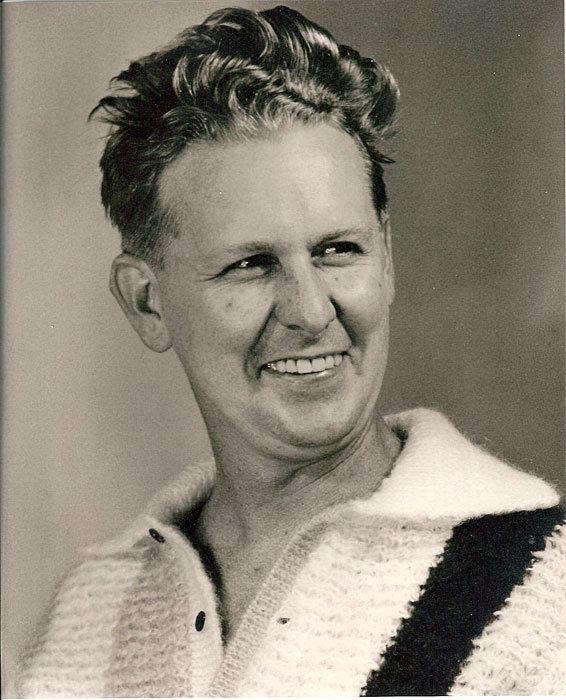
Ron Grainer

Classical
Classical Crossover
Downtempo
 Viberate Rank: 281726
 Viberate Rank: 281726
 Monthly ListenersFollowers
 Subscribers
 Followers
 Followers
 FansTop Spotify Songs
| Track | 7-Day Streams | |
|---|---|---|
1 | 3.55K | |
2 | 2.33K | |
3 | 815 | |
4 | 613 | |
5 | 270 |
Top YouTube VideosMonthly ListenersFeatured in Playlists| Playlist | Followers | |
|---|---|---|
1 | Best of Doctor Who Soundtrack Abdelilah El Aissaoui | 19.37K |
2 |  Doctor Who Season 1 - 9 + Specials David Álvarez Llop | 18.86K |
3 | TV Theme Songs melodiousindulgence | 13.42K |
4 | TV theme tunes Leah Webster | 9.65K |
5 | ADVENTURE MUSIC Stian Wivestad | 6.00K |
Audience| City | Monthly Listeners | |
|---|---|---|
1 | | 583 |
2 | | 244 |
3 |  | 206 |
4 | | 181 |
5 | | 159 |
See full performance history, audience data, playlist activity, rankings, comparisons, and more in Viberate music analytics. Start with a free trial, then continue with a paid plan.
Ron Grainer’s Spotify BioRon Grainer was something of a fixture in pop music in England during the 1960s, and as a composer at least two of his creations -- the title theme from Doctor Who and the title theme for The Prisoner -- remain known to millions of people around the world, decades after his death. Born in Queensland, Australia, he started playing the violin at age four and subsequently took up the piano. After studying at the Sydney Conservatory of Music, he decided to go to England to pursue a career in classical music, but once there he found himself sidetracked into popular music. His skills as a pianist placed him in great demand as an accompanist, to homegrown talent and also to visiting singers such as Guy Mitchell, Frankie Laine, and Billy Eckstine, among others.
It was from his work as an accompanist and rehearsal pianist with the BBC that led to his first engagement as a composer, of music for plays presented by the radio and television service. That, in turn, led Grainer to his first… assignment in scoring a regular television series, Maigret, based on the books by Georges Simenon, the title music from which -- utilizing an array of then little-heard, archaic instruments, including the harpsichord and the clavichord -- became a hit composition and earned Grainer the first of three Ivor Novello Awards for his work in popular music.
With that success behind him, Grainer was suddenly in heavy demand as a television composer, and his later successes included Comedy Playhouse and Steptoe and Son, the latter one of the most important and influential British comedies of the 1960s, which also earned Grainer his second Novello Award. He also moved into film scoring and into producing rock & roll music at approximately this same time. By sheer chance, he discovered an instrumental rock & roll band from Bristol called the Eagles -- not to be confused with the California-based outfit of the next decade -- whom he got signed to Pye Records and produced for the next couple of years.
He also put them into a 1962 juvenile delinquency drama called Some People, which Grainer was scoring. The soundtrack included a song entitled "Some People," which was released as a single by the Eagles (with singer Valerie Mountain on the vocals) as well as a handful of other artists. The Eagles' rendition was the most interesting, however, displaying the composer's penchant for unusual sounds, including a break played on a calliope -- the latter, in fact, was sort of the good-natured antecedent to the ocarina break on the Troggs' "Wild Thing." With his penchant for unusual sounds, Grainer could easily have been a competitor to the likes of Joe Meek, but he never pursued pop music activity, as television and movie soundtracks -- at which he was already proficient and writing profitably -- held his attention from 1964 onward.
Grainer's first crack at musical immortality came in 1963 when he was assigned to write the music for a new science fiction/adventure series entitled Doctor Who. Grainer went to town on this title theme, indulging his taste for unusual instrumentation to the fullest -- it was a mysterious yet exciting piece of music made up of what seemed like unearthly sounds, most notably the Ondes Martinot, a close cousin to the theremin, and it remained the title theme (with updates in the arrangement) for the quarter-century run of the series. It's still so familiar in the 21st century that its opening bars are instantly recognizable.
Grainer continued writing film and television music for the next decade, and showed a unique ability to absorb and assimilate the characteristics of the changing popular music around him. His main title theme for the espionage/adventure series Man in a Suitcase was thoroughly in his own style, but it also displayed characteristics resembling the Beatles' "Good Day Sunshine" and the Tremeloes' "Suddenly You Love Me." His big triumph, however, was the title theme to The Prisoner -- ironically, his proposed music was initially rejected by creator/star Patrick McGoohan, until he speeded it up. Coupling romping horns, jangling electric guitar, and a relentless beat, it was a striking opening to the 17 episodes of the series, and was even quoted in an homage to the series in an episode of The Simpsons 30 years later, and Grainer himself reused the same thematic material in his score for the science fiction thriller The Omega Man (1971).
Grainer's health had been an issue since the early '60s, when his eyesight had begun failing. In the early '70s, he developed further vision problems and left his career behind for several years' rest. He returned to composing at the end of the 1970s, most notably on the Roald Dahl-inspired series Tales of the Unexpected. He passed away early in 1981 of complications from spinal cancer. ~ Bruce Eder, Rovi
Viberate is a music analytics platform built for A&Rs, artist managers, labels, booking agents, marketers, and artists.
It helps music professionals track artist growth, analyze audience data, monitor playlist activity, compare artists, follow song performance, and identify opportunities across the music market.
Public artist pages provide a free preview of selected artist data. Paid plans provide access to deeper analytics, historical data, charts, comparisons, playlist tools, exports, alerts, reports, and additional professional features.
Yes. Public Viberate artist pages provide selected artist analytics and music data for free.
Viberate also offers a 7-day free trial of the full platform. A credit card is required to start the trial. The trial includes access to the complete product so users can test deeper artist analytics, historical views, playlist insights, comparisons, charts, exports, alerts, and reporting features before choosing a paid plan.
Viberate provides artist analytics across streaming, playlists, social media, video, radio airplay, songs, and audience markets.
Users can analyze Spotify performance, Spotify and Apple Music playlists, YouTube activity, TikTok and Instagram growth, radio spins, song performance, audience locations, demographics, rankings, and overall artist momentum.
Artist profiles also connect to music charts, similar artists, and comparison tools, helping users benchmark performance and evaluate artists in context.
Viberate updates key artist and track data daily.
For followed artists and tracks, selected data is refreshed multiple times per day. This helps teams monitor playlist changes, streaming movement, audience growth, releases, and campaign performance with more current data.
Update frequency can vary depending on the metric and data source.
Yes. Viberate lets users compare up to five artists side by side across streaming, social media, audience, and engagement metrics.
Users can compare fanbase growth, audience demographics, locations, Spotify performance, social metrics, and other artist data over selected time periods.
Artist comparison can be used for A&R scouting, benchmarking, booking decisions, campaign planning, and evaluating artists with similar audiences or market positions.