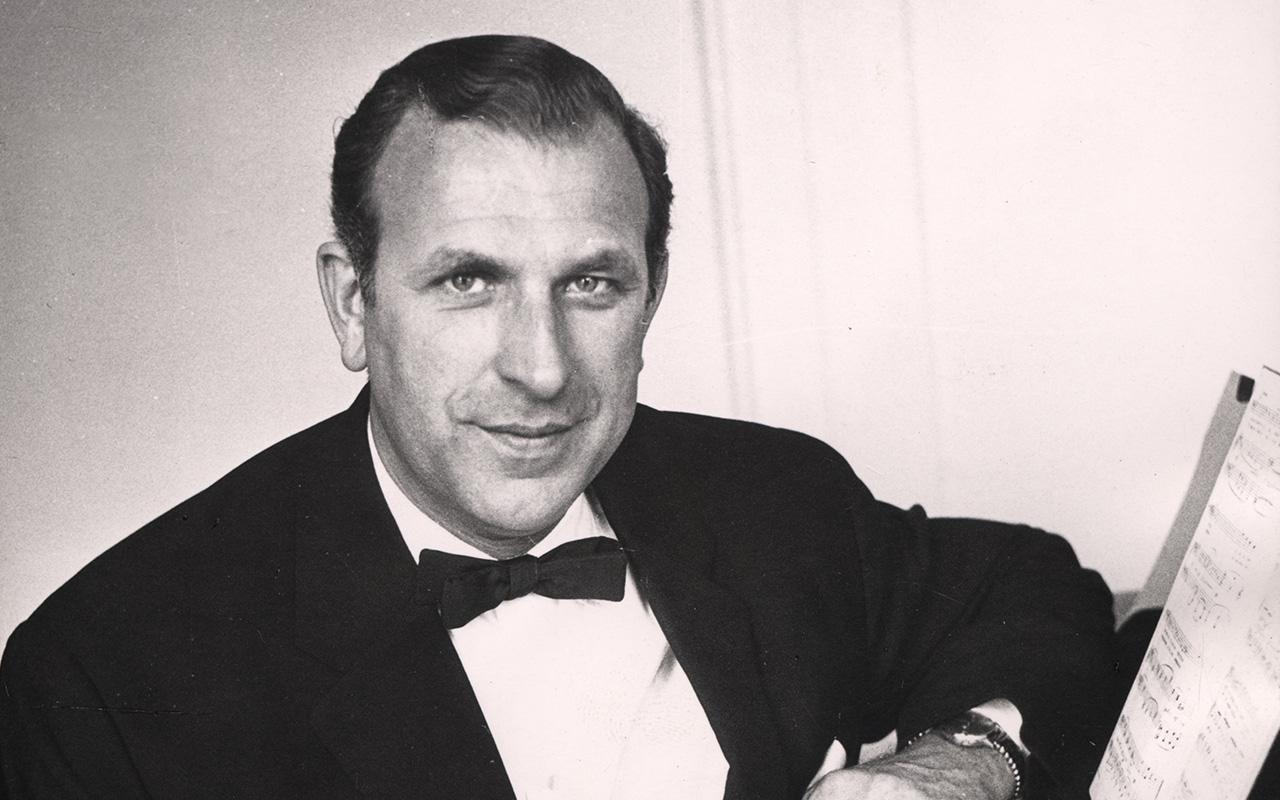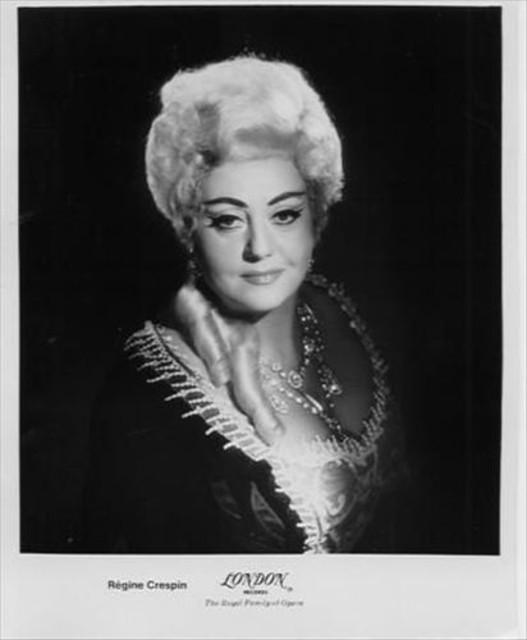
Régine Crespin

Classical
Opera
 Viberate Rank: 334958
 Viberate Rank: 334958
 Monthly ListenersFollowers
 Subscribers
 Followers
 Followers
 FansTop Spotify Songs
| Track | 7-Day Streams | |
|---|---|---|
1 | 695 | |
2 | 695 | |
3 | 663 | |
4 | 475 | |
5 | 475 |
Top YouTube VideosMonthly ListenersFeatured in Playlists| Playlist | Followers | |
|---|---|---|
1 |  This Is Wagner Spotify | 113.02K |
2 |  1000 Recordings to Hear Before You Die (Tom Moon): Album Index Ulysses' Classical | 94.29K |
3 |  Romantic Classical E. McNeil | 9.47K |
4 | Musica para ambientar la fiesta Daniel Catalán | 6.83K |
5 | 5 Minutes nytimes | 4.67K |
Audience| City | Monthly Listeners | |
|---|---|---|
1 | | 183 |
2 |  | 168 |
3 |  | 157 |
4 |  | 119 |
5 | | 94 |
See full performance history, audience data, playlist activity, rankings, comparisons, and more in Viberate music analytics. Start with a free trial, then continue with a paid plan.
Régine Crespin’s Spotify BioNotwithstanding her great success in the German repertory, Régine Crespin was quintessentially a French artist. With an unmistakable sensuality betraying her origins in Mediterranean France, she was guided by an unfailing sense of elegance. Whether as Kundry, the Marschallin, Carmen, Didon, Amelia in Un ballo in maschera, or Sieglinde, her large, lush voice was deployed with refined abandon. Her top register, powerful and soaring when it was working as the singer wished, sometimes emerged congested, as tones that began as clarion would cloud over and lose their cutting edge. As it became increasingly problematic, Crespin looked toward roles only equivocally soprano, where she could rely on the luxurious amplitude of her middle and lower registers. Her Carmen, presented at the Metropolitan Opera in 1975 after a period of vocal restudy and a loss of weight, was distinctive for its subtle danger and meticulous delivery of text and vocal line.
Following studies at the Paris Conservatoire… with Georges Jouatte and celebrated bass Paul Cabanel, Crespin made her debut in 1950 singing Elsa at Mulhouse. In August of that same year, she appeared for the first time at the Paris Opéra, the role once again being Elsa. Despite the self-evident resplendence of her voice and art, little else happened in the French capital and it was left to provincial theaters to witness the advance of Crespin's career. There, she grew into mastery of both the expected lyric/dramatic roles in the French repertory and spinto weight characters in Italian and German operas. With a major success in Paris as Reiza in Weber's Oberon, as well as in Poulenc's Dialogues des Carmélites (as Madame Lidoine), Crespin's reputation began to expand to other countries. In 1958, she appeared at Bayreuth, fulfilling Wieland Wagner's wish for a Kundry as Mediterranean temptress. Audiences at England's Gyndebourne Festival responded warmly to Crespin's womanly Marschallin in 1959 and Vienna hailed her passionate Sieglinde that same year. A Covent Garden debut in 1960 brought renewed acquaintance with her Marschallin and gained her still more ardent followers.
Chicago claimed Crespin for her American debut in 1962 and the reviews for her Tosca were adulatory. Critic Claudia Cassidy described her as "a singing actress of the first rank. She has what Callas has -- intelligence, a born stage presence, subtlety, class, and a big spinto voice of individual timbre." Also in 1962 were debuts in Buenos Aires (where she sang such French roles as Cassandre and Didon in Berlioz's Les Troyens, Fauré's Pénélope, and the title role in Gluck's Iphigénie en Tauride) and New York. On November 19, Crespin made her first appearance at the Metropolitan Opera as Marschallin in a production enlisting Lotte Lehmann, that incomparable Marschallin of yesteryear, as director. Crespin was received enthusiastically and Lehmann herself later recalled that her younger colleague had begun rehearsals as rather "French," but had become "a typical Viennese woman" by the first performance. Lehmann, in her book on the operas of Richard Strauss, deemed Crespin "a magnificent Marschallin."
Crespin's San Francisco debut in 1966 found her shrill as Elisabeth in Tannhäuser, but both vocally comfortable and dramatically on point in the dual roles of Cassandre and Didon. In 1967, Crespin sang Marschallin in San Francisco.
By the early 1970s, vocal problems had dictated a move to roles with a lower tessitura, such as Carmen, Charlotte, and Madame de Croissy. Crespin retired in 1989.
Viberate is a music analytics platform built for A&Rs, artist managers, labels, booking agents, marketers, and artists.
It helps music professionals track artist growth, analyze audience data, monitor playlist activity, compare artists, follow song performance, and identify opportunities across the music market.
Public artist pages provide a free preview of selected artist data. Paid plans provide access to deeper analytics, historical data, charts, comparisons, playlist tools, exports, alerts, reports, and additional professional features.
Yes. Public Viberate artist pages provide selected artist analytics and music data for free.
Viberate also offers a 7-day free trial of the full platform. A credit card is required to start the trial. The trial includes access to the complete product so users can test deeper artist analytics, historical views, playlist insights, comparisons, charts, exports, alerts, and reporting features before choosing a paid plan.
Viberate provides artist analytics across streaming, playlists, social media, video, radio airplay, songs, and audience markets.
Users can analyze Spotify performance, Spotify and Apple Music playlists, YouTube activity, TikTok and Instagram growth, radio spins, song performance, audience locations, demographics, rankings, and overall artist momentum.
Artist profiles also connect to music charts, similar artists, and comparison tools, helping users benchmark performance and evaluate artists in context.
Viberate updates key artist and track data daily.
For followed artists and tracks, selected data is refreshed multiple times per day. This helps teams monitor playlist changes, streaming movement, audience growth, releases, and campaign performance with more current data.
Update frequency can vary depending on the metric and data source.
Yes. Viberate lets users compare up to five artists side by side across streaming, social media, audience, and engagement metrics.
Users can compare fanbase growth, audience demographics, locations, Spotify performance, social metrics, and other artist data over selected time periods.
Artist comparison can be used for A&R scouting, benchmarking, booking decisions, campaign planning, and evaluating artists with similar audiences or market positions.