Quartet San Francisco

Classical
Classical Crossover
Chamber Music
 Viberate Rank: 362150
 Viberate Rank: 362150
 Monthly ListenersFollowers
 Subscribers
 Followers
 Followers
 FansTop Spotify Songs
| Track | 7-Day Streams | |
|---|---|---|
1 | 2.38K | |
2 | 233 | |
3 | 117 | |
4 | 44 | |
5 | 44 |
Top YouTube VideosMonthly ListenersFeatured in Playlists| Playlist | Followers | |
|---|---|---|
1 |  Violent, aggressive and dramatic classical music Hanna 🌻 | 221.52K |
2 |  Claire de Lune Mariana Peña | 21.85K |
3 |  Moonrise Library🗝📜🤎🖋️💼 Music for studying and relaxing Sunrise Coffee | 8.93K |
4 | Balkan&Gipsy&Folk Music Jose Enrique Blanquer Carbonell | 5.63K |
5 |  Chamber Music for Self-Renewal synergy555 | 4.21K |
Audience| City | Monthly Listeners | |
|---|---|---|
1 |  | 17 |
2 | | 15 |
3 |  | 15 |
4 |  | 15 |
5 | | 14 |
See full performance history, audience data, playlist activity, rankings, comparisons, and more in Viberate music analytics. Start with a free trial, then continue with a paid plan.
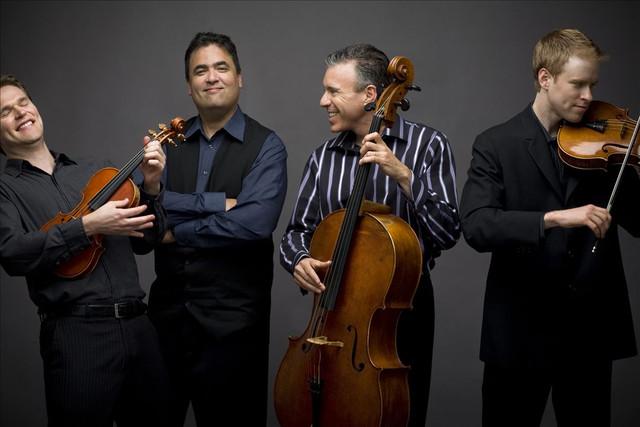
Quartet San Francisco’s Spotify BioAn adventurous crossover ensemble, Quartet San Francisco mixes classical string traditions with jazz improvisation, bluegrass, and Latin sounds. Since their debut in 2001, the group, lead by violinist Jeremy Cohen, has garnered acclaim, earning Grammy Award nominations for 2006's Latigo, 2007's Whirled Chamber Music, and 2009's QSF Plays Brubeck. Along with interpreting works by Dave Brubeck, The Beatles, and Raymond Scott, among others, the group showcased contemporary California composers on 2013's Pacific Premieres. With 2018's A QSF Journey, Cohen brought all of the project's varied genre influences to bear with a handful of his own compositions.
Quartet San Francisco was formed in 2001 in San Francisco by violinist Jeremy Cohen as an outlet to explore classical alongside an array of other genres. Prior to launching the group, Cohen grew up in a family of musicians and eventually took lessons with both Itzhak Perlman and Anne Crowden. As a performer, he developed a distinctive… style, drawing from classical luminaries like Fritz Kreisler as well as swing legends like Joe Venuti and Eddie South. Along with soundtrack and symphonic work, Cohen was a member of the Turtle Island String Quartet and has performed on albums with Linda Ronstadt, Diane Reeves, and Regina Belle, among others.
The group debuted with their 2002 self-titled album, which featured the original lineup of violinists Cohen and Kronos Quartet founder James Shallenberger, violist Emily Onderdonk, cellist Joel Cohen (Jeremy's brother), and bassist James Kerwin. By their second album, 2006's Latigo, the membership had shifted, with Kayo Miki replacing Shallenberger on second violin and the group no longer using a bassist (John Santos added occasional percussion on the album). It garnered their first Grammy nomination for Best Classical Crossover Album. Over the years, the QSF's lineup has changed often, with Cohen as the sole continuously remaining member. Among the virtuoso performers who have been members in the group are violinist Dawn Harms (2002 to 2004), cellist Michelle Djokic, violist Keith Lawrence (2008-2012), violinist Alisa Rose (2009-2012), and cellist Kelley Maulbetsch (2011-2015).
In 2007, they released Whirled Chamber Music, mixing blues, funk, jazz, and tango and taking on songs by Duke Ellington, Chick Corea, and Alan Menken as well as seven by Raymond Scott. The album was nominated for Best Classical Crossover Album. Two years later, they delivered QSF Plays Brubeck, an exploration of the music of innovative jazz pianist Dave Brubeck. Recorded at Skywalker Sound by Judy Kirschner, the album earned a Grammy nomination for Best Engineered Album, Classical. They followed it with 2011's Five by Four, which featured three songs by the Beatles.
For 2013's Pacific Premieres, Quartet San Francisco showcased the work of several modern California composers, including Gordon Goodwin, Vince Mendoza, and Patrick Williams as well as Cohen. Both Goodwin and Mendoza picked up Grammy nominations in the Best New Instrumental Composition category for their contributions to the album. A QSF Journey arrived in 2018 and featured songs in a bevy of classical, swing, and bluegrass styles, all written by Cohen. ~ Matt Collar, Rovi
Viberate is a music analytics platform built for A&Rs, artist managers, labels, booking agents, marketers, and artists.
It helps music professionals track artist growth, analyze audience data, monitor playlist activity, compare artists, follow song performance, and identify opportunities across the music market.
Public artist pages provide a free preview of selected artist data. Paid plans provide access to deeper analytics, historical data, charts, comparisons, playlist tools, exports, alerts, reports, and additional professional features.
Yes. Public Viberate artist pages provide selected artist analytics and music data for free.
Viberate also offers a 7-day free trial of the full platform. A credit card is required to start the trial. The trial includes access to the complete product so users can test deeper artist analytics, historical views, playlist insights, comparisons, charts, exports, alerts, and reporting features before choosing a paid plan.
Viberate provides artist analytics across streaming, playlists, social media, video, radio airplay, songs, and audience markets.
Users can analyze Spotify performance, Spotify and Apple Music playlists, YouTube activity, TikTok and Instagram growth, radio spins, song performance, audience locations, demographics, rankings, and overall artist momentum.
Artist profiles also connect to music charts, similar artists, and comparison tools, helping users benchmark performance and evaluate artists in context.
Viberate updates key artist and track data daily.
For followed artists and tracks, selected data is refreshed multiple times per day. This helps teams monitor playlist changes, streaming movement, audience growth, releases, and campaign performance with more current data.
Update frequency can vary depending on the metric and data source.
Yes. Viberate lets users compare up to five artists side by side across streaming, social media, audience, and engagement metrics.
Users can compare fanbase growth, audience demographics, locations, Spotify performance, social metrics, and other artist data over selected time periods.
Artist comparison can be used for A&R scouting, benchmarking, booking decisions, campaign planning, and evaluating artists with similar audiences or market positions.