Turtle Island String Quartet

Classical
Classical Crossover
Jazz Fusion
 Viberate Rank: 272414
 Viberate Rank: 272414
 Monthly ListenersFollowers
 Subscribers
 Followers
 Followers
 FansTop Spotify Songs
| Track | 7-Day Streams | |
|---|---|---|
1 | 1.21K | |
2 | 1.01K | |
3 | 488 | |
4 | 313 | |
5 | 300 |
Top YouTube VideosMonthly ListenersFeatured in Playlists| Playlist | Followers | |
|---|---|---|
1 |  NPR Classical NPR Music | 14.43K |
2 |  Jazz Now! Blue Note Records | 9.16K |
3 |  Yule Tidings Clara D Munro | 8.59K |
4 | Happy Classical Rebecca Noelle | 7.89K |
5 | A Very Pagan Christmas – Yuletide Carols for the Winter Solstice G.M. Tatum | 6.58K |
Audience| City | Monthly Listeners | |
|---|---|---|
1 | | 102 |
2 | | 86 |
3 | | 73 |
4 | | 64 |
5 | | 64 |
See full performance history, audience data, playlist activity, rankings, comparisons, and more in Viberate music analytics. Start with a free trial, then continue with a paid plan.
Turtle Island String Quartet’s Spotify BioAn adventurous chamber group, the Turtle Island String Quartet (aka the Turtle Island Quartet) emerged in the mid-'80s playing stylistically wide-ranging music that married classical string traditions with modern jazz arrangements and improvisation. Originally signed to Windham Hill, they gained acclaim for their innovative reworkings of bebop standards like "A Night in Tunisia" off their 1988 debut, as well as their equally boundary-breaking interpretations of songs from beyond the jazz and classical worlds, including forays into bluegrass, rock, R&B, and various ethnic traditions. While their line-up has changed over the years, the group has continued to garner plaudits, including winning the 2006 and 2008 Grammy Awards for Best Classical Crossover Album for 4 + Four, a collaboration with Iowa's Ying Quartet, and A Love Supreme: The Legacy of John Coltrane. They've also remained dedicated to exploring an array of sounds from Jimi Hendrix (2010's Have You Ever Been...?), to blues… legend Robert Johnson (2013's Mike Marshall & the Turtle Island Quartet), and Charlie Parker (2018's Bird's Eye View).
Founded in 1985 in San Francisco, the Turtle Island String Quartet was initially the idea of violinist David Balakrishnan and violist Darol Anger. Prior to meeting, Balakrishnan had earned his master's degree from Antioch University West where he composed music for string players versed in both classical and jazz, and wrote his thesis on the subject of cross-pollinated music titled "Transcending Style." Similarly, Anger (whose father was from India) had studied with noted composer W.A. Mathieu, who encouraged his interest in connecting music from across various genres from classical to jazz and world music traditions. Anger had also spent nine years as a member of the innovative David Grisman Quintet, an experience that helped shape his own sense of how to better open up the world of jazz improvisation for string-based ensembles. Anger and Balakrishnan met while playing in a four-violin group called Saheeb, and in 1985, recorded Jazz Violin Celebration with violinist Matt Glaser. Their work attracted the attention of cellist Mark Summer who had recently traveled to San Francisco after leaving his job with the Winnipeg Symphony Orchestra. Following a concert in which Summer sat in on several songs with Balakrishnan and Anger the three decided to form their own quartet with former Balakrishnan student Laurie Moore, rounding out the group on cello.
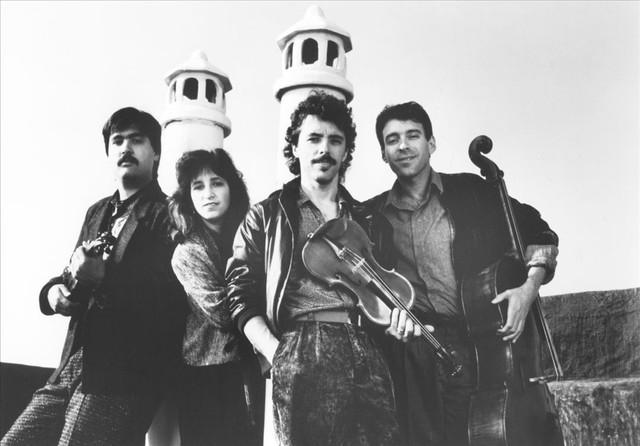
Borrowing their name from a Native American creation myth, the Turtle Island String Quartet began playing live. By 1986, Moore had left the group to be replaced by violinist/violist Irene Sazer. It was this version of the group that is best recognized as the founding lineup, and the one which recorded the group's eponymous Windham Hill Jazz debut, 1988's Turtle Island String Quartet. Included on the album was their take on Dizzy Gillespie's "A Night in Tunisia," which earned Balakrishnan a Grammy nomination for Best Arrangement on an Instrumental. The group returned in 1989 with Metropolis, an equally ambitious production featuring arrangements of songs by John Coltrane, Horace Silver, Lee Morgan, and more.
More lineup changes followed during the '90s with violist Katrina Wreede taking over for Sazer, who left to pursue a solo career. Wreede made her debut on 1990's Sky Life, the group's third album for Windham Hill. More albums followed for the label, including 1990's soundtrack to the Michael Caine thriller A Shock to the System, 1991's On the Town (which featured pianist Billy Taylor), and 1992's soundtrack to the film Spider Dreams (which marked Wreede's departure and temporary replacement by Jeremy Cohen). Also in 1992, Juilliard-trained violinist Danny Seidenberg joined the band and made his recorded debut on 1994's Who Do We Think We Are??.
In 1993, co-founding member Balakrishnan parted ways with the band to deal with family obligations, and was replaced by another Juilliard grad, violinist Tracy Silverman. Over the next few years, the group gained yet more recognition as they sought out high-profile shows, including playing concerts with Manhattan Transfer, Ray Charles, and Shirley Horn. In 1997, Balakrishnan returned to the group after Silverman's departure, just as Anger left to pursue a solo career. He was replaced by violinist Evan Price.
In 2000, the quartet moved from Windham Hill to Koch with Art of the Groove, which featured a mix of jazz songs by Michael Brecker, Chick Corea, and Dave Brubeck, as well as a swinging version of Leonard Bernstein's "Cool" from West Side Story. Also during this period, Seidenberg left the group to be replaced by Mads Tolling. Two years later, they issued the Latin-infused Danzon featuring clarinetist Paquito D'Rivera on several tracks, including the standard "You've Changed," which earned Balakrishnan a Grammy nomination for Best Instrumental Arrangement. 4 + Four, a collaboration with Iowa's Ying Quartet, arrived in 2005 and won the Grammy for Best Classical Crossover Album. The quartet then earned the same award for 2007's A Love Supreme: The Legacy of John Coltrane. The album, which found the group simplifying their name to the Turtle Island Quartet, also marked the group's last with Evan Price. With Price's departure, Tolling moved to violin with Jeremy Kittel taking over the viola chair.
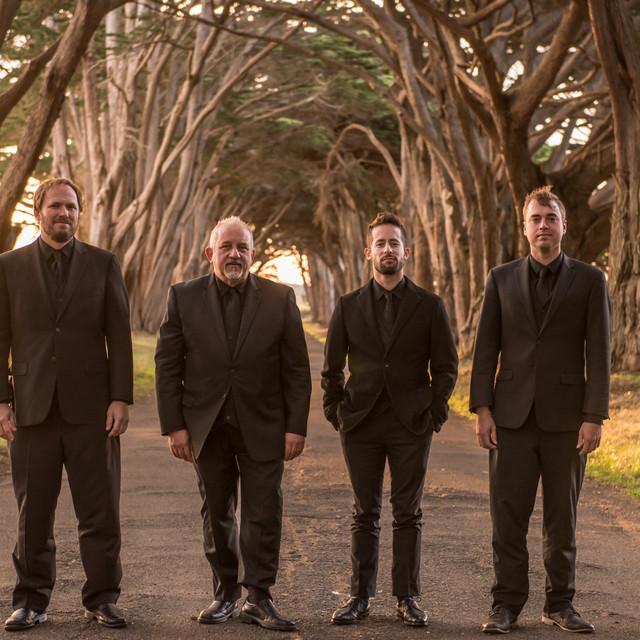
In 2010, Turtle Island paid homage to guitarist Jimi Hendrix with Have You Ever Been...?. They also picked up a Grammy nomination alongside mandolinist Mike Marshall for 2013's Mike Marshall & the Turtle Island Quartet. Around the same time, Kittel and Tolling departed to be replaced by Polish violinist Mateusz Smoczynski, and German-born violist Benjamin von Gutzeit. This version of the group debuted to acclaim on 2014's Confetti Man, which included a guest appearance by singer Nellie McKay and earned Balakrishnan a Grammy nomination for Best Instrumental Composition for the title track. In 2016, both Summer and Smoczynski left the ensemble, to be replaced by Carolina Chocolate Drops cellist Malcolm Parson and violinist Alex Hargreaves. Over the next few years they stayed busy playing concerts with pianist Cyrus Chestnut presenting the music of Jelly Roll Morton, and headlining their own "Birth of the Cool" tour playing the music of Miles Davis, Gerry Mulligan, Lenny Tristano, and others. In 2018, they issued the Charlie Parker-themed Bird's Eye View. ~ Matt Collar, Rovi
Viberate is a music analytics platform built for A&Rs, artist managers, labels, booking agents, marketers, and artists.
It helps music professionals track artist growth, analyze audience data, monitor playlist activity, compare artists, follow song performance, and identify opportunities across the music market.
Public artist pages provide a free preview of selected artist data. Paid plans provide access to deeper analytics, historical data, charts, comparisons, playlist tools, exports, alerts, reports, and additional professional features.
Yes. Public Viberate artist pages provide selected artist analytics and music data for free.
Viberate also offers a 7-day free trial of the full platform. A credit card is required to start the trial. The trial includes access to the complete product so users can test deeper artist analytics, historical views, playlist insights, comparisons, charts, exports, alerts, and reporting features before choosing a paid plan.
Viberate provides artist analytics across streaming, playlists, social media, video, radio airplay, songs, and audience markets.
Users can analyze Spotify performance, Spotify and Apple Music playlists, YouTube activity, TikTok and Instagram growth, radio spins, song performance, audience locations, demographics, rankings, and overall artist momentum.
Artist profiles also connect to music charts, similar artists, and comparison tools, helping users benchmark performance and evaluate artists in context.
Viberate updates key artist and track data daily.
For followed artists and tracks, selected data is refreshed multiple times per day. This helps teams monitor playlist changes, streaming movement, audience growth, releases, and campaign performance with more current data.
Update frequency can vary depending on the metric and data source.
Yes. Viberate lets users compare up to five artists side by side across streaming, social media, audience, and engagement metrics.
Users can compare fanbase growth, audience demographics, locations, Spotify performance, social metrics, and other artist data over selected time periods.
Artist comparison can be used for A&R scouting, benchmarking, booking decisions, campaign planning, and evaluating artists with similar audiences or market positions.