Protector

Metal
Death Metal
Thrash Metal
 Viberate Rank: 172368
 Viberate Rank: 172368
 Monthly ListenersFollowers
 Subscribers
 Followers
 Followers
 FansTop Spotify Songs
| Track | 7-Day Streams | |
|---|---|---|
1 | 847 | |
2 | 591 | |
3 | 494 | |
4 | 376 | |
5 | 373 |
Top YouTube VideosMonthly ListenersFeatured in Playlists| Playlist | Followers | |
|---|---|---|
1 |  Death Metal Classics @MansenSankari | 127.47K |
2 |  FENRIZ METAL Gylve | 32.35K |
3 | Metal🤘🏻 Naydil González | 16.46K |
4 |  Death Metal Old School Stéphane Loisal | 12.90K |
5 |  Early Thrash: The '80s & '90s Loudwire | 8.05K |
Audience| City | Monthly Listeners | |
|---|---|---|
1 |  | 240 |
2 |  | 151 |
3 |  | 146 |
4 |  | 136 |
5 |  | 90 |
See full performance history, audience data, playlist activity, rankings, comparisons, and more in Viberate music analytics. Start with a free trial, then continue with a paid plan.
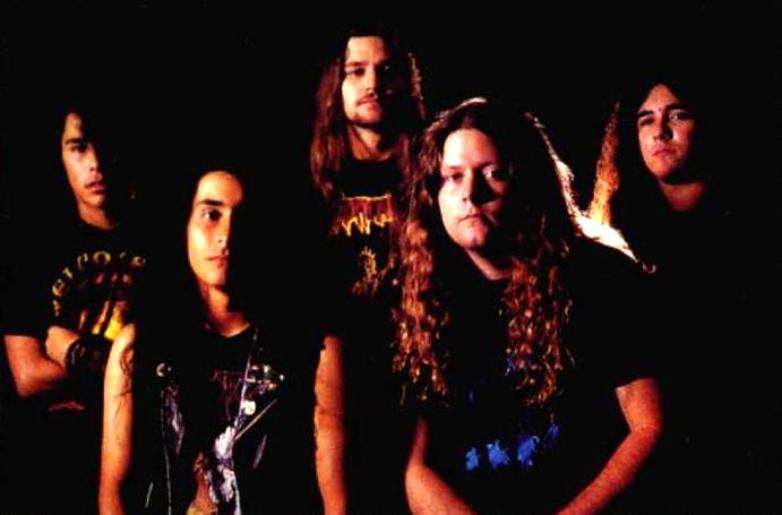
Protector’s Spotify BioProtector was formed in Wolfsburg/Germany in the summer of 1986 by Michael Hasse (v/dr), Hansi Müller (g) and Michael
Schnabel (b). Later that year the band recorded and released their first demo.
In the fall of 1987 the band, now with Martin Missy (v) and Ede Belichmeier (who had replaced Michael Schnabel) in the lineup,
released the EP "Misanthropy". In the same year Protector also played their first gigs.
On the 26th of february 1994, almost seven years, one EP, four LPs, four tours and a couple of lineup-changes after the release of
"Misanthropy", Protector played their last gig (in Wolfsburg) in the formation Olly Wiebel (v/g), Matze Grün (b) and Marco Pape
(dr).
During the years 1996-2003 Protector was kept alive by drummer Marco Pape. The band recorded one demo in 1999, and in the
years following their third gig together in 2001, the band fell apart bit by bit.
In 2006 the Protector tribute band ”Martin Missy and The Protectors” was formed in Sweden by Martin Missy, Carl-Gustav Karlsson
(…dr), Mathias Johansson (b) and Michael Carlsson (g). They played twentyfour gigs together between 2006 and 2011.
In october 2011 "Martin Missy and The Protectors" announced that they officially would continue under the name Protector.
Since then, the band has released one demo and four LPs (the latter four on High Roller Records) and has played many club- and
festivalgigs in Europe.
Viberate is a music analytics platform built for A&Rs, artist managers, labels, booking agents, marketers, and artists.
It helps music professionals track artist growth, analyze audience data, monitor playlist activity, compare artists, follow song performance, and identify opportunities across the music market.
Public artist pages provide a free preview of selected artist data. Paid plans provide access to deeper analytics, historical data, charts, comparisons, playlist tools, exports, alerts, reports, and additional professional features.
Yes. Public Viberate artist pages provide selected artist analytics and music data for free.
Viberate also offers a 7-day free trial of the full platform. A credit card is required to start the trial. The trial includes access to the complete product so users can test deeper artist analytics, historical views, playlist insights, comparisons, charts, exports, alerts, and reporting features before choosing a paid plan.
Viberate provides artist analytics across streaming, playlists, social media, video, radio airplay, songs, and audience markets.
Users can analyze Spotify performance, Spotify and Apple Music playlists, YouTube activity, TikTok and Instagram growth, radio spins, song performance, audience locations, demographics, rankings, and overall artist momentum.
Artist profiles also connect to music charts, similar artists, and comparison tools, helping users benchmark performance and evaluate artists in context.
Viberate updates key artist and track data daily.
For followed artists and tracks, selected data is refreshed multiple times per day. This helps teams monitor playlist changes, streaming movement, audience growth, releases, and campaign performance with more current data.
Update frequency can vary depending on the metric and data source.
Yes. Viberate lets users compare up to five artists side by side across streaming, social media, audience, and engagement metrics.
Users can compare fanbase growth, audience demographics, locations, Spotify performance, social metrics, and other artist data over selected time periods.
Artist comparison can be used for A&R scouting, benchmarking, booking decisions, campaign planning, and evaluating artists with similar audiences or market positions.