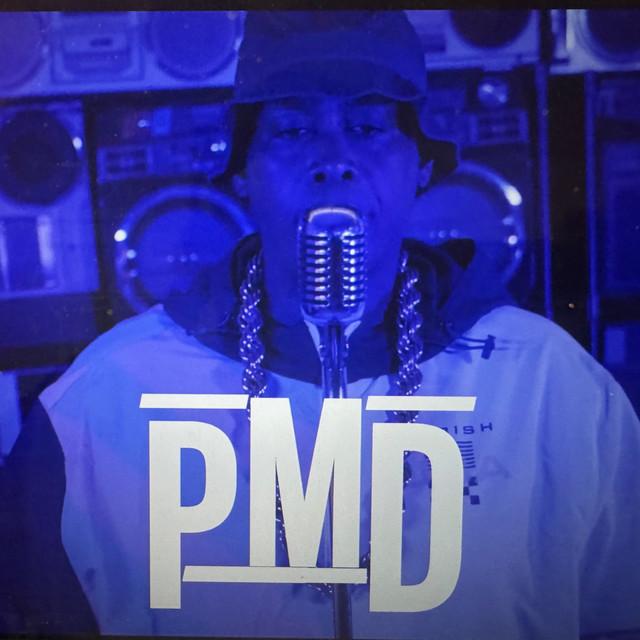
PMD

Hip Hop
Alternative Hip Hop
Contemporary Hip Hop
 Viberate Rank: 165143
 Viberate Rank: 165143
 Monthly ListenersFollowers
 Subscribers
 Followers
 Followers
 FansTop Spotify Songs
| Track | 7-Day Streams | |
|---|---|---|
1 | 1.49K | |
2 | 1.26K | |
3 | 1.15K | |
4 | 1.06K | |
5 | 631 |
Top YouTube VideosMonthly ListenersFeatured in Playlists| Playlist | Followers | |
|---|---|---|
1 |  Boom Bap Classics Ville Kyyny | 60.44K |
2 |  90's Rap Instrumentals Sepehr Aman | 50.23K |
3 | Rare 90s underground rap dennissey | 31.27K |
4 |  KESSEL MUSS BRENNEN Daniel Hernes | 18.92K |
5 |  WRMFZY BEATS wrmfzy | 18.79K |
Audience| City | Monthly Listeners | |
|---|---|---|
1 |  | 358 |
2 |  | 234 |
3 | | 169 |
4 |  | 141 |
5 |  | 133 |
See full performance history, audience data, playlist activity, rankings, comparisons, and more in Viberate music analytics. Start with a free trial, then continue with a paid plan.
PMD’s Spotify BioAfter New York hip-hop pioneers EPMD split in the early '90s, Parrish Smith went solo and simply dropped the "e" from the duo's name -- which stood for Erick, as in Erick Sermon -- to record as PMD (as in "Parrish Making Dollars"). As with EPMD, Smith's solo work is hardcore rap in its purest form, with strong rhymes delivered over booming beats, and a defiantly non-mainstream attitude. In 1994, PMD released Shadé Business (featuring guest spots from Das EFX and Top Quality), and 1996 saw the release of a better follow-up, Business Is Business (with a few more Das EFX appearances). Smith joined back up with Sermon (and Def Jam) for 1997's Back in Business, EPMD's fifth album, and a sixth album with his partner -- Out of Business -- came in 1999. The duo broke up a second time, and PMD collaborated with Japan's DJ Honda for several singles and the 2002 full-length Underground Connection, which was only released in Asia. PMD's third solo album, The Awakening, appeared on Boondox Records… in 2003, and Smith executive-produced Zero Tolerance, a reunion album from EPMD's long-running Hit Squad crew, which appeared in 2004. EPMD reunited again in 2006, releasing We Mean Business in 2008. After a few years of silence, PMD resurfaced in 2013, collaborating with German crew Snowgoons and Queens-based rapper Sean Strange for an album called Welcome to the Goondox. PMD returned in 2017 with Business Mentality, which he co-produced along with Snowgoons and Agallah. ~ Andy Kellman & Paul Simpson, Rovi
Viberate is a music analytics platform built for A&Rs, artist managers, labels, booking agents, marketers, and artists.
It helps music professionals track artist growth, analyze audience data, monitor playlist activity, compare artists, follow song performance, and identify opportunities across the music market.
Public artist pages provide a free preview of selected artist data. Paid plans provide access to deeper analytics, historical data, charts, comparisons, playlist tools, exports, alerts, reports, and additional professional features.
Yes. Public Viberate artist pages provide selected artist analytics and music data for free.
Viberate also offers a 7-day free trial of the full platform. A credit card is required to start the trial. The trial includes access to the complete product so users can test deeper artist analytics, historical views, playlist insights, comparisons, charts, exports, alerts, and reporting features before choosing a paid plan.
Viberate provides artist analytics across streaming, playlists, social media, video, radio airplay, songs, and audience markets.
Users can analyze Spotify performance, Spotify and Apple Music playlists, YouTube activity, TikTok and Instagram growth, radio spins, song performance, audience locations, demographics, rankings, and overall artist momentum.
Artist profiles also connect to music charts, similar artists, and comparison tools, helping users benchmark performance and evaluate artists in context.
Viberate updates key artist and track data daily.
For followed artists and tracks, selected data is refreshed multiple times per day. This helps teams monitor playlist changes, streaming movement, audience growth, releases, and campaign performance with more current data.
Update frequency can vary depending on the metric and data source.
Yes. Viberate lets users compare up to five artists side by side across streaming, social media, audience, and engagement metrics.
Users can compare fanbase growth, audience demographics, locations, Spotify performance, social metrics, and other artist data over selected time periods.
Artist comparison can be used for A&R scouting, benchmarking, booking decisions, campaign planning, and evaluating artists with similar audiences or market positions.