Pinetop Perkins

Blues
Classic Blues
Jazz Fusion
 Viberate Rank: 163781
 Viberate Rank: 163781
 Monthly ListenersFollowers
 Subscribers
 Followers
 Followers
 FansTop Spotify Songs
| Track | 7-Day Streams | |
|---|---|---|
1 | 3.44K | |
2 | 1.50K | |
3 | 1.37K | |
4 | 1.18K | |
5 | 738 |
Top YouTube VideosMonthly ListenersFeatured in Playlists| Playlist | Followers | |
|---|---|---|
1 |  Chicago Blues Spotify | 191.13K |
2 |  Greatest Blues Jared Kerkhof | 56.21K |
3 |  Blues Ballads/ Slow Blues Joar Fosså | 39.54K |
4 |  Slow Blues & Blues Rock | Don's Tunes Don's Tunes | 19.74K |
5 | PIANO BLUES ... John Firth | 14.84K |
Audience| City | Monthly Listeners | |
|---|---|---|
1 |  | 309 |
2 |  | 297 |
3 | | 267 |
4 |  | 239 |
5 | | 219 |
See full performance history, audience data, playlist activity, rankings, comparisons, and more in Viberate music analytics. Start with a free trial, then continue with a paid plan.
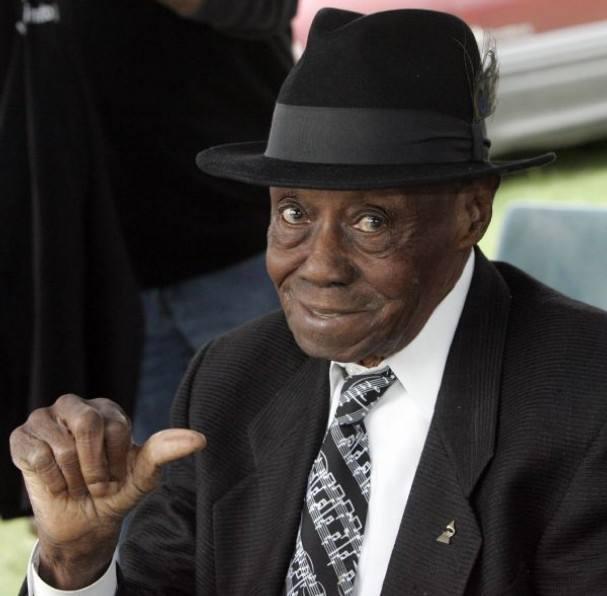
Pinetop Perkins’ Spotify BioHe admittedly wasn't the originator of the seminal piano piece "Pinetop's Boogie Woogie," but it's a safe bet that more people associate it nowadays with Pinetop Perkins than with the man who devised it in the first place, Clarence "Pinetop" Smith. Although it seems as though he was around Chicago forever, the Mississippi native actually got a relatively late start on his path to Windy City immortality. It was only when Muddy Waters took him on to replace Otis Spann in 1969 that Perkins' rolling mastery of the ivories began to assume outsized proportions.
Perkins began his blues existence primarily as a guitarist, but a mid-'40s encounter with an outraged chorus girl toting a knife at a Helena, Arkansas nightspot left him with severed tendons in his left arm. That dashed his guitar aspirations, but Joe Willie Perkins came back strong from the injury, concentrating solely on piano from that point on. Perkins had traveled to Helena with Robert Nighthawk in 1943, playing with the elegant… slide guitarist on Nighthawk's KFFA radio program. Perkins soon switched over to rival Sonny Boy Williamson's beloved King Biscuit Time radio show in Helena, where he remained for an extended period. Perkins accompanied Nighthawk on a 1950 session for the Chess brothers that produced "Jackson Town Gal," but Chicago couldn't hold him at the time.
Nighthawk disciple Earl Hooker recruited Perkins during the early '50s. They hit the road, pausing at Sam Phillips' studios in Memphis long enough for Perkins to wax his first version of "Pinetop's Boogie Woogie" in 1953. He settled in downstate Illinois for a spell, then relocated to Chicago. Music gradually was relegated to the back burner until Hooker coaxed him into working on an LP for Arhoolie in 1968. When Spann split from Muddy Waters, the stage was set for Pinetop Perkins' re-emergence.
After more than a decade with the Man, Perkins and his bandmates left en masse to form the Legendary Blues Band. Their early Rounder albums (Life of Ease, Red Hot 'n' Blue) prominently spotlighted Perkins' rippling 88s and rich vocals. He had previously waxed an album for the French Black & Blue logo in 1976 and four fine cuts for Alligator's Living Chicago Blues anthologies in 1978. Finally, in 1988, he cut his first domestic album for Blind Pig, After Hours. After that, Pinetop Perkins made up for precious lost time in the studio. Discs for Antone's, Omega (Portrait of a Delta Bluesman, a solo outing that includes fascinating interview segments), Deluge, Earwig, and several other firms ensured that his boogie legacy wouldn't be forgotten in the decades to come. In 2010 he collaborated with harmonica whiz Willie "Big Eyes" Smith for the album Joined at the Hip, which won a Grammy for Best Traditional Blues Album, giving Perkins the status of oldest Grammy winner ever. On March 21, 2011, just over a month after the award ceremony, the legendary bluesman died from a heart attack at his home in Austin, Texas. Pinetop Perkins was 97 years old. ~ Bill Dahl, Rovi
Viberate is a music analytics platform built for A&Rs, artist managers, labels, booking agents, marketers, and artists.
It helps music professionals track artist growth, analyze audience data, monitor playlist activity, compare artists, follow song performance, and identify opportunities across the music market.
Public artist pages provide a free preview of selected artist data. Paid plans provide access to deeper analytics, historical data, charts, comparisons, playlist tools, exports, alerts, reports, and additional professional features.
Yes. Public Viberate artist pages provide selected artist analytics and music data for free.
Viberate also offers a 7-day free trial of the full platform. A credit card is required to start the trial. The trial includes access to the complete product so users can test deeper artist analytics, historical views, playlist insights, comparisons, charts, exports, alerts, and reporting features before choosing a paid plan.
Viberate provides artist analytics across streaming, playlists, social media, video, radio airplay, songs, and audience markets.
Users can analyze Spotify performance, Spotify and Apple Music playlists, YouTube activity, TikTok and Instagram growth, radio spins, song performance, audience locations, demographics, rankings, and overall artist momentum.
Artist profiles also connect to music charts, similar artists, and comparison tools, helping users benchmark performance and evaluate artists in context.
Viberate updates key artist and track data daily.
For followed artists and tracks, selected data is refreshed multiple times per day. This helps teams monitor playlist changes, streaming movement, audience growth, releases, and campaign performance with more current data.
Update frequency can vary depending on the metric and data source.
Yes. Viberate lets users compare up to five artists side by side across streaming, social media, audience, and engagement metrics.
Users can compare fanbase growth, audience demographics, locations, Spotify performance, social metrics, and other artist data over selected time periods.
Artist comparison can be used for A&R scouting, benchmarking, booking decisions, campaign planning, and evaluating artists with similar audiences or market positions.