Patti LuPone

Pop
Mainstream Pop
 Viberate Rank: 44025
 Viberate Rank: 44025
 Monthly ListenersFollowers
 Subscribers
 Followers
 Followers
 FansTop Spotify Songs
| Track | 7-Day Streams | |
|---|---|---|
1 | 192.15K | |
2 | 148.35K | |
3 | 63.87K | |
4 | 56.32K | |
5 | 53.15K |
Top YouTube Videos| Video | 7-Day Views | |
|---|---|---|
1 | 1.34K | |
2 | 164 | |
3 | 47 | |
4 | 43 | |
5 | 31 |
Monthly ListenersFeatured in Playlists| Playlist | Followers | |
|---|---|---|
1 |  Disney Halloween Spotify | 478.91K |
2 |  Fidi & Bumsi Spotify | 353.23K |
3 |  New Soundtracks Spotify | 335.07K |
4 | Steven Universe (all songs) mikomoares | 224.76K |
5 |  Marvel Music Spotify | 205.05K |
Audience| City | Monthly Listeners | |
|---|---|---|
1 |  | 11.59K |
2 | | 7.37K |
3 | | 7.15K |
4 | | 6.29K |
5 |  | 5.55K |
See full performance history, audience data, playlist activity, rankings, comparisons, and more in Viberate music analytics. Start with a free trial, then continue with a paid plan.
Patti LuPone’s Spotify BioIn 1980, Patti LuPone won her first Tony Award for best actress in a musical for her portrayal of Eva Peron, the ambitious, doomed wife of Argentine dictator Juan Peron, in Andrew Lloyd Webber and Tim Rice's Evita. In 2008, LuPone won her second Tony as Mama Rose, the maniacal stage mother of Gypsy Rose Lee, in a revival of Jule Styne and Stephen Sondheim's Gypsy. In between, she maintained a career as one of the most successful musical theater stars of her generation. Unlike predecessors such as Mary Martin and Ethel Merman, however, she did not work in a theater environment that allowed her to go from show to show with few interruptions. Instead, while waiting for contemporary composers to come up with new shows worthy of her talent or producers to mount revivals in which she could star, she filled the time acting in straight plays, in films, and on television; created nightclub acts and mounted concert tours; and recorded solo albums. Nevertheless, her true métier was the musical… theater. Possessed of a powerful voice and an intense performing style, she was sometimes criticized for having a "cold," "dark" persona. If so, that persona was ideal for the kinds of anti-heroines who peopled the musicals of the later decades of the 20th century, not only Eva Peron and Mama Rose, but also Norma Desmond, the aging silent film star of Lloyd Webber's Sunset Boulevard, and Mrs. Lovett, the murderous pie seller in Sondheim's Sweeney Todd, and LuPone excelled at playing them.
Patti Ann LuPone was born in the Long Island town of Northport, NY, on April 21, 1949, the daughter of a school administrator and a librarian, and the younger sister of Robert LuPone, who also went on to act on Broadway. She was named for her great-great-aunt, the opera singer Adelina Patti, and she demonstrated her own interests in music and theater as early as her attendance at Northport High School, from which she graduated in June 1967. In September 1968, she began attending the Juilliard School of Music in its newly formed drama division, run by actor/producer John Houseman. Houseman went on to use his students in the formation of the Acting Company in association with the City Center Theater, and LuPone began appearing in the company's productions. She made her New York professional debut in a revival of Richard Brinsley Sheridan's play School for Scandal that opened on September 27, 1972, and ran 12 performances. The following year, she made her Broadway debut in a brief run of Chekhov's The Three Sisters on December 19, 1973, followed quickly by an equally brief Broadway musical debut in a revival of John Gay's The Beggar's Opera that opened on December 22, 1973.
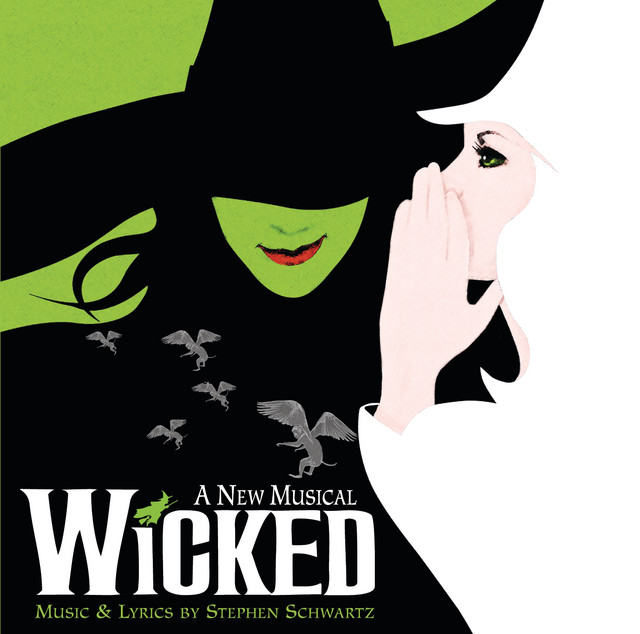
Continuing to work with the Acting Company, LuPone appeared in a 15-performance limited engagement Broadway run of Alfred Uhry and Robert Waldman's musical The Robber Bridegroom that opened on October 7, 1975. It earned LuPone her first Tony nomination as featured actress in a musical. She was next cast in Stephen Schwartz's Broadway-bound musical The Baker's Wife, which opened a tryout tour in Los Angeles on May 11, 1976, but the show ran into trouble and closed in Washington, D.C., without reaching New York. The following year, along with other members of the cast, LuPone recorded a cast album of the failed show that was released by Take Home Tunes Records. She also signed on to Schwartz's next project, a musical called Working for which he wrote the libretto and some of the music, as well as directing. It opened on Broadway on May 14, 1978, and ran only 25 performances, but it did generate a cast album on Columbia Records. LuPone made her movie debut in 1978 with a featured role in King of the Gypsies. The following year, she appeared in Steven Spielberg's 1941.
LuPone achieved stardom with Evita. The Broadway production (which followed a studio cast recording and a London production) opened on September 25, 1979, and became a huge hit, running 1,568 performances. The double-LP cast recording released by MCA Records, on which LuPone could be heard singing "Don't Cry for Me Argentina" among other songs, sold a million copies. She remained with the show until January 1, 1981. Returning to film, she starred in Fighting Back (1982). On March 2, 1983, she appeared in the first of 28 performances of the William Finn musical America Kicks Up Its Heels at the off-Broadway theater Playwrights Horizons. (Finn later reworked the show and retitled it Romance in Hard Times.) Two months later, she began a 29-performance run of a revival of Marc Blitzstein's musical The Cradle Will Rock at the off-Broadway American Place Theatre under the direction of Houseman, who had directed the original production in 1938. On April 29, 1984, she returned to Broadway in a revival of Lionel Bart's Oliver! as Nancy, singing "As Long as He Needs Me" during the unsuccessful production's 17 performances. She was back on Broadway in November in the straight play Accidental Death of an Anarchist.
In 1985, LuPone moved to London, where Houseman mounted a West End production of The Cradle Will Rock in which she was again featured. It was recorded for a cast album issued by That's Entertainment Records (TER) in the U.K. and by Polydor Records in the U.S. Still in London, she was cast as the doomed Fantine in the Royal Shakespeare Company's English adaptation of Claude-Michel Schönberg and Alain Boublil's musical treatment of the Victor Hugo novel Les Misérables. The show began its massively successful run on September 30, 1985, and LuPone won an Olivier Award, the British equivalent of the Tony, for her work in it and in The Cradle Will Rock. She also appeared on the double-disc cast album, singing "I Dreamed a Dream." The album, released by First Night Records in the U.K. and Relativity Records in the U.S., was a million-selling hit.
While waiting for another major musical theater role, LuPone returned to filmmaking, appearing in Witness, Cat's Eye (both 1985), and Wise Guys (1986), and portraying Lady Bird Johnson in the 1986 TV mini-series LBJ: The Early Years. She was back on Broadway on October 19, 1987, in a revival of Cole Porter's Anything Goes, starring as Reno Sweeney and singing "I Get a Kick Out of You" and "You're the Top." The show was a hit, running 804 performances, and she earned her third Tony nomination. She also appeared on the cast album recorded by RCA Victor Records. On December 12, 1988, on the stage of the Beaumont Theater in Lincoln Center, where the show was running, she married cameraman Matt Johnson.
Typically, when LuPone completed her commitment to Anything Goes, there was no new musical waiting for her, and she decamped to Hollywood, where she appeared in the film Driving Miss Daisy (1989) and accepted a starring role on television. She played Libby Thatcher, wife and mother in the hourlong family drama Life Goes On, which premiered on ABC on September 12, 1989. The show's title came from the Beatles song "Ob-La-Di, Ob-La-Da," which she sang along with the cast as the theme song; cast as a former singer, she also had occasion to perform the occasional song on the show. Life Goes On was the first network television series to seriously consider the issue of mental disability, featuring a major character with Down syndrome. It ran weekly for four years, concluding on August 29, 1993. While appearing in Life Goes On and living in Los Angeles, LuPone found time to make other occasional appearances. She acted in a television production of the play The Water Engine (1992), and on June 10, 1992, was part of Sondheim -- A Celebration at Carnegie Hall, a tribute that was recorded and filmed, singing "Being Alive" from Company. It was telecast in March 1993 and released on CD and as a home video by RCA Victor.
As the television series wound down in its final season, LuPone acted in another film, Family Prayers (1993), and put together a concert program of her best-known material from the various shows in which she had appeared. She took it to the Westwood Playhouse in Los Angeles in January 1993, where RCA Victor recorded her debut solo album, Patti LuPone Live! At the same time, it was announced that she would return to the stage in London, creating the role of Norma Desmond in Lloyd Webber's musical adaptation of the 1950 Billy Wilder film Sunset Boulevard. She was also contracted to open the Broadway production following her London appearance. The show opened in the West End on July 12, 1993, and soon after a double-disc cast album was released by Polydor Records. A second production opened in Los Angeles starring Glenn Close, and soon there were rumors that Close, a bigger film star than LuPone, would be the Broadway Norma Desmond instead. The rumors were confirmed by Lloyd Webber in February 1994. Having breached LuPone's contract, he was forced to pay her a settlement reported to be in the range of one million dollars. (With Close, and later Betty Buckley, the Broadway production did not run long enough to make a profit.)
In July 1994, LuPone recorded Heatwave, an album of songs by Irving Berlin, with the Hollywood Bowl Orchestra; released by Philips Records, the album made the classical crossover charts upon its release in 1995. She reappeared in New York for the brief run of a concert revival of Rodgers & Hart's Pal Joey mounted by the City Center Encores! organization starting on May 4, 1995. DRG Records recorded and released a cast album based on the production. LuPone next mounted a one-woman concert production of her own, premiering Patti LuPone on Broadway on October 12, 1995, for a run of 46 performances. In 1996, she began to appear in a recurring role in the TV series Law & Order, and on July 25, 1996, she replaced Zoe Caldwell in the part of Maria Callas in the Broadway play Master Class. She took the play to London in 1997, then returned to New York for another straight play, The Old Neighborhood, that ran into 1998. In 1999, she put together a new concert act, Matters of the Heart, which followed the story of a romance in songs from the musical theater and from contemporary pop writers. She toured internationally with the act and recorded an album called Matters of the Heart, released by Varèse Sarabande Records. (The show came to Broadway from November 13 to December 17, 2000.) At the turn of the century, she engaged in a flurry of film work including Bonanno: A Godfather's Story (TV), The 24-Hour Woman, Summer of Sam, Just Looking (all 1999), State and Main, and Bad Faith (both 2000). (She also sang "The Song of the Old Mill" on the soundtrack of State and Main.)
Although she continued to appear on-stage in the early years of the 21st century, notably in a Broadway revival of the comic play Noises Off in 2001-2002, LuPone tended to accept only limited appearances in musicals, often in semi-staged concert versions with brief runs. There was, for example, a one-off performance of Sweeney Todd with the New York Philharmonic in May 2000 that was recorded for an album and filmed for a video. There was also a filmed performance of Leonard Bernstein's Candide from Lincoln Center in 2004 and another of Sondheim's Passion in 2005. Meanwhile, LuPone continued to make film appearances: The Victim, Heist (both 2001), Life at Five Feet (TV), Monday Night Mayhem (TV), City by the Sea (all 2002), and Strip Search (TV; 2004). And she had a continuing role on the HBO TV series Oz in 2003.
In 2005, she finally returned to Broadway in a musical. It was a revival of Sweeney Todd in an unusual stripped-down staging in which the actors were expected to double as the orchestra; LuPone played tuba. The show opened on November 3, 2005, and ran 349 performances. LuPone earned her fourth Tony nomination, and a cast album was recorded by Nonesuch Records. Ghostlight Records released her fourth solo album, The Lady with the Torch, in April 2006. In 2007, she appeared in a revival of Kurt Weill and Bertolt Brecht's The Rise and Fall of the City of Mahagonny at the Los Angeles Opera, and it was filmed for TV broadcast and video release. The recording of the production went on to win Grammy Awards for Best Opera Recording and Best Classical Album in 2009. After she appeared in an Encores! version of Gypsy, the decision was made to return the perennially popular musical to Broadway with LuPone in a part she seemed perfect to play. After the show opened on March 27, 2008, audiences and Tony voters agreed, and Time Life preserved the performance on a cast album.
Two years later, LuPone's performance as Lucia in the original Broadway production of Women on the Verge of a Nervous Breakdown earned her another Tony nomination. In 2011, she made her New York City Ballet debut as Anna in a production of the Kurt Weill/Bertolt Brecht sung ballet The Seven Deadly Sins. A 2012 cabaret-style performance at the club 54 Below was captured in the following year's live album 54 Below: Far Away Places. In 2013, LuPone appeared in the third season of the FX series American Horror Story, and over the next few years appeared on shows including Girls, Crazy Ex-Girlfriend and Penny Dreadful, earning a nomination for the Critics' Choice Television Award for Best Guest Performer in a Drama Series in 2015. She also voiced characters on the animated shows Steven Universe and BoJack Horseman. LuPone found more success on Broadway in 2017 with War Paint, a musical about the rivalry between cosmetics entrepreneurs Helena Rubinstein and Elizabeth Arden; originating the role of Rubinstein, she was nominated for a Tony Award as well as Drama Desk and Outer Critics Circle Awards. That September, LuPone released the live double album Don't Monkey With Broadway.~ William Ruhlmann
Viberate is a music analytics platform built for A&Rs, artist managers, labels, booking agents, marketers, and artists.
It helps music professionals track artist growth, analyze audience data, monitor playlist activity, compare artists, follow song performance, and identify opportunities across the music market.
Public artist pages provide a free preview of selected artist data. Paid plans provide access to deeper analytics, historical data, charts, comparisons, playlist tools, exports, alerts, reports, and additional professional features.
Yes. Public Viberate artist pages provide selected artist analytics and music data for free.
Viberate also offers a 7-day free trial of the full platform. A credit card is required to start the trial. The trial includes access to the complete product so users can test deeper artist analytics, historical views, playlist insights, comparisons, charts, exports, alerts, and reporting features before choosing a paid plan.
Viberate provides artist analytics across streaming, playlists, social media, video, radio airplay, songs, and audience markets.
Users can analyze Spotify performance, Spotify and Apple Music playlists, YouTube activity, TikTok and Instagram growth, radio spins, song performance, audience locations, demographics, rankings, and overall artist momentum.
Artist profiles also connect to music charts, similar artists, and comparison tools, helping users benchmark performance and evaluate artists in context.
Viberate updates key artist and track data daily.
For followed artists and tracks, selected data is refreshed multiple times per day. This helps teams monitor playlist changes, streaming movement, audience growth, releases, and campaign performance with more current data.
Update frequency can vary depending on the metric and data source.
Yes. Viberate lets users compare up to five artists side by side across streaming, social media, audience, and engagement metrics.
Users can compare fanbase growth, audience demographics, locations, Spotify performance, social metrics, and other artist data over selected time periods.
Artist comparison can be used for A&R scouting, benchmarking, booking decisions, campaign planning, and evaluating artists with similar audiences or market positions.