Joel Grey

Pop
Mainstream Pop
 Viberate Rank: 188734
 Viberate Rank: 188734
 Monthly ListenersFollowers
 Subscribers
 Followers
 Followers
 FansTop Spotify Songs
| Track | 7-Day Streams | |
|---|---|---|
1 | 15.30K | |
2 | 14.07K | |
3 | 13.55K | |
4 | 8.84K | |
5 | 4.56K |
Top YouTube VideosMonthly ListenersFeatured in Playlists| Playlist | Followers | |
|---|---|---|
1 |  Fidi & Bumsi Spotify | 353.23K |
2 | The Best of Musicals Craig | 67.62K |
3 |  worst songs to have sex to vradin | 58.81K |
4 |  Wicked Soundtrack MK | 46.55K |
5 |  Schitt's Creek Soundtrack worldtraveller33 | 42.48K |
Audience| City | Monthly Listeners | |
|---|---|---|
1 |  | 3.33K |
2 | | 2.22K |
3 |  | 1.62K |
4 | | 1.54K |
5 | | 1.43K |
See full performance history, audience data, playlist activity, rankings, comparisons, and more in Viberate music analytics. Start with a free trial, then continue with a paid plan.
Joel Grey’s Spotify BioThe future Tony Award-winning Joel Grey was born on April 11, 1932, in Cleveland, OH. Grey (actually born Joel Katz) was the son of Yiddish comedian Mickey Katz, a member of the Spike Jones Orchestra, and a well-known nightclub performer and Broadway satirist. Joel Grey married Jo Wilder in 1957 and had two children, including actress Jennifer Grey who starred in the 1980s cult classic Dirty Dancing, as well as the short-lived television comedy It's Like You Know, in which her father had a guest appearance.
Joel Grey made his stage debut at the age of nine as Pud in On Borrowed Time and is best known for his role as Emcee in the 1972 film version of Cabaret opposite Liza Minnelli, for which he won an Academy Award. He first performed the mesmerizing, sexually ambivalent role during its original Broadway run in 1966 (for which he won a Tony), after a low-profile run of film and television roles including 77 Sunset Strip, About Face (1953), and Come September (1961). Grey also enjoyed a… highly successful Broadway run in the 1969 musical George M. Though considered difficult to cast, Joel Grey has worked into the '90s, appearing in multiple episodes of both Buffy the Vampire Slayer and Touched By an Angel. Recent film roles include Dancer in the Dark with Bjork, Armistead Maupin's Further Tales of the City, and The Fantasticks with Joe McIntyre of the New Kids on the Block.
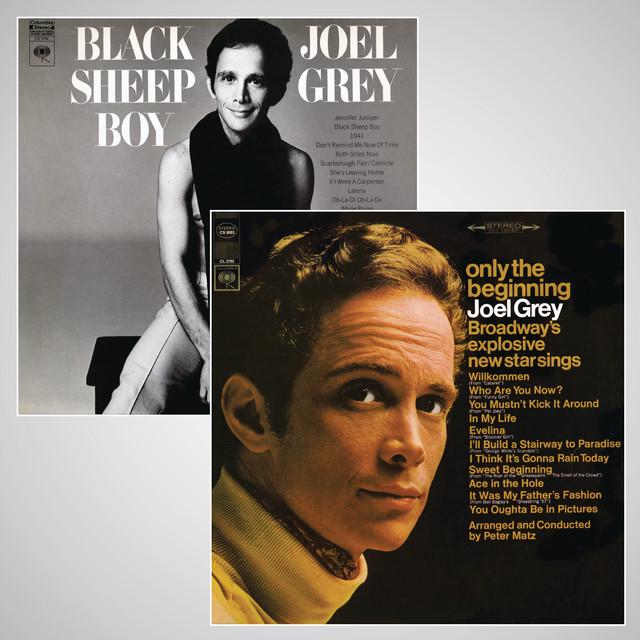
As detailed as is Joel Grey's filmic and theatrical career, very little has been written about his musical recording career. Not surprisingly, he has appeared on quite a few original cast recording albums, including the film and Broadway soundtracks for Cabaret and two shows released on CD in 1997, Chicago and Goodtime Charlie. Few know that he has also released three of his own, non-Broadway show related albums: Whoever Heard of a Fird, Black Sheep Boy, and Songs My Father Taught Me. Each of these three albums offer fascinating glimpses into the musical inspirations of one of the greatest talents in American musical theater history. Black Sheep Boy is a collection of pop songs chosen by Joel Grey, including compositions by Tim Hardin, Donovan, John Lennon, and Paul McCartney, Simon and Garfunkle, and (amazingly!) Cream. It is safe to say that Black Sheep Boy will be a surprising listen for those who know Joel Grey as the smirking, stylized character in Cabaret. Songs My Father Taught Me is, perhaps, an even more unexpected and personal musical trip for Grey. The album, released by Capitol Records, comes labeled with the instructions to "file under: Jewish Music." Though that seems insultingly simplistic, it is an accurate representation of the content of Songs My Father Taught Me. The album includes 12 examples of the Jewish folk music that Joel Grey heard while growing up the son of Mickey Katz. The liner notes describe the performances as "warm-hearted" which perfectly captures the nature of the personal album of ethnic celebration and family heritage. The record's harvest songs, lullabies, and humorous tunes are among the most essential recordings to track down if understanding Joel Grey as an artist is your goal. ~ JT Griffith, Rovi
Viberate is a music analytics platform built for A&Rs, artist managers, labels, booking agents, marketers, and artists.
It helps music professionals track artist growth, analyze audience data, monitor playlist activity, compare artists, follow song performance, and identify opportunities across the music market.
Public artist pages provide a free preview of selected artist data. Paid plans provide access to deeper analytics, historical data, charts, comparisons, playlist tools, exports, alerts, reports, and additional professional features.
Yes. Public Viberate artist pages provide selected artist analytics and music data for free.
Viberate also offers a 7-day free trial of the full platform. A credit card is required to start the trial. The trial includes access to the complete product so users can test deeper artist analytics, historical views, playlist insights, comparisons, charts, exports, alerts, and reporting features before choosing a paid plan.
Viberate provides artist analytics across streaming, playlists, social media, video, radio airplay, songs, and audience markets.
Users can analyze Spotify performance, Spotify and Apple Music playlists, YouTube activity, TikTok and Instagram growth, radio spins, song performance, audience locations, demographics, rankings, and overall artist momentum.
Artist profiles also connect to music charts, similar artists, and comparison tools, helping users benchmark performance and evaluate artists in context.
Viberate updates key artist and track data daily.
For followed artists and tracks, selected data is refreshed multiple times per day. This helps teams monitor playlist changes, streaming movement, audience growth, releases, and campaign performance with more current data.
Update frequency can vary depending on the metric and data source.
Yes. Viberate lets users compare up to five artists side by side across streaming, social media, audience, and engagement metrics.
Users can compare fanbase growth, audience demographics, locations, Spotify performance, social metrics, and other artist data over selected time periods.
Artist comparison can be used for A&R scouting, benchmarking, booking decisions, campaign planning, and evaluating artists with similar audiences or market positions.