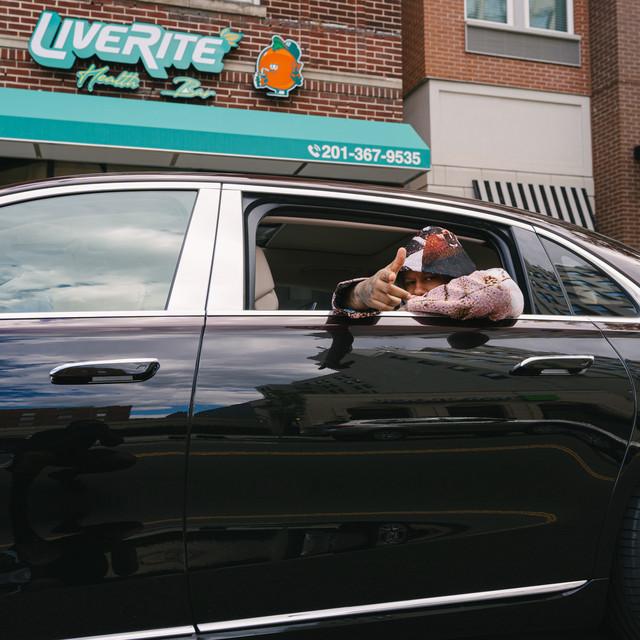
Papoose

Hip Hop
Contemporary Hip Hop
 Viberate Rank: 14051
 Viberate Rank: 14051
 Monthly ListenersFollowers
 Subscribers
 Followers
 Followers
 FansTop Spotify Songs
| Track | 7-Day Streams | |
|---|---|---|
1 | 101.01K | |
2 | 57.28K | |
3 | 51.61K | |
4 | 9.47K | |
5 | 8.25K |
Top YouTube Videos| Video | 7-Day Views | |
|---|---|---|
1 | 91.34K | |
2 | 26.55K | |
3 | 19.01K | |
4 | 15.58K | |
5 | 8.62K |
Monthly ListenersFeatured in Playlists| Playlist | Followers | |
|---|---|---|
1 |  clubbing like it's the 2000's kass !! | 981.12K |
2 |  Hip-Hop Classics Party Spotify | 312.04K |
3 |  This Is DMX Spotify | 232.76K |
4 |  This Is Mary J. Blige Spotify | 209.30K |
5 | RnB 2000s Christian Perry | 178.65K |
Audience| City | Monthly Listeners | |
|---|---|---|
1 | | 4.61K |
2 | | 3.01K |
3 | | 2.86K |
4 |  | 2.42K |
5 |  | 2.34K |
See full performance history, audience data, playlist activity, rankings, comparisons, and more in Viberate music analytics. Start with a free trial, then continue with a paid plan.
Papoose’s Spotify BioOver a decade would pass between the time of Brooklyn rapper Papoose making his first widely visible appearance on a Kool G Rap track and the release of his first proper studio album. It wasn't for a lack of drive, however, but due to hassles and false starts with various labels. Frustrated with the constant roadblocks labels seemed to impose, Papoose chose to build his music independently by prolifically releasing and distributing high-quality mixtapes. This struggle ultimately paid off with a devoted fan base enamored with his street-savvy persona and hard-edged East Coast rap styles. His long-completed debut album, The Nacirema Dream, finally saw proper release in 2013, and made a showing in the charts.
Papoose was born Shamele Mackie and raised in the Bedford-Stuyvesant neighborhood of Brooklyn. His first appearance on a major release would be a feature on the track "Home Sweet Funeral Home" on Kool G Rap's 1998 album Roots of Evil. The appearance brought interest from labels, but… the promises of record deals never fully materialized. From there, Papoose went full bore into releasing his music in the form of independently pressed and distributed mixtapes, and would release nearly a dozen collections of his high-energy songs between 2004 and 2005 alone. During this wildly productive time, he approached New York radio DJ Kay Slay several times on the street, aggressively promoting his music. Kay Slay was impressed, and not only did he start placing Papoose on his Streetsweeper mixtape series, but he essentially founded the Street Sweepers Entertainment imprint to help gear up the unsigned artist to be New York's next legendary MC. Papoose patiently took his time to find the best label situation, but he did broker promotion deals with Violator Management and Busta Rhymes' Flipmode Squad.
After appearing as a guest on a few tracks in 2006, including the remix of Busta's Top 20 pop-charting single "Touch It," Papoose finally signed a $1.5 million contract with Jive Records in August 2006. His debut album, The Nacirema Dream, was mostly complete at the time he signed with Jive, but some label red tape held up the release of the album. Papoose tided over fans with The Best of Papoose: The Mixtape, a succinct synopsis of his prolific mixtape run. His time on Jive would never result in any commercially released music, and more red tape and label-inflicted setbacks led to the rapper cutting ties with the label in late 2007. Undefeated, he returned to his program of steadily releasing mixtapes, dropping nine new projects between leaving Jive in 2007 and the release of Most Hated Alive in late 2012. On his 2009 mixtape 21 Gun Salute, he bragged that he was able to keep the $1.5 million Jive had paid him for his contract, even though no record ever came of it.
The Nacirema Dream was finally released in March 2013, nearly seven years after it was in its final stages of completion, on Fontana Records offshoot Honorable Records. The album was well received by fans and critics alike and boasted guest appearances by Mobb Deep, Erykah Badu, DJ Premiere, Jadakiss, and other stars of rap and R&B. It sold well and debuted at number 97 on the Billboard 200 chart. Papoose quickly followed the long-awaited studio debut with yet another mixtape, Hoodie Season, released in November 2013, and would issue mixtapes Hoodie Season 2 and Cigar Society before returning in 2015 with his second studio album You Can't Stop Destiny. During this time, Papoose and his wife, infamous rapper Remy Ma, were part of VH1 reality show Love & Hip Hop: New York. They stayed on for several seasons as Papoose readied his third studio album, Underrated, which saw release in February 2019. ~ Fred Thomas, Rovi
Viberate is a music analytics platform built for A&Rs, artist managers, labels, booking agents, marketers, and artists.
It helps music professionals track artist growth, analyze audience data, monitor playlist activity, compare artists, follow song performance, and identify opportunities across the music market.
Public artist pages provide a free preview of selected artist data. Paid plans provide access to deeper analytics, historical data, charts, comparisons, playlist tools, exports, alerts, reports, and additional professional features.
Yes. Public Viberate artist pages provide selected artist analytics and music data for free.
Viberate also offers a 7-day free trial of the full platform. A credit card is required to start the trial. The trial includes access to the complete product so users can test deeper artist analytics, historical views, playlist insights, comparisons, charts, exports, alerts, and reporting features before choosing a paid plan.
Viberate provides artist analytics across streaming, playlists, social media, video, radio airplay, songs, and audience markets.
Users can analyze Spotify performance, Spotify and Apple Music playlists, YouTube activity, TikTok and Instagram growth, radio spins, song performance, audience locations, demographics, rankings, and overall artist momentum.
Artist profiles also connect to music charts, similar artists, and comparison tools, helping users benchmark performance and evaluate artists in context.
Viberate updates key artist and track data daily.
For followed artists and tracks, selected data is refreshed multiple times per day. This helps teams monitor playlist changes, streaming movement, audience growth, releases, and campaign performance with more current data.
Update frequency can vary depending on the metric and data source.
Yes. Viberate lets users compare up to five artists side by side across streaming, social media, audience, and engagement metrics.
Users can compare fanbase growth, audience demographics, locations, Spotify performance, social metrics, and other artist data over selected time periods.
Artist comparison can be used for A&R scouting, benchmarking, booking decisions, campaign planning, and evaluating artists with similar audiences or market positions.