Os Cariocas

Latin
Samba
Bossa Nova
 Viberate Rank: 107538
 Viberate Rank: 107538
 Monthly ListenersFollowers
 Subscribers
 Followers
 Followers
 FansTop Spotify Songs
| Track | 7-Day Streams | |
|---|---|---|
1 | 35.48K | |
2 | 22.50K | |
3 | 12.16K | |
4 | 11.29K | |
5 | 9.63K |
Top YouTube VideosMonthly ListenersFeatured in Playlists| Playlist | Followers | |
|---|---|---|
1 |  Bossa Nova Spotify | 1.13M |
2 |  MPB anos 70, 80, 90, 2000, 2026 - AS MELHORES Under | 248.82K |
3 |  Bossa Nova Dinner 2026 🍷 bossanova music & covers Filtr Legacy Sweden | 190.07K |
4 | BOSSA NOVA CLASSICS Music | 115.32K |
5 |  você é uma helena de uma novela do maneco e está andando pelo leblon com sua água de coco sofia | 95.42K |
Audience| City | Monthly Listeners | |
|---|---|---|
1 | | 12.85K |
2 | | 10.33K |
3 | | 3.43K |
4 | | 2.57K |
5 | | 2.56K |
See full performance history, audience data, playlist activity, rankings, comparisons, and more in Viberate music analytics. Start with a free trial, then continue with a paid plan.
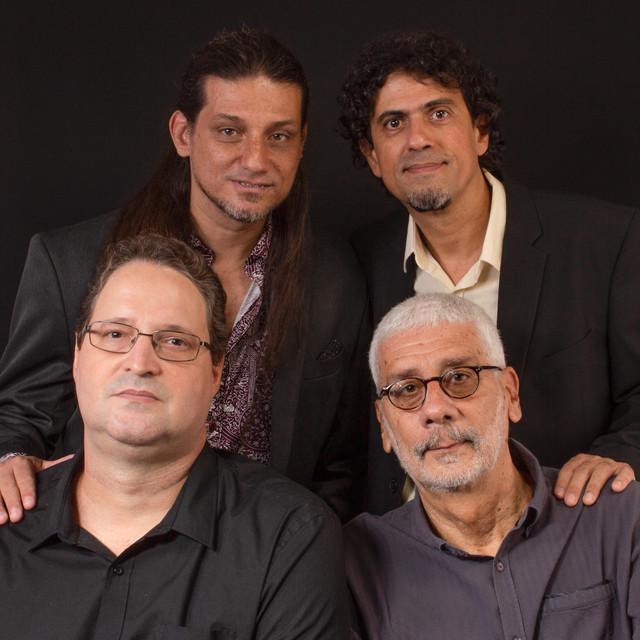
Os Cariocas’ Spotify BioActive since 1942 (having had 20 years of success at the prestigious Rádio Nacional) and singularized in comparison to other vocal groups of the time for the elaborated arrangements for four or five voices, the Os Cariocas became the most representative vocal group of bossa nova after their 1957 recording of "Chega de Saudade" (Tom Jobim/Vinícius de Moraes) with João Gilberto on guitar. One of the first recordings of this classic song, the immediate success in this new genre made them to embrace it and thus influenced most vocal groups that appeared afterwards. In 1962, Os Cariocas participated in the show O Encontro at the Au Bon Gourmet club with Tom Jobim, de Moraes, João Gilberto, and sidemen Milton Banana (drums) and Octávio Bailly (bass). Their repertory featured "Corcovado" (Quiet Nights), "Garota de Ipanema" (Girl From Ipanema), "Samba do Avião" (Plane Samba), "Samba de Uma Nota Só" (One Note Samba), "Só Danço Samba," and other classics. Taking part in several important bossa… nova events, the group often appeared in Elis Regina/Jair Rodrigues' program O Fino da Bossa (TV Record, São Paulo). In the mid-'60s, they performed at the U.S. in New York and Washington at the Carter Barron with Astrud Gilberto and Paul Anka. In New York, they participated in The Tonight Show With Johnny Carson at NBC. Their LP Introducing the Cariocas had its liner notes written by Quincy Jones, who drew attention to their unique blend of bossa nova rhythms and melodies with modern jazz harmonies.
The bossa nova phase was their second one, lasting from 1957 to 1967, when the group was dissolved until 1988. The first phase of success spanned from 1948 to 1955. The group had been formed in 1942 by brothers Ismael Neto and Severino Filho, who invited Ari Mesquita, Salvador, and Tarqüínio for performances at local school events. In 1945, Valdir Prado Viviani (piano/harmonica) replaced Ari Mesquita and the group opened on the Rádio Clube. Soon they were hired by Rádio Nacional, becoming its exclusive artists in 1946, when they took the Os Cariocas name. In the same year, Tarqüínio and Salvador left the group, which continued with the following lineup: Badeco, first voice; Filho, second voice; Ismael Neto, third voice and vocal arranger; Quartera, fourth voice; and Valdir, fifth voice and solos/whistle. Their first commercial recording was done in 1948, a 78 rpm with "Nova Ilusão" (José Menezes/Luís Bittencourt) and "Adeus América" (Haroldo Barbosa/Geraldo Jacques, later re-recorded by João Gilberto, remaining as one of his classics), two instant hits. These were included on the Mestres da MPB series (1994). They also recorded other genres, such as Northeastern cocos e baiões (with Marlene, they recorded in 1949 the hits "Qui Nem Jiló" and "Macapá" by Luís Gonzaga/Humberto Teixeira) or canções juninas (such as "Baile na Roça" by Ismael Neto, "Festa de São João" by Bide/Sebastião Gomes, "Eu Também Sou Batista" by Wilson Batista/José Batista, and "Pula Fogueira" by Haroldo Lobo/Milton DeOliveira). In 1950, they had success with "Marca na Parede" (Mario Faccini/Ismael Neto) and in the next year with "Tim Tim por Tim Tim" (Haroldo Barbosa/Geraldo Jacques). In 1953, Ismael Neto started a partnership with Antônio Maria, producing hits such as "Canção da Volta," recorded by Dolores Durán in 1954, and "Valsa de Uma Cidade," re-recorded by the Os Cariocas. In 1954, they participated in Tom Jobim/Billy Blanco's Sinfonia do Rio de Janeiro, recording "Hino ao Sol" with Dick Farney, "Coisas do Dia" with Lúcio Alves, and "Noites do Rio" with Dóris Monteiro.
In 1956, with Ismael Neto's demise, Filho invited his sister Hortênsia da Silva Araújo to join the group, recording the tribute album Os Cariocas a Ismael Neto. In that year, Filho also took over the arranging/direction of the Os Cariocas. In 1962, Hortênsia left the group and Viviani was replaced, due to an illness, by Luís Roberto Gomes, with the Os Cariocas remaining as a quartet. Dissolved in 1967, the group became active again in 1988, the year in which Luís Roberto died of a heart attack at the Jazzmania club in Rio de Janeiro. With a variable formation since then, the Os Cariocas recorded Minha Namorada in 1990, winning of the Sharp Prize. Two years later, they won another Sharp prize for Reconquistar. In 1997, they recorded with Tim Maia the CD Amigo do Rei and their CD A Bossa Brasileira was also nominated for the Sharp prize. ~ Alvaro Neder, Rovi
Viberate is a music analytics platform built for A&Rs, artist managers, labels, booking agents, marketers, and artists.
It helps music professionals track artist growth, analyze audience data, monitor playlist activity, compare artists, follow song performance, and identify opportunities across the music market.
Public artist pages provide a free preview of selected artist data. Paid plans provide access to deeper analytics, historical data, charts, comparisons, playlist tools, exports, alerts, reports, and additional professional features.
Yes. Public Viberate artist pages provide selected artist analytics and music data for free.
Viberate also offers a 7-day free trial of the full platform. A credit card is required to start the trial. The trial includes access to the complete product so users can test deeper artist analytics, historical views, playlist insights, comparisons, charts, exports, alerts, and reporting features before choosing a paid plan.
Viberate provides artist analytics across streaming, playlists, social media, video, radio airplay, songs, and audience markets.
Users can analyze Spotify performance, Spotify and Apple Music playlists, YouTube activity, TikTok and Instagram growth, radio spins, song performance, audience locations, demographics, rankings, and overall artist momentum.
Artist profiles also connect to music charts, similar artists, and comparison tools, helping users benchmark performance and evaluate artists in context.
Viberate updates key artist and track data daily.
For followed artists and tracks, selected data is refreshed multiple times per day. This helps teams monitor playlist changes, streaming movement, audience growth, releases, and campaign performance with more current data.
Update frequency can vary depending on the metric and data source.
Yes. Viberate lets users compare up to five artists side by side across streaming, social media, audience, and engagement metrics.
Users can compare fanbase growth, audience demographics, locations, Spotify performance, social metrics, and other artist data over selected time periods.
Artist comparison can be used for A&R scouting, benchmarking, booking decisions, campaign planning, and evaluating artists with similar audiences or market positions.