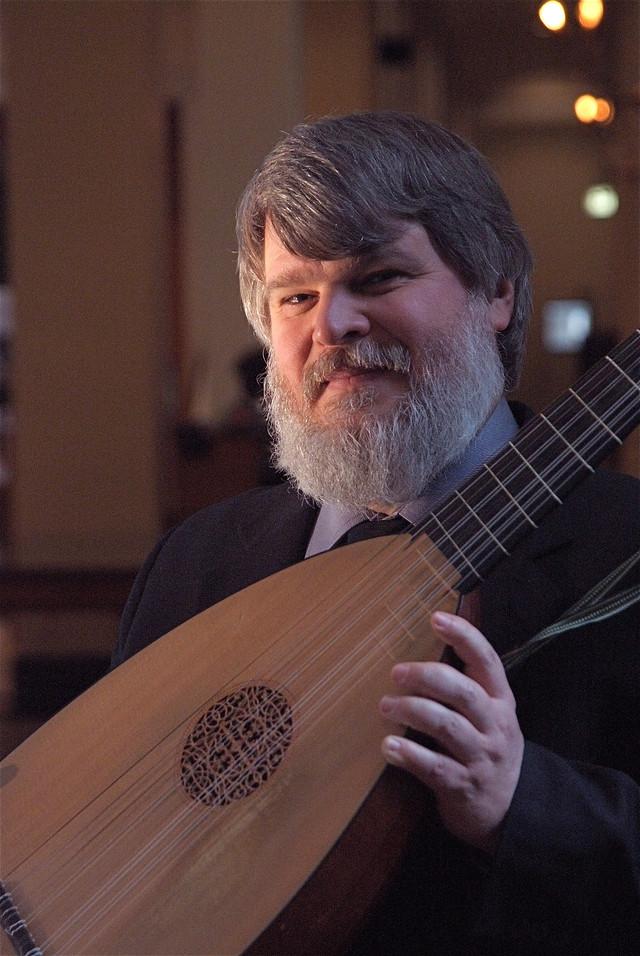
Nigel North

Classical
Chamber Music
Other European Music
 Viberate Rank: 195881
 Viberate Rank: 195881
 Monthly ListenersFollowers
 Subscribers
 Followers
 Followers
 FansTop Spotify Songs
| Track | 7-Day Streams | |
|---|---|---|
1 | 9.53K | |
2 | 6.71K | |
3 | 1.94K | |
4 | 1.76K | |
5 | 1.35K |
Top YouTube VideosMonthly ListenersFeatured in Playlists| Playlist | Followers | |
|---|---|---|
1 |  medieval vibes Spotify | 500.32K |
2 |  Relaxing Bach Spotify | 129.35K |
3 |  Medieval Ambient Ville Pelkonen | 82.74K |
4 | Classical & Symphony Orchestra Adriansyah Wijaya | 47.77K |
5 |  Hi-fi Test Music (High Quality Audio) Ben Koomen | 31.07K |
Audience| City | Monthly Listeners | |
|---|---|---|
1 |  | 1.65K |
2 |  | 1.14K |
3 | | 851 |
4 |  | 814 |
5 |  | 811 |
See full performance history, audience data, playlist activity, rankings, comparisons, and more in Viberate music analytics. Start with a free trial, then continue with a paid plan.
Nigel North’s Spotify BioEnglish lutenist Nigel North picked up the lute in the late 1960s while studying guitar at the Guildhall School of Music. At the time, this was viewed as "slacking" to some extent, as the lute was then largely regarded as a historical curiosity rather than a pursuit that was liable to earn one a teaching position. But North found his voice in the lute and stuck with it, and managed to land a position as lute player within the Early Music Consort of London during the last part of its existence under David Munrow. North also backed up legendary countertenor Alfred Deller in some of his final recordings. As the period performance movement began to take off in the wake of Munrow's death, North was able to find work playing continuo parts in ensembles such as Academy of Ancient Music, English Concert, and le Grande Ecurie. In 1975 the Guildhall School of Music appointed North to the position of lute instructor, even though he was still a student at the time. He held this position for 21… years.
North's career as a solo artist on recordings began in 1978 with a L'Oiseau Lyre disc of music by Robert de Visée. Since then he has recorded most frequently (and arguably, best) with Linn Records in the U.K., but North has also appeared as a soloist on discs released by the Saydisc and Arcana labels. In 1988 North co-founded the ensemble Romanesca with violinist Andrew Manze and continuo keyboardist Toll. Together they recorded some of the finest discs of violin-led Baroque chamber music ever for Harmonia Mundi, including multi-award winning sets of works by Heinrich Ignaz Franz von Biber, Antonio Vivaldi, and Johann Rosenmüller. Unfortunately, when Manze accepted directorship of the Academy of Ancient Music in 1998, Romanesca's activity came to a close, and with the death of John Toll in 2001, their recorded output appears finite. North left the Guildhall School in 1996 and spent three years teaching at the Hochschule der Künst in Berlin. In 1999, North joined the faculty of Indiana University in Bloomington as a professor in the Early Music Institute there.
Viberate is a music analytics platform built for A&Rs, artist managers, labels, booking agents, marketers, and artists.
It helps music professionals track artist growth, analyze audience data, monitor playlist activity, compare artists, follow song performance, and identify opportunities across the music market.
Public artist pages provide a free preview of selected artist data. Paid plans provide access to deeper analytics, historical data, charts, comparisons, playlist tools, exports, alerts, reports, and additional professional features.
Yes. Public Viberate artist pages provide selected artist analytics and music data for free.
Viberate also offers a 7-day free trial of the full platform. A credit card is required to start the trial. The trial includes access to the complete product so users can test deeper artist analytics, historical views, playlist insights, comparisons, charts, exports, alerts, and reporting features before choosing a paid plan.
Viberate provides artist analytics across streaming, playlists, social media, video, radio airplay, songs, and audience markets.
Users can analyze Spotify performance, Spotify and Apple Music playlists, YouTube activity, TikTok and Instagram growth, radio spins, song performance, audience locations, demographics, rankings, and overall artist momentum.
Artist profiles also connect to music charts, similar artists, and comparison tools, helping users benchmark performance and evaluate artists in context.
Viberate updates key artist and track data daily.
For followed artists and tracks, selected data is refreshed multiple times per day. This helps teams monitor playlist changes, streaming movement, audience growth, releases, and campaign performance with more current data.
Update frequency can vary depending on the metric and data source.
Yes. Viberate lets users compare up to five artists side by side across streaming, social media, audience, and engagement metrics.
Users can compare fanbase growth, audience demographics, locations, Spotify performance, social metrics, and other artist data over selected time periods.
Artist comparison can be used for A&R scouting, benchmarking, booking decisions, campaign planning, and evaluating artists with similar audiences or market positions.