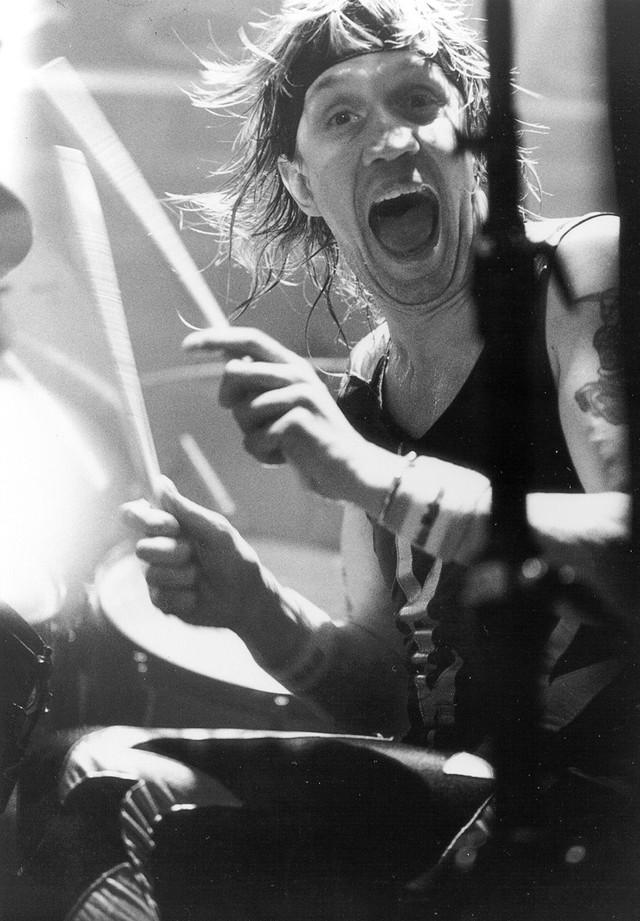
Nicko McBrain

Metal
Heavy Metal
 Viberate Rank: 348236
 Viberate Rank: 348236
 Monthly ListenersFollowers
 Subscribers
 Followers
 Followers
 FansTop Spotify Songs
| Track | 7-Day Streams | |
|---|---|---|
1 | 8.60K | |
2 | 44 |
Top YouTube VideosMonthly ListenersFeatured in Playlists| Playlist | Followers | |
|---|---|---|
1 |  Deep Cuts, Forgotten Gems & Classic Rock Gold Rick Kirby - music nerd | 5.63K |
2 | 80s Metal Rock BLOODLUST | 4.71K |
3 |  Music From The Metallica Report Metallica | 4.04K |
4 |  Deep Purple & Friends earMUSIC | 2.67K |
5 |  Song of History Max Millares | 2.58K |
Audience| City | Monthly Listeners | |
|---|---|---|
1 |  | 1.01K |
2 |  | 378 |
3 |  | 318 |
4 |  | 298 |
5 |  | 291 |
See full performance history, audience data, playlist activity, rankings, comparisons, and more in Viberate music analytics. Start with a free trial, then continue with a paid plan.
Nicko McBrain’s Spotify BioFor three decades and counting, Nicko McBrain's powerful yet virtuosic drumming has been the engine driving British heavy metal institution Iron Maiden. And although his irreverent, fun-loving personality has sometimes distracted from McBrain's superlative musicianship (and provided some much-needed comic relief for this oftentimes all-too-serious heavy metal machine), his body of work on-stage and on record have justifiably made him one of the most influential drummers in heavy metal.
Michael Henry "Nicko" McBrain was born on June 5, 1954 in the Hackney suburb of London, England, and took up playing drums at an early age after watching a television performance by jazz great Joe Morello, of the Dave Brubeck Quartet fame. McBrain became a dedicated practitioner of his instrument but agreed to stay in school long enough to earn an engineering degree at his parents' behest before becoming a professional musician. By the mid-'70s, he was quickly building his career resume, putting in time… with blues-rockers Streetwalkers, with whom he recorded two albums (1975's Downtown Flyers and 1976's Red Card), then Canadian guitar hero Pat Travers for another pair of LPs (Makin' Magic and Putting It Straight, both in 1977), amid frequent session and road work. Come the '80s, McBrain had taken over the drum stool for rising French hard rockers Trust, recording with them on 1981's Marche ou Crève, but eventually tiring of the long distance cross-Channel commute.
In 1982, he was hired to stand in for Iron Maiden drummer Clive Burr when the latter's father passed away midway through the American leg of the band's Beast on the Road tour (McBrain had befriended the group years earlier, and actually made a cameo in Maiden's video for "The Number of the Beast" dressed as the devil). But the band was so impressed with McBrain's talents that his status was upgraded from temporary to permanent replacement by the time Iron Maiden entered Compass Point Studios in the Bahamas to begin working on 1983's landmark Piece of Mind album. And critics agreed that McBrain immediately left a mark on Maiden's sound, showcasing his uncommon single-pedal foot speed and manual dexterity on challenging numbers like "Where Eagles Dare," "The Trooper," and "Dune (To Tame a Land)." But the new boy didn't convert all of the group's fans quite as easily, because many of these were accustomed to Burr's looser, instinctive feel and more familiar metallic thudding; by comparison, McBrain's agile touch and intricate style (characterized by a tight, snappy drum sound informed by his early jazz influences) took some getting used to. Nevertheless, the drummer's unquestionable talent, tireless work ethic, and natural bonhomie would eventually endear him to all and sundry, and he has carried on performing with the group ever since, completing the "classic" lineup that oversaw their most prosperous career period, through the rough 90s and onward into their new millennium rebirth. Ironically, McBrain converted to Christianity in 1999, but this has in no way affected his involvement with Iron Maiden, despite the fact that many of the group's songs openly question fundamental biblical principles. ~ Eduardo Rivadavia, Rovi
Viberate is a music analytics platform built for A&Rs, artist managers, labels, booking agents, marketers, and artists.
It helps music professionals track artist growth, analyze audience data, monitor playlist activity, compare artists, follow song performance, and identify opportunities across the music market.
Public artist pages provide a free preview of selected artist data. Paid plans provide access to deeper analytics, historical data, charts, comparisons, playlist tools, exports, alerts, reports, and additional professional features.
Yes. Public Viberate artist pages provide selected artist analytics and music data for free.
Viberate also offers a 7-day free trial of the full platform. A credit card is required to start the trial. The trial includes access to the complete product so users can test deeper artist analytics, historical views, playlist insights, comparisons, charts, exports, alerts, and reporting features before choosing a paid plan.
Viberate provides artist analytics across streaming, playlists, social media, video, radio airplay, songs, and audience markets.
Users can analyze Spotify performance, Spotify and Apple Music playlists, YouTube activity, TikTok and Instagram growth, radio spins, song performance, audience locations, demographics, rankings, and overall artist momentum.
Artist profiles also connect to music charts, similar artists, and comparison tools, helping users benchmark performance and evaluate artists in context.
Viberate updates key artist and track data daily.
For followed artists and tracks, selected data is refreshed multiple times per day. This helps teams monitor playlist changes, streaming movement, audience growth, releases, and campaign performance with more current data.
Update frequency can vary depending on the metric and data source.
Yes. Viberate lets users compare up to five artists side by side across streaming, social media, audience, and engagement metrics.
Users can compare fanbase growth, audience demographics, locations, Spotify performance, social metrics, and other artist data over selected time periods.
Artist comparison can be used for A&R scouting, benchmarking, booking decisions, campaign planning, and evaluating artists with similar audiences or market positions.