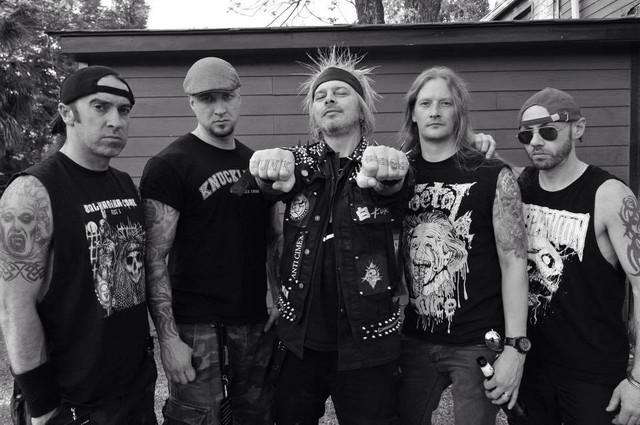
Nasum

Metal
Grindcore
Death Metal
 Viberate Rank: 122760
 Viberate Rank: 122760
 Monthly ListenersFollowers
 Subscribers
 Followers
 Followers
 FansTop Spotify Songs
| Track | 7-Day Streams | |
|---|---|---|
1 | 2.15K | |
2 | 1.59K | |
3 | 1.11K | |
4 | 1.09K | |
5 | 974 |
Top YouTube VideosMonthly ListenersFeatured in Playlists| Playlist | Followers | |
|---|---|---|
1 |  Death Metal Classics @MansenSankari | 127.50K |
2 |  GRINDCORE TeoDaCasteo | 16.57K |
3 | Metal🤘🏻 Naydil González | 16.45K |
4 | Grindcore classics MillisKav | 16.13K |
5 |  Crust Punk / D-Beat Miguel Ciprés Avendaño | 12.56K |
Audience| City | Monthly Listeners | |
|---|---|---|
1 |  | 244 |
2 | | 212 |
3 |  | 180 |
4 | | 178 |
5 |  | 152 |
See full performance history, audience data, playlist activity, rankings, comparisons, and more in Viberate music analytics. Start with a free trial, then continue with a paid plan.
Nasum’s Spotify BioNasum, a Swedish grindcore band formed in 1992 by Necrony members Anders Jakobson (guitar) and Rickard Alriksson (drums and vocals), would develop into one of that country's premier metal acts, but would be felled tragically by the events of the December 2004 tsunami that brought mass destruction to Thailand, ending the life of (eventual) vocalist and beloved member Mieszko Talarczyk. The original idea was to create a more pure Napalm Death-style grindcore act, based less on theatrics and gore and more on a straight-ahead political message, and although the band sort of let that concept fall to the wayside at the outset, the label that handled parent band Necrony offered Nasum a slot on a split EP. With the idea of recording for an actual release as motivation, Nasum took on a new member in guitarist Talarczyk and recorded six tracks, which would end up on the Blind World split EP, with the band Agathocles making up the remainder. A handful of compilation appearances followed, as well… as a few more split 7" appearances, which led to Nasum securing a deal to record an MCD (mini compact disc) of their own with Poserlsaughter Records in 1995.
With the release of the MCD ready to roll, label Poserslaughter scored Nasum a gig in Germany, but founder and drummer Alriksson balked at the notion of live performance, and called it a day. Jakobson would eventually move into the vacant drummer's position, and Talarczyk would take on vocal duties in addition to guitar in response to the sudden roster change. More recording -- for EPs, splits, and compilations -- followed over 1996 and 1997, and in 1998 Nasum released their first full-length album, Inhale/Exhale, on Relapse, an American label that had fallen in love with the band's sound after hearing Nasum's recent recordings. With momentum and popularity on the rise and an ever increasing performance schedule, Nasum opted to move past the days of the duo and added full-time bassist Jesper Liveröd (from Burst) in late 1998. The band finished up the millennium appearing at the Milwaukee Metal Fest as well as entering the studio to work on album number two. In April of 2000, Human 2.0 was released, and the band spent the lion's share of the next two-plus years touring and performing in support of the work, including a stop in Japan. Released in 2003, Helvete, which featured the talents ofNapalm Death's Shane Embury, was well received, and led to even more high-profile appearances, especially on the European festival circuit. During the development of Helvete, Nasum added second guitarist Urban Skytt and bassist Jon Lindqvist, who took the place of departing member Liveröd. In 2004, Nasum unveiled album number four, Shift, and followed the release with further touring.
Plans for the new year were being laid out -- including new recordings and tours -- as the year wound down, and with a break in the action, vocalist and guitarist Talarczyk decided on a Thai vacation to celebrate his 30th birthday. After the tsunami hit that country -- a result from a massive earthquake in the Indian Ocean -- Talarczyk was listed as missing. Fearing the worst, the band decided to end Nasum, and on February 17, 2005, Talarczyk's death was officially confirmed. To celebrate and honor the work of Talarczyk and Nasum, a two-disc compilation of all of the band's non-album work was made available in 2006, entitled Grind Finale. A live album featuring a 2004 show from Osaka, entitled Doombringer, was released in early 2008. The remaining members of Nasum either went back to their parent bands or began work on new projects. ~ Chris True, Rovi
Viberate is a music analytics platform built for A&Rs, artist managers, labels, booking agents, marketers, and artists.
It helps music professionals track artist growth, analyze audience data, monitor playlist activity, compare artists, follow song performance, and identify opportunities across the music market.
Public artist pages provide a free preview of selected artist data. Paid plans provide access to deeper analytics, historical data, charts, comparisons, playlist tools, exports, alerts, reports, and additional professional features.
Yes. Public Viberate artist pages provide selected artist analytics and music data for free.
Viberate also offers a 7-day free trial of the full platform. A credit card is required to start the trial. The trial includes access to the complete product so users can test deeper artist analytics, historical views, playlist insights, comparisons, charts, exports, alerts, and reporting features before choosing a paid plan.
Viberate provides artist analytics across streaming, playlists, social media, video, radio airplay, songs, and audience markets.
Users can analyze Spotify performance, Spotify and Apple Music playlists, YouTube activity, TikTok and Instagram growth, radio spins, song performance, audience locations, demographics, rankings, and overall artist momentum.
Artist profiles also connect to music charts, similar artists, and comparison tools, helping users benchmark performance and evaluate artists in context.
Viberate updates key artist and track data daily.
For followed artists and tracks, selected data is refreshed multiple times per day. This helps teams monitor playlist changes, streaming movement, audience growth, releases, and campaign performance with more current data.
Update frequency can vary depending on the metric and data source.
Yes. Viberate lets users compare up to five artists side by side across streaming, social media, audience, and engagement metrics.
Users can compare fanbase growth, audience demographics, locations, Spotify performance, social metrics, and other artist data over selected time periods.
Artist comparison can be used for A&R scouting, benchmarking, booking decisions, campaign planning, and evaluating artists with similar audiences or market positions.