Mulgrew Miller

Jazz
Smooth Jazz
 Viberate Rank: 167520
 Viberate Rank: 167520
 Monthly ListenersFollowers
 Subscribers
 Followers
 Followers
 FansTop Spotify Songs
| Track | 7-Day Streams | |
|---|---|---|
1 | 20.48K | |
2 | 5.48K | |
3 | 2.07K | |
4 | 1.78K | |
5 | 1.16K |
Top YouTube VideosMonthly ListenersFeatured in Playlists| Playlist | Followers | |
|---|---|---|
1 |  Smooth Jazz Piano funkyjlo | 155.13K |
2 |  Best of the Best of Jazz 118614068 | 61.29K |
3 |  Instrumental Jazz Valdemar Bille-Lauridsen | 45.25K |
4 |  JAZZ CHILLOUT 1296362009 | 44.19K |
5 |  Old Jazz Classics Alden Singleton | 36.72K |
Audience| City | Monthly Listeners | |
|---|---|---|
1 | | 993 |
2 |  | 845 |
3 |  | 708 |
4 | | 702 |
5 |  | 660 |
See full performance history, audience data, playlist activity, rankings, comparisons, and more in Viberate music analytics. Start with a free trial, then continue with a paid plan.
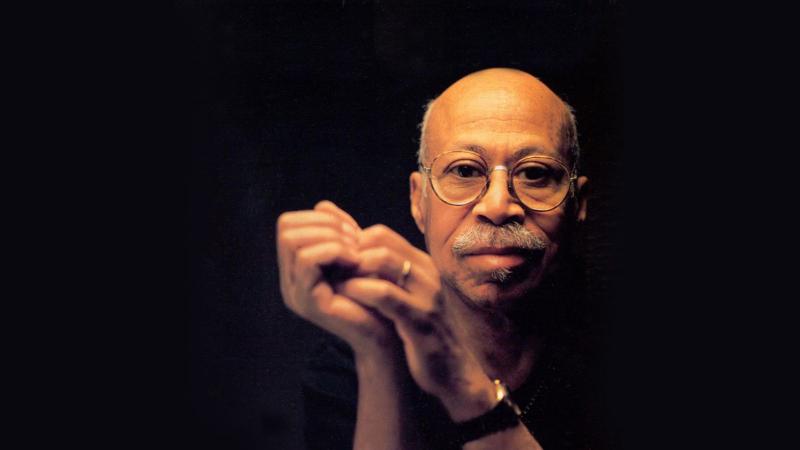
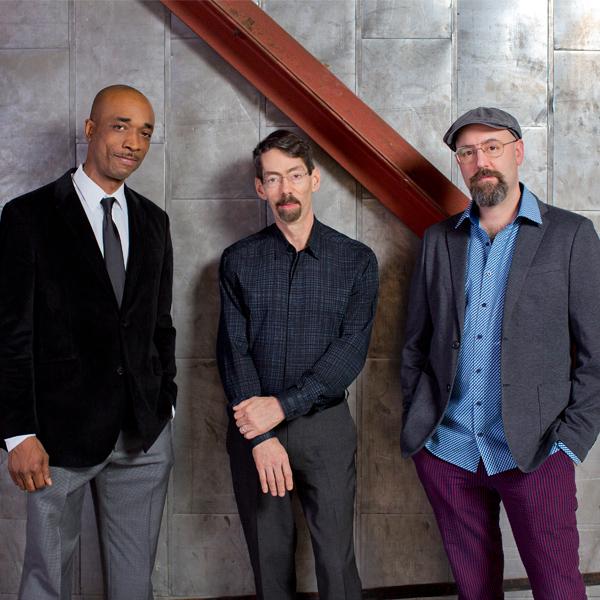
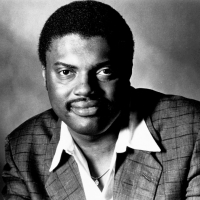
Mulgrew Miller’s Spotify BioAn immensely gifted pianist steeped in the jazz and gospel traditions, Mulgrew Miller had a boldly rhythmic, harmonically rich style that drew from players like Oscar Peterson, McCoy Tyner, and Bud Powell. Miller came into his own as a member of both Woody Shaw's band and Art Blakey's Jazz Messengers in the early '80s, before issuing his own highly regarded trio and small group albums, like 1985's Keys to the City, 1987's Wingspan, and 1994's With Our Own Eyes. All the while, he continued to find himself in demand as a sideman, playing with artists such as Branford Marsalis, Freddie Hubbard, Bobby Hutcherson, Wallace Roney, Tony Williams, and Kenny Garrett. Along with performing, he garnered respect as an educator, holding the position of Director of Jazz Studies at William Paterson University. His only solo piano album, Solo, arrived in 2010, just three years before he died tragically from a stroke. Miller remains one of the most beloved and highly regarded pianists of his generation,… a sentiment buoyed by such posthumous archival releases as 2019's The Art of the Duo with Kenny Barron and 2021's In Harmony with Roy Hargrove.
Miller was born in 1955 in Greenwood, Mississippi, where he started to play piano by ear at age six. He began taking piano lessons and excelled, eventually performing at dances and playing gospel music at church. Early on, he gained inspiration from Ramsey Lewis. However, by his teens he was studying the music of Oscar Peterson, along other players like Art Tatum and Erroll Garner. He also began leading his own trio, performing at local functions. After high school, he enrolled at Memphis State University, attending on a band scholarship that found him playing euphonium. However, it was while at school that he met pianists Donald Brown and James Williams, who further encouraged his development, introducing him to the music of players like Bud Powell, Wynton Kelly, and McCoy Tyner. He also met trumpeter Woody Shaw, with whom he would later perform.
Following his university years, Miller spent time in Boston studying privately with Madame Margaret Chaloff. He also found work, playing with saxophonists Ricky Ford and Bill Pierce, before relocating to Los Angeles. In 1976, he accepted the piano chair in the Mercer Ellington Orchestra, touring with the ensemble for three years.
In 1980, he toured with vocalist Betty Carter and then joined Woody Shaw, with whom he made his recorded debut on 1981's United. There were also dates with Johnny Griffin, Bobby Watson, Terence Blanchard, and others. It was on the recommendation of Blanchard and Donald Harrison that Miller was recruited into Art Blakey's Jazz Messengers, touring and recording with the legendary drummer from 1983 to 1986. Under Blakey's forceful sway, Miller matured as a player, solidifying his reputation as one of the most authoritative pianists of his generation. His contemporaries and elders took notice, and Miller found himself recording throughout the '80s with such luminaries as Branford Marsalis, Bobby Hutcherson, Wallace Roney, Joe Henderson, Benny Golson, Kenny Garrett, Freddie Hubbard, and more.
As a leader, Miller made his solo debut with 1985's Keys to the City on Landmark, a trio album with bassist Ira Coleman and drummer Marvin "Smitty" Smith. More albums followed on the label, including 1986's Work! with bassist Charnett Moffett and drummer Terri Lynne Carrington, and 1987's Wingspan, a sextet date with Moffett, saxophonist Kenny Garrett, vibraphonist Steve Nelson, and others. He also formed Trio Transition with Reggie Workman and Freddie Waits, recording several albums, including a 1987 session with Oliver Lake. Away from his solo work and after he had parted ways with Blakey, he joined drummer Tony Williams' group, performing with the former Miles Davis alum until the group disbanded in 1993.
In 1992, Miller moved to the Novus label with Hand in Hand, playing in both a quintet and sextet with Kenny Garrett, Christian McBride, Joe Henderson, Eddie Henderson, Steve Nelson, and Lewis Nash. He released several more trio albums with bassist Richie Goods and drummer Karriem Riggins, including 1995's Getting to Know You. He also paired with bassist Niels-Henning Ørsted Pedersen for 1999's The Duets, drawing inspiration from the 1940s work of Duke Ellington and Jimmy Blanton. The '90s also found him working with a bevy acclaimed performers, including Donald Byrd, Joe Lovano, and Dianne Reeves. He recorded regularly with Wallace Roney, appeared with the Jazz at Lincoln Center Orchestra, and toured with the New York Jazz Giants, an all-star ensemble featuring Jon Faddis, Tom Harrell, Lew Tabackin, Bobby Watson, Ray Drummond, and Carl Allen.
The early 2000s found Miller continuing to lead his group, releasing albums on MaxJazz like 2002's The Sequel and 2004's Live at Yoshi's, Vol. 1. He also recorded with Brian Lynch, Jeremy Pelt, Ron Carter, Cassandra Wilson, and others. Miller moved into education, accepting the position of Director of Jazz Studies at William Paterson University in 2005. Around the same time, Lafayette College awarded him an honorary doctorate in Performing Arts and hosted him as Artist in Residence. He still remained active as a performer, joining Dave Holland's sextet and John Scofield's band. Solo, a solo piano concert Miller gave at the Jazz en Tête festival in Clermont-Ferrand, France in 2000, arrived on Space Time Records in 2010. That same year, Miller suffered a minor stroke. Following a period of recovery he returned to work, performing in Denmark with the Klüvers Big Band, working in a duo with Kenny Barron, and touring Europe with Yusef Lateef and Archie Shepp. Sadly, Miller suffered a second stroke and died in Allentown, Pennsylvania on May 29, 2013; he was 57 years old.
A posthumous album of duo performances with pianist Barron, The Art of the Duo, arrived in 2019. A second duo album, In Harmony, appeared in 2021 and featured Miller in two concerts from 2006 and 2007 with trumpeter Roy Hargrove. ~ Matt Collar, Rovi
Viberate is a music analytics platform built for A&Rs, artist managers, labels, booking agents, marketers, and artists.
It helps music professionals track artist growth, analyze audience data, monitor playlist activity, compare artists, follow song performance, and identify opportunities across the music market.
Public artist pages provide a free preview of selected artist data. Paid plans provide access to deeper analytics, historical data, charts, comparisons, playlist tools, exports, alerts, reports, and additional professional features.
Yes. Public Viberate artist pages provide selected artist analytics and music data for free.
Viberate also offers a 7-day free trial of the full platform. A credit card is required to start the trial. The trial includes access to the complete product so users can test deeper artist analytics, historical views, playlist insights, comparisons, charts, exports, alerts, and reporting features before choosing a paid plan.
Viberate provides artist analytics across streaming, playlists, social media, video, radio airplay, songs, and audience markets.
Users can analyze Spotify performance, Spotify and Apple Music playlists, YouTube activity, TikTok and Instagram growth, radio spins, song performance, audience locations, demographics, rankings, and overall artist momentum.
Artist profiles also connect to music charts, similar artists, and comparison tools, helping users benchmark performance and evaluate artists in context.
Viberate updates key artist and track data daily.
For followed artists and tracks, selected data is refreshed multiple times per day. This helps teams monitor playlist changes, streaming movement, audience growth, releases, and campaign performance with more current data.
Update frequency can vary depending on the metric and data source.
Yes. Viberate lets users compare up to five artists side by side across streaming, social media, audience, and engagement metrics.
Users can compare fanbase growth, audience demographics, locations, Spotify performance, social metrics, and other artist data over selected time periods.
Artist comparison can be used for A&R scouting, benchmarking, booking decisions, campaign planning, and evaluating artists with similar audiences or market positions.