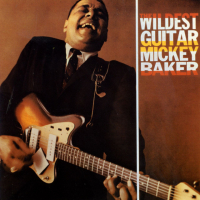
Mickey Baker

Blues
Blues Rock
Smooth Jazz
 Viberate Rank: 112704
 Viberate Rank: 112704
 Monthly ListenersFollowers
 Subscribers
 Followers
 Followers
 FansTop Spotify Songs
| Track | 7-Day Streams | |
|---|---|---|
1 | 162.13K | |
2 | 9.09K | |
3 | 932 | |
4 | 865 | |
5 | 813 |
Top YouTube VideosMonthly ListenersFeatured in Playlists| Playlist | Followers | |
|---|---|---|
1 |  60 & 70's oldies menjasa_bcn | 59.38K |
2 |  valentine’s day 💌 caelyn | 28.49K |
3 | CWW Larry Little | 5.26K |
4 | Mostly 50s stuff Albin Wig | 4.57K |
5 |  come here lover boy miss roman | 4.08K |
Audience| City | Monthly Listeners | |
|---|---|---|
1 | | 386 |
2 |  | 356 |
3 | | 337 |
4 |  | 314 |
5 | | 310 |
See full performance history, audience data, playlist activity, rankings, comparisons, and more in Viberate music analytics. Start with a free trial, then continue with a paid plan.
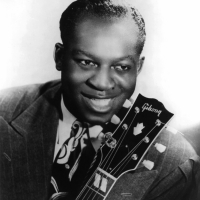
Mickey Baker’s Spotify BioOf all the guitarists who helped transform rhythm & blues into rock & roll, Mickey Baker was one of the very most important, ranking almost on the level of Chuck Berry and Bo Diddley. The reason he wasn't nearly as well known as those legends is that a great deal of his work wasn't issued under his own name, but as a backing guitarist for many R&B and rock & roll musicians. Baker originally aspired to be a jazz musician, but turned to calypso, mambo, and then R&B, where the most work could be found.
In the early and mid-'50s, he did countless sessions for Atlantic, King, RCA, Decca, and OKeh, playing on such classics as the Drifters' "Money Honey" and "Such a Night," Joe Turner's "Shake, Rattle & Roll," Ruth Brown's "Mama, He Treats Your Daughter Mean," and Big Maybelle's "Whole Lot of Shakin' Going On." He also released a few singles under his own name, and made a Latin jazz-tinged solo album, Guitar Mambo.
Baker's best work, though, was recorded as half of the duo Mickey & Sylvia.… Their hit "Love Is Strange," as well as several other unknown but nearly equally strong tracks, featured Baker's keening, bluesy guitar riffs, which were gutsier and more piercing than most anything else around in the late '50s. Mickey & Sylvia split in the late '50s (though they recorded off and on until the middle of the next decade), and Baker recorded his best solo album, the all-instrumental The Wildest Guitar. In 1961, he took the male spoken part (usually assumed to be Ike Turner) on Ike & Tina Turner's first hit, "It's Gonna Work Out Fine." Shortly afterwards he moved to France, making a few hard-to-find solo records and working with a lot of French pop and rock performers, including Ronnie Bird, the best '60s French rock singer. He recorded only sporadically after the mid-'60s. Mickey Baker died at his home in Montastruc-la-Conseillère, France on November 27, 2012, at the age of 87. ~ Richie Unterberger, Rovi
Viberate is a music analytics platform built for A&Rs, artist managers, labels, booking agents, marketers, and artists.
It helps music professionals track artist growth, analyze audience data, monitor playlist activity, compare artists, follow song performance, and identify opportunities across the music market.
Public artist pages provide a free preview of selected artist data. Paid plans provide access to deeper analytics, historical data, charts, comparisons, playlist tools, exports, alerts, reports, and additional professional features.
Yes. Public Viberate artist pages provide selected artist analytics and music data for free.
Viberate also offers a 7-day free trial of the full platform. A credit card is required to start the trial. The trial includes access to the complete product so users can test deeper artist analytics, historical views, playlist insights, comparisons, charts, exports, alerts, and reporting features before choosing a paid plan.
Viberate provides artist analytics across streaming, playlists, social media, video, radio airplay, songs, and audience markets.
Users can analyze Spotify performance, Spotify and Apple Music playlists, YouTube activity, TikTok and Instagram growth, radio spins, song performance, audience locations, demographics, rankings, and overall artist momentum.
Artist profiles also connect to music charts, similar artists, and comparison tools, helping users benchmark performance and evaluate artists in context.
Viberate updates key artist and track data daily.
For followed artists and tracks, selected data is refreshed multiple times per day. This helps teams monitor playlist changes, streaming movement, audience growth, releases, and campaign performance with more current data.
Update frequency can vary depending on the metric and data source.
Yes. Viberate lets users compare up to five artists side by side across streaming, social media, audience, and engagement metrics.
Users can compare fanbase growth, audience demographics, locations, Spotify performance, social metrics, and other artist data over selected time periods.
Artist comparison can be used for A&R scouting, benchmarking, booking decisions, campaign planning, and evaluating artists with similar audiences or market positions.