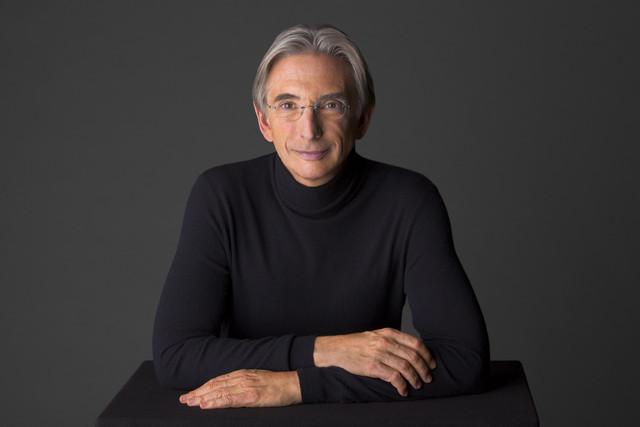
Michael Tilson Thomas

Classical
Orchestral
 Viberate Rank: 82332
 Viberate Rank: 82332
 Monthly ListenersFollowers
 Subscribers
 Followers
 Followers
 FansTop Spotify SongsTop YouTube VideosMonthly ListenersFeatured in Playlists
| Playlist | Followers | |
|---|---|---|
1 |  Epic Classical Spotify | 705.95K |
2 |  Classical Ballet Spotify | 354.81K |
3 |  Fidi & Bumsi Spotify | 353.23K |
4 |  This Is Debussy Spotify | 260.71K |
5 |  Classical Wedding Spotify | 189.86K |
Audience| City | Monthly Listeners | |
|---|---|---|
1 |  | 9.66K |
2 |  | 6.06K |
3 |  | 5.40K |
4 |  | 4.53K |
5 |  | 4.36K |
See full performance history, audience data, playlist activity, rankings, comparisons, and more in Viberate music analytics. Start with a free trial, then continue with a paid plan.
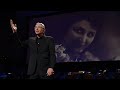
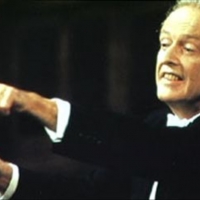
Michael Tilson Thomas’ Spotify BioMichael Tilson Thomas is among the most famous American-born conductors, best known as the longtime conductor of the San Francisco Symphony. He has a bright, extroverted personality and a wide-ranging repertoire that allows him to take a place at the forefront of experimentation with the form and content of symphonic concerts, combining his eclectic style with various American music styles. He is also a respected composer, with his You Come Here Often?, for solo piano being featured on Yuja Wang's 2023 album The American Project.
Tilson Thomas was born in Los Angeles on December 12, 1944. He was musically influenced by his family: his grandparents were Boris and Bessie Thomaschevsky, founders of New York's Yiddish Theater, and his father Ted Thomas was an avid amateur pianist and worked in films and television. He studied piano at the University of Southern California with John Crown and conducting and composing with Ingolf Dahl. At the age of 19, he was named the music director of the… Young Musicians Foundation Orchestra and accompanied master classes by Jascha Heifetz and Gregor Piatigorsky. Tilson Thomas became the assistant conductor of the Boston Symphony Orchestra in 1969 after winning the Koussevitzky Prize at Tanglewood.
On October 22, 1969, he was called to replace William Steinberg during a Carnegie Hall concert, repeating the circumstances of Leonard Bernstein's sensational debut 26 years earlier with nearly identical results: Tilson Thomas was catapulted into the top ranks of American conductors. In 1970, he was appointed the associate conductor of the Boston Symphony and then principal guest conductor until 1974. He served as the music director of the Buffalo Philharmonic Orchestra (1971-1979), principal guest conductor of the Los Angeles Philharmonic (1981-1985), and principal conductor of the London Symphony Orchestra (1988-1995). In 1987, recognizing a need for music graduates to gain experience, he created the New World Symphony in Miami Beach; he served as the group's artistic director from its creation until 2022.
Tilson Thomas has also spent time composing, writing From the Diary of Anne Frank on commission from UNICEF in 1990 (the premiere was narrated by actress Audrey Hepburn). In 1995, he was commissioned by Hiroshima, Japan, to write Shówa/Shoáh for the 50th anniversary of the bombing of the city. That year, Tilson Thomas was appointed as the 11th music director of the San Francisco Symphony Orchestra. Upon taking the post with the San Francisco Symphony, he became the principal guest conductor of the London Symphony. Together, he and the San Francisco Symphony went on international tours, won a 1997 Grammy Award for their recording of Prokofiev's Romeo and Juliet, created the cross-platform educational program Keeping Score, and launched their own label in 2001, where many of Tilson Thomas' recordings with the orchestra have been released. Among these is one of Mahler's Symphony No. 5, which was issued in 2006.
In 2016, Tilson Thomas was named conductor laureate of the London Symphony, and the following year, he announced his retirement at the end of the 2019-2020 season. He led the San Francisco Symphony on a complete cycle of Robert Schumann's symphonies in 2017. In 2020, he led the orchestra on a recording of his From the Diary of Anne Frank and Meditations on Rilke. Due to the coronavirus pandemic that year, the San Francisco Symphony's planned farewell festivities to conclude Tilson Thomas' tenure were re-organized as a 25-day online celebration. He took the post of music director laureate and led the orchestra for several weekends a season. Tilson Thomas was diagnosed with brain cancer in 2021; he subsequently underwent surgery and treatment. He continued to conduct and compose, and in 2023, his solo piano work, You Come Here Often?, was included on Yuja Wang's Grammy-winning album The American Project. Tilson Thomas retired from conducting due to health concerns after a performance in January of 2024. He led Mahler's Fifth Symphony in his final concert, bookending his career with the San Francisco Symphony with the same composer he also conducted in his 1974 debut.
Tilson Thomas is a Chevalier dans l'ordre des Arts et des Lettres of France. In 2009, he received the National Medal of Arts, the highest artistic award given in the United States, and in 2019, he received the Kennedy Center Honor. He has won 12 Grammy Awards in several categories, including Best Orchestral Performance and Best Classical Album. ~ TiVo Staff, Rovi
Viberate is a music analytics platform built for A&Rs, artist managers, labels, booking agents, marketers, and artists.
It helps music professionals track artist growth, analyze audience data, monitor playlist activity, compare artists, follow song performance, and identify opportunities across the music market.
Public artist pages provide a free preview of selected artist data. Paid plans provide access to deeper analytics, historical data, charts, comparisons, playlist tools, exports, alerts, reports, and additional professional features.
Yes. Public Viberate artist pages provide selected artist analytics and music data for free.
Viberate also offers a 7-day free trial of the full platform. A credit card is required to start the trial. The trial includes access to the complete product so users can test deeper artist analytics, historical views, playlist insights, comparisons, charts, exports, alerts, and reporting features before choosing a paid plan.
Viberate provides artist analytics across streaming, playlists, social media, video, radio airplay, songs, and audience markets.
Users can analyze Spotify performance, Spotify and Apple Music playlists, YouTube activity, TikTok and Instagram growth, radio spins, song performance, audience locations, demographics, rankings, and overall artist momentum.
Artist profiles also connect to music charts, similar artists, and comparison tools, helping users benchmark performance and evaluate artists in context.
Viberate updates key artist and track data daily.
For followed artists and tracks, selected data is refreshed multiple times per day. This helps teams monitor playlist changes, streaming movement, audience growth, releases, and campaign performance with more current data.
Update frequency can vary depending on the metric and data source.
Yes. Viberate lets users compare up to five artists side by side across streaming, social media, audience, and engagement metrics.
Users can compare fanbase growth, audience demographics, locations, Spotify performance, social metrics, and other artist data over selected time periods.
Artist comparison can be used for A&R scouting, benchmarking, booking decisions, campaign planning, and evaluating artists with similar audiences or market positions.