Adrian Chandler

Classical
Classical Crossover
Chamber Music
 Viberate Rank: 80137
 Viberate Rank: 80137
 Monthly ListenersFollowers
 Subscribers
 Followers
 Followers
 FansTop Spotify Songs
| Track | 7-Day Streams | |
|---|---|---|
1 | 242.70K | |
2 | 21.78K | |
3 | 16.83K | |
4 | 16.38K | |
5 | 14.53K |
Top YouTube VideosMonthly ListenersFeatured in Playlists| Playlist | Followers | |
|---|---|---|
1 |  Dramatic Classical Spotify | 521.92K |
2 |  This Is Vivaldi Spotify | 477.42K |
3 |  Baroque Classics Spotify | 387.96K |
4 |  Feel Good Classical Spotify | 283.13K |
5 |  Violent, aggressive and dramatic classical music Hanna 🌻 | 221.82K |
Audience| City | Monthly Listeners | |
|---|---|---|
1 |  | 19.97K |
2 |  | 13.93K |
3 |  | 13.44K |
4 |  | 12.01K |
5 | | 10.57K |
See full performance history, audience data, playlist activity, rankings, comparisons, and more in Viberate music analytics. Start with a free trial, then continue with a paid plan.
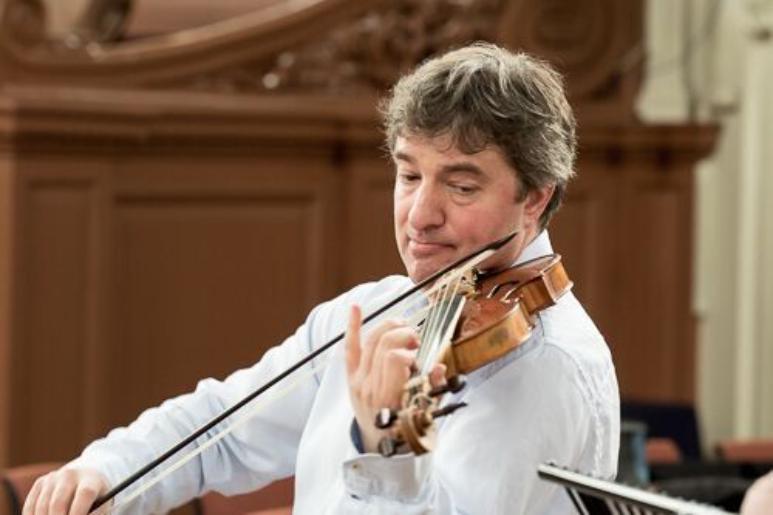
Adrian Chandler’s Spotify BioBest known as the leader of the historical performance group La Serenissima, Baroque violinist Adrian Chandler has also performed with many other ensembles. He combines a scholarly approach with an edgy virtuosity that, in the words of the Guardian, "would have awed Hendrix."
Chandler was born in England's Merseyside region near Liverpool in 1974. At the age of ten, he heard Baroque violinist Iona Brown performing the Vivaldi Four Seasons violin concertos, and his choice of career was set. Chandler attended the Royal College of Music in London, studying violin with Rodney Friend. While still a student there, he founded La Serenissima, often performing concertos and conducting the group. La Serenissima went on to become one of Britain's top early music groups, maintaining a busy schedule at British venues, including Wigmore Hall and Bridgewater Hall. With that group, Chandler released his debut album, Per Monsieur Pisendel, in 2003 on the Avie label. In 2016 and 2017, the group held a… residence at St. John's Smith Square Church. He has led La Serenissima from the violin in performances of six Vivaldi operas, and his performances have emphasized the music of that composer. Chandler has also performed as a soloist with many other groups, including the Avison Ensemble, Musicians of the Globe, and the New London Consort. Chandler also performs on a modern violin, playing sonatas by Mozart and Beethoven in Japan.
Chandler earned a three-year fellowship at Southampton University to study the development of the North Italian violin concerto from 1690 to 1740 (and he joined the school's faculty as well). The fruits of his research were audible on The Rise of the North Italian Violin Concerto, Vols. 1, 2, and 3, released from 2006 to 2008 on the Avie label. Chandler has recorded mostly for that label but moved to Signum Classics in 2019 for the album The Godfather: Masters of the German & Italian Baroque. He followed that up in 2020 with Extra Time, an album of unusual concertos by Vivaldi, Giuseppe Antonio Brescianello, Nicola Matteis, and others. Chandler remained active in the recording studio during the COVID-19 pandemic, releasing four innovatively programmed albums in 2021 and 2022; these included Vivaldi's Women: Instrumental and Vocal Sacred Music. He returned on Signum Classics in 2023 with the album An Englishman Abroad: Nicola Matteis and the English Style in 18th Century Europe. By that time, his recording catalog comprised some 25 items. ~ James Manheim, Rovi
Viberate is a music analytics platform built for A&Rs, artist managers, labels, booking agents, marketers, and artists.
It helps music professionals track artist growth, analyze audience data, monitor playlist activity, compare artists, follow song performance, and identify opportunities across the music market.
Public artist pages provide a free preview of selected artist data. Paid plans provide access to deeper analytics, historical data, charts, comparisons, playlist tools, exports, alerts, reports, and additional professional features.
Yes. Public Viberate artist pages provide selected artist analytics and music data for free.
Viberate also offers a 7-day free trial of the full platform. A credit card is required to start the trial. The trial includes access to the complete product so users can test deeper artist analytics, historical views, playlist insights, comparisons, charts, exports, alerts, and reporting features before choosing a paid plan.
Viberate provides artist analytics across streaming, playlists, social media, video, radio airplay, songs, and audience markets.
Users can analyze Spotify performance, Spotify and Apple Music playlists, YouTube activity, TikTok and Instagram growth, radio spins, song performance, audience locations, demographics, rankings, and overall artist momentum.
Artist profiles also connect to music charts, similar artists, and comparison tools, helping users benchmark performance and evaluate artists in context.
Viberate updates key artist and track data daily.
For followed artists and tracks, selected data is refreshed multiple times per day. This helps teams monitor playlist changes, streaming movement, audience growth, releases, and campaign performance with more current data.
Update frequency can vary depending on the metric and data source.
Yes. Viberate lets users compare up to five artists side by side across streaming, social media, audience, and engagement metrics.
Users can compare fanbase growth, audience demographics, locations, Spotify performance, social metrics, and other artist data over selected time periods.
Artist comparison can be used for A&R scouting, benchmarking, booking decisions, campaign planning, and evaluating artists with similar audiences or market positions.