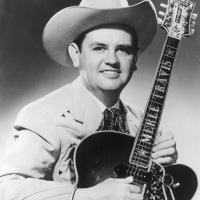
Merle Travis

Country
Contemporary Country
Bluegrass
Classic Blues
 Viberate Rank: 114911
 Viberate Rank: 114911
 Monthly ListenersFollowers
 Subscribers
 Followers
 Followers
 FansTop Spotify Songs
| Track | 7-Day Streams | |
|---|---|---|
1 | 12.42K | |
2 | 7.84K | |
3 | 5.09K | |
4 | 4.83K | |
5 | 2.92K |
Top YouTube VideosMonthly ListenersFeatured in Playlists| Playlist | Followers | |
|---|---|---|
1 |  Fallout Radio Spotify | 297.39K |
2 |  40s Country Spotify | 149.76K |
3 |  old western classic Renzo | 84.24K |
4 | Wasteland Radio Expanded Neale Christopher Zeringue | 76.99K |
5 |  The Morning Show - soundtrack seasons 1, 2, 3 & 4 your own kind of music | 43.22K |
Audience| City | Monthly Listeners | |
|---|---|---|
1 | | 957 |
2 | | 763 |
3 | | 762 |
4 | | 762 |
5 | | 710 |
See full performance history, audience data, playlist activity, rankings, comparisons, and more in Viberate music analytics. Start with a free trial, then continue with a paid plan.
Merle Travis’ Spotify BioMerle Travis was virtually without peer as a guitarist and songwriter. A unique stylist, he was respected and prominent enough to have an instrumental style ("Travis picking") named after him, and only Chet Atkins even comes close to the influence that Travis had on the way the guitar is understood and played in country music. (Indeed, Atkins was initially signed to RCA to be that label's Merle Travis.) As a songwriter, he wasn't far behind, with originals such as "Sixteen Tons" crossing over as popular standards in the hands of other artists. He even played two different vital and indirect roles in the development of rock & roll, and was no slouch as a recording artist, with his own share of chart hits and novelty songs.
Merle Robert Travis was born on November 29, 1917, in Rosewood, Kentucky. His father was a coal miner, and the family lived on the bare edge of poverty; eventually this experience, coupled with a phrase that Travis' father used to describe their lives, became the basis… for the song "Sixteen Tons." His very first instrument was a five-string banjo, but when he was 12 years old his older brother gave him a homemade guitar. Travis was lucky enough to have as neighbors Ike Everly, later the father of Don and Phil, and Mose Rager, who played in a unique three-finger guitar style that had developed in that area of Kentucky. Travis learned this approach as a teenager and grew astonishingly proficient in a repertory that included blues, ragtime, and popular tunes. It wasn't enough to earn a living, and he survived by working in the Civilian Conservation Corps as a teenager.
His first break came during a visit to his brother's home in Evansville, Indiana, in 1935, where his chance to entertain at a local dance resulted in membership in a couple of local bands and a chance to appear on a local radio station. By 1937, he was a member of Clayton McMichen's Georgia Wildcats, and a year later he'd moved on to the Drifting Pioneers, who found a permanent broadcasting gig at Cincinnati's WLW. The Boone Country Jamboree radio show kept the group busy until World War II came along and forced it to disband. While a member of the Drifting Pioneers, Travis acquired a national following and also began playing with Grandpa Jones and the Delmore Brothers in a gospel quartet called the Brown's Ferry Four. He later teamed up with Jones as "the Shepherd Brothers" as the first artists to record for the newly founded King Records label in 1943. He and Jones even exchanged songs and found the sources for a few songs together -- it was while out with Jones one day at a Black church in Cincinnati that Travis heard the sermon that became the song "That's All."
Travis spent a short stint in the Marines, but was quickly discharged and returned to Cincinnati. During the late winter of 1944, he headed for Los Angeles, where he began making appearances in Charles Starrett's Western movies and playing with Ray Whitley's Western swing band. With guidance from Tex Ritter and bassist Cliffie Stone, in 1946 he released the topical song "No Vacancy" -- dealing with the displacement of returning veterans -- along with "Cincinnati Lou," and earned a double-sided hit. His next major project was a concept album, Folk Songs of the Hills, which was intended to compete with Burl Ives' successful folk recordings. The album, released as a set of four 78-rpm discs, was a failure at the time it was released in 1947 (it wasn't even transferred to long-playing disc until nearly ten years later). However, it yielded several classics, among them the Travis originals "Sixteen Tons," "Dark as a Dungeon," and "Over by Number Nine," as well as introducing such standards as "Nine Pound Hammer"; it also became a unique document, depicting a beautiful all-acoustic solo guitar performance by this master virtuoso.
The initial failure of the folk album aside, 1947 began a boom period in Travis' career. In addition to writing the million-selling hit "Smoke! Smoke! Smoke!" for his friend Tex Williams, he had a half-dozen Top Ten records himself, including "Divorce Me C.O.D.," "So Round, So Firm, So Fully Packed," and "Three Times Seven." Travis also devised the first solid-body electric guitar, coming up with a model that, when perfected by Leo Fender, would become a key element in early rock & roll. The string of hits didn't last, but Travis' career continued uninterrupted, with performances on stage, television, and record.
Beginning in 1953, he landed a fairly visible movie role in one of the biggest films of the year, From Here to Eternity, where he performed "Re-Enlistment Blues," and it was around that same time that he began playing on all of his friend Hank Thompson's records. In 1955, Tennessee Ernie Ford had his crossover hit with "Sixteen Tons," and it was around that same time that Travis acolytes such as Atkins were making a major impact on music themselves. Scotty Moore, who'd first been influenced by Travis from his radio performances, had become Elvis Presley's lead guitarist, and a year after Elvis hit nationally, the Everly Brothers (themselves Atkins disciples) started topping the charts.
Travis was one of those musical figures who was referred to constantly, either musically or literally, by dozens of major figures, but he was never able to ascend the charts himself again. Much of the problem lay in his personal life. Along with a reputation as one of country music's top axemen, Travis also became known as a wild man, especially when he drank. He was arrested more than once for public intoxication and drunk driving -- on his motorcycle -- and in 1956 there was a highly publicized report of police surrounding his home after he assaulted his wife. Then, during the early '60s, he was hospitalized briefly after being arrested while driving under the influence of narcotics. He managed to pull his professional life together in the mid-'60s to do one new folk-style album, Songs of the Coal Mines, which, like its predecessor Folk Songs of the Hills, failed to sell on its original release. His other albums -- mostly instrumental, such as Walkin' the Strings -- proved much more significant and influential at the time as standard acquisitions for aspiring guitarists.
He still played occasionally and became something of a star on the college folk circuit, teaming with Atkins for the Grammy-winning Atkins-Travis Traveling Show in 1974. Travis finally seemed to settle down after he married his fourth wife, Dorothy -- the former wife of his longtime friend Hank Thompson -- and focused once again on music. He recorded tribute albums to the Georgia Wildcats and began working again with old associates like Grandpa Jones, and it looked like Travis was to enjoy a resurgence of musical and public acclaim. At age 65, however, he suffered a massive heart attack and died the following morning. ~ Bruce Eder, Rovi
Viberate is a music analytics platform built for A&Rs, artist managers, labels, booking agents, marketers, and artists.
It helps music professionals track artist growth, analyze audience data, monitor playlist activity, compare artists, follow song performance, and identify opportunities across the music market.
Public artist pages provide a free preview of selected artist data. Paid plans provide access to deeper analytics, historical data, charts, comparisons, playlist tools, exports, alerts, reports, and additional professional features.
Yes. Public Viberate artist pages provide selected artist analytics and music data for free.
Viberate also offers a 7-day free trial of the full platform. A credit card is required to start the trial. The trial includes access to the complete product so users can test deeper artist analytics, historical views, playlist insights, comparisons, charts, exports, alerts, and reporting features before choosing a paid plan.
Viberate provides artist analytics across streaming, playlists, social media, video, radio airplay, songs, and audience markets.
Users can analyze Spotify performance, Spotify and Apple Music playlists, YouTube activity, TikTok and Instagram growth, radio spins, song performance, audience locations, demographics, rankings, and overall artist momentum.
Artist profiles also connect to music charts, similar artists, and comparison tools, helping users benchmark performance and evaluate artists in context.
Viberate updates key artist and track data daily.
For followed artists and tracks, selected data is refreshed multiple times per day. This helps teams monitor playlist changes, streaming movement, audience growth, releases, and campaign performance with more current data.
Update frequency can vary depending on the metric and data source.
Yes. Viberate lets users compare up to five artists side by side across streaming, social media, audience, and engagement metrics.
Users can compare fanbase growth, audience demographics, locations, Spotify performance, social metrics, and other artist data over selected time periods.
Artist comparison can be used for A&R scouting, benchmarking, booking decisions, campaign planning, and evaluating artists with similar audiences or market positions.