Tex Ritter

Country
Contemporary Country
 Viberate Rank: 84812
 Viberate Rank: 84812
 Monthly ListenersFollowers
 Subscribers
 Followers
 Followers
 FansTop Spotify Songs
| Track | 7-Day Streams | |
|---|---|---|
1 | 4.72K | |
2 | 4.27K | |
3 | 4.23K | |
4 | 4.09K | |
5 | 3.25K |
Top YouTube VideosMonthly ListenersFeatured in Playlists| Playlist | Followers | |
|---|---|---|
1 |  40s Country Spotify | 149.76K |
2 |  Out in the Open Ben Kretchman | 64.64K |
3 |  Shameless Soundtrack - Music from the Showtime TV Series Excelsior Recordings | 60.42K |
4 |  The Sound of Everything The Sounds of Spotify | 53.81K |
5 |  Belfast [2021] Soundtrack Dr Buckaroo Banzai | 39.08K |
Audience| City | Monthly Listeners | |
|---|---|---|
1 |  | 934 |
2 | | 853 |
3 | | 761 |
4 | | 710 |
5 | | 601 |
See full performance history, audience data, playlist activity, rankings, comparisons, and more in Viberate music analytics. Start with a free trial, then continue with a paid plan.
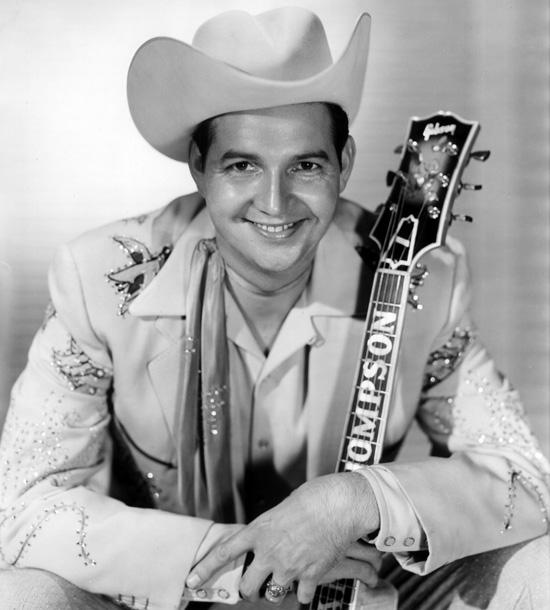
Tex Ritter’s Spotify BioSinging cowboy Tex Ritter stood as one of the biggest names in country music throughout the postwar era, thanks to a diverse career that led him everywhere from the Broadway stage to the political arena. He was born Maurice Woodward Ritter in Marvaul, TX, on January 12, 1907, and grew up on a ranch in Beaumont. After graduating at the top of his high school class, he majored in law at the University of Texas. During college, however, he was bitten by the acting bug and moved to New York in 1928 to join a theatrical troupe. After a few years of struggle, he briefly returned to school, only to leave again to pursue stardom.
Ritter was playing cowboy songs on the radio when he returned to New York in 1931 to act in the Broadway production Green Grow the Lilacs; during scene changes, he also performed on his guitar. Thanks to his success on the stage, he began hosting radio programs like Tex Ritter's Campfire and Cowboy Tom's Roundup before entering the studio with producer Art Satherley in… 1933, where his deep, lived-in voice graced songs like "Rye Whiskey." He caught the attention of Hollywood producer Edward Finney, who was searching for a cowboy singer in the mold of the highly successful Gene Autry and was tapped to star in the 1936 Western Song of the Gringo. Over the next two years, Ritter starred in a dozen films, including 1937's Trouble in Texas (co-starring a young Rita Hayworth), before Finney's studio, Grand National Pictures, folded. Ritter then switched to Monogram Studios, for whom he made some 20 Westerns, including 1940's Take Me Back to Oklahoma with co-star Bob Wills; work at Columbia and Universal followed, and by the time of his movie swan song, 1945's The Texas Rangers, he had appeared in a total of 85 films.
As Ritter's Hollywood career went into decline, his music career began to blossom, and in 1942, he became the first country artist signed to Capitol Records, where he recorded everything from traditional folk tunes to patriotic material to sentimental songs. In 1944, Tex Ritter & His Texans topped the charts with the single "I'm Wastin' My Tears on You." The record's flip side, "There's a New Moon Over My Shoulder," peaked at number two, as did the follow-up "Jealous Heart." 1945's "You Two-Timed Me One Time Too Often" proved to be Ritter's greatest success, holding at number one for 11 consecutive weeks. Among his other successes in the 1940s were 1945's number one "You Will Have to Pay," 1948's "Rock and Rye," and 1950's "Daddy's Last Letter (Private First Class John H. McCormick)," based on the actual correspondence of a soldier slain during the Korean War.
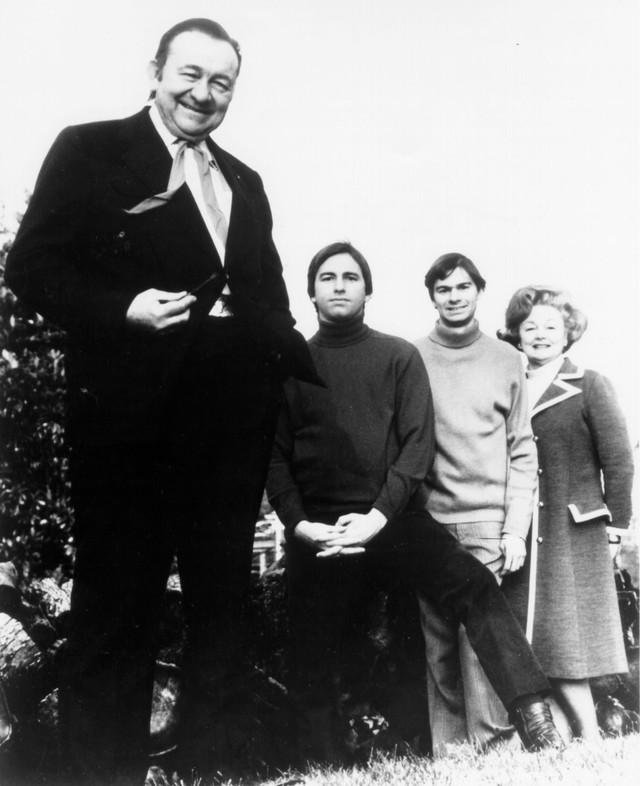
Ritter recorded the theme to the Fred Zinneman classic High Noon in 1953, and the resulting single proved extremely successful with pop audiences, helping win him the job as the MC of the television program Town Hall Party, which he hosted between 1953 and 1960. In 1958, he issued his first full-length LP, Songs From the Western Screen, followed the next year by Psalms. After leaving Town Hall Party, he released the LP Blood on the Saddle, a dark collection of cowboy narrative songs, and in 1961, he returned to the country charts after an 11-year absence with the Top Five hit "I Dreamed of a Hillbilly Heaven." In 1963 Ritter began a two-year tenure as the president of the Country Music Association, and in 1965 he moved to Nashville to join the Grand Ole Opry. After an unsuccessful bid for the U.S. Senate in 1970, Ritter died of a heart attack on January 2, 1974; his son John Ritter carried on the family name as a popular actor in TV sitcoms like Three's Company and Hooperman. ~ Jason Ankeny, Rovi
Viberate is a music analytics platform built for A&Rs, artist managers, labels, booking agents, marketers, and artists.
It helps music professionals track artist growth, analyze audience data, monitor playlist activity, compare artists, follow song performance, and identify opportunities across the music market.
Public artist pages provide a free preview of selected artist data. Paid plans provide access to deeper analytics, historical data, charts, comparisons, playlist tools, exports, alerts, reports, and additional professional features.
Yes. Public Viberate artist pages provide selected artist analytics and music data for free.
Viberate also offers a 7-day free trial of the full platform. A credit card is required to start the trial. The trial includes access to the complete product so users can test deeper artist analytics, historical views, playlist insights, comparisons, charts, exports, alerts, and reporting features before choosing a paid plan.
Viberate provides artist analytics across streaming, playlists, social media, video, radio airplay, songs, and audience markets.
Users can analyze Spotify performance, Spotify and Apple Music playlists, YouTube activity, TikTok and Instagram growth, radio spins, song performance, audience locations, demographics, rankings, and overall artist momentum.
Artist profiles also connect to music charts, similar artists, and comparison tools, helping users benchmark performance and evaluate artists in context.
Viberate updates key artist and track data daily.
For followed artists and tracks, selected data is refreshed multiple times per day. This helps teams monitor playlist changes, streaming movement, audience growth, releases, and campaign performance with more current data.
Update frequency can vary depending on the metric and data source.
Yes. Viberate lets users compare up to five artists side by side across streaming, social media, audience, and engagement metrics.
Users can compare fanbase growth, audience demographics, locations, Spotify performance, social metrics, and other artist data over selected time periods.
Artist comparison can be used for A&R scouting, benchmarking, booking decisions, campaign planning, and evaluating artists with similar audiences or market positions.