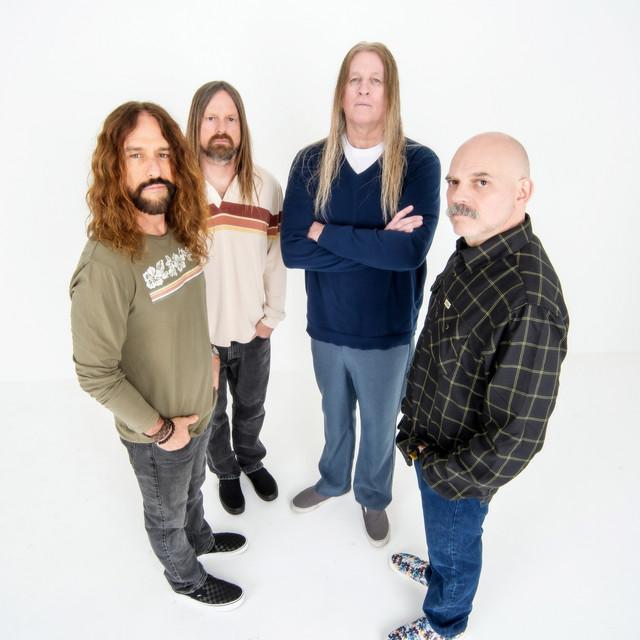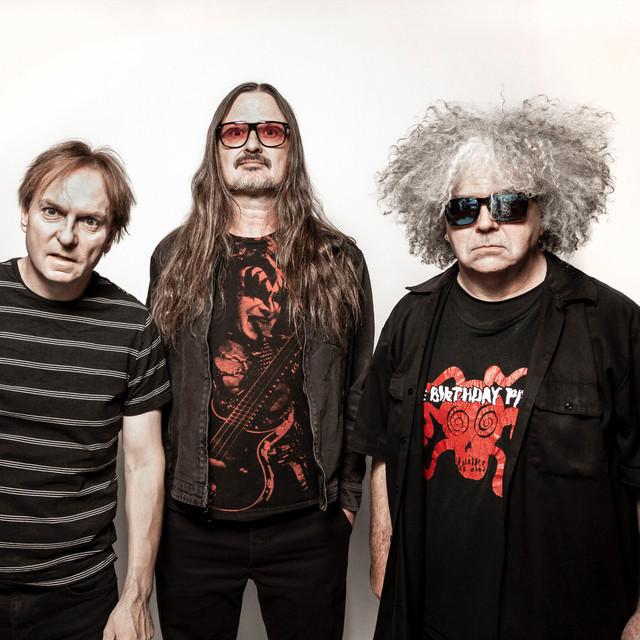
Melvins

Rock
Alternative Rock
Doom/Sludge Metal
 Viberate Rank: 16549
 Viberate Rank: 16549
 Monthly ListenersFollowers
 Subscribers
 Followers
 Followers
 FansTop Spotify Songs
| Track | 7-Day Streams | |
|---|---|---|
1 | 93.14K | |
2 | 84.80K | |
3 | 81.58K | |
4 | 42.63K | |
5 | 21.91K |
Top YouTube Videos| Video | 7-Day Views | |
|---|---|---|
1 | 17.08K | |
2 | 11.55K | |
3 | 4.35K | |
4 | 3.65K | |
5 | 2.98K |
Monthly ListenersFeatured in Playlists| Playlist | Followers | |
|---|---|---|
1 |  Grunge Forever Spotify | 1.78M |
2 |  Stoner Rock Spotify | 549.90K |
3 |  True Detective (Season 1) Soundtrack matthewditta1999 | 84.25K |
4 | sad metal songs. Sebastian Finta | 78.46K |
5 |  Grunge Greatest Hits 🎸 DJ DINO | 68.61K |
Audience| City | Monthly Listeners | |
|---|---|---|
1 | | 7.90K |
2 |  | 7.78K |
3 | | 7.62K |
4 | | 7.47K |
5 |  | 7.28K |
See full performance history, audience data, playlist activity, rankings, comparisons, and more in Viberate music analytics. Start with a free trial, then continue with a paid plan.
Melvins’ Spotify BioNo other band to emerge from the punk/alternative underground has mined Black Sabbath's slow, monolithic roar with greater effect than the Melvins, and they have proven to be wildly influential despite barely breaking out of cult status. The drop-D tunings and brontosaurus stomp of grunge icons such as Tad, Mudhoney, and Soundgarden would be unthinkable without the trails the Melvins blazed, and Kurt Cobain often sang their praises, helping them land their first major-label recording deal in 1993. They became a bridge between the edges of the punk and metal communities, who would find greater common ground from the '90s onward. (Their debut EP, 1986's 6 Songs, found them wavering between speedier punk-oriented numbers and full-on heaviness, but by 1991's Bullhead, the Melvins' trademark gargantuan sound was firmly in place.) While the Melvins proved as recognizable as any band of their day, they were also more creatively flexible than nearly all their peers, willing to experiment with… different styles (the massive suite on 1992's Melvins [aka Lysol], the ambitious studio experimentation of 1996's Stag, the noisy soundscapes in 2017's A Walk with Love and Death, the offbeat compositional concepts of 2024's Tarantula Heart), and a variety of musical configurations (multiple guest vocalists on 2000's The Crybaby, using two drummers on 2006's A Senile Animal, a rotating team of bassists on 2016's Basses Loaded, and adding pop and groove accents on 2022's Bad Mood Rising), all of which helped them remain productive and prolific more than three decades after they launched.
The band formed in Aberdeen, Washington, the same town that produced Nirvana's Cobain and Krist Novoselic. For Nirvana and many other Seattle-area bands, the Melvins' sludge was inspirational; the younger bands took the Sabbath-styled heaviness of the Melvins and added an equally important pop song structure, which the group tended to lack. While all of their disciples became famous after Nirvana broke big in 1991 (including Mudhoney, which featured former Melvins bassist Matt Lukin), the Melvins only expanded their cult slightly. They did earn a major-label contract with Atlantic, but after releasing three records for the label, they were dropped in late 1996 and the group returned to indie status, landing on Amphetamine Reptile for 1998's Alive at the F*cker Club. The late '90s and early 2000s saw a flurry of releases by the band: The Maggot, The Bootlicker, The Crybaby, Electroretard, The Colossus of Destiny, Hostile Ambient Takeover, Pigs of the Roman Empire, and Houdini Live 2005: A Live History of Gluttony and Lust, all of which (except for the fourth one) were issued on Mike Patton's Ipecac label.
In addition to their Melvins activities, singer/guitarist Buzz Osborne joined Patton (and former Slayer drummer Dave Lombardo and Mr. Bungle bassist Trevor Dunn) for the experimental outfit Fantômas, resulting in a number of releases (1999's self-titled debut, 2001's The Director's Cut, 2002's Millennium Monsterwork by "the Fantômas Melvins Big Band" (recorded live in San Francisco on New Year's Eve 2000 but not released until two years later), 2004's Delirium Cordia, and 2005's Suspended Animation), while the Melvins' latest bassist, Kevin Rutmanis, joined Patton in another side project, Tomahawk. In 2006, Big Business bassist Jared Warren and drummer Coady Willis joined the Melvins, appearing on that year's Senile Animal album. The follow-ups, 2008's Nude with Boots, 2010's The Bride Screamed Murder, and a live album titled Sugar Daddy Live, were recorded with the same members and released by Ipecac.
The band returned in 2012 with a stripped-down lineup, dubbed Melvins Lite, for Freak Puke, which found Crover and Osborne recording without the boys from Big Business and instead adding standup bassist Dunn to their roster to round out the band's already formidable bottom-end sound. Mixing things up even further, the band invited a host of guests, including the likes of Jello Biafra and J.G. Thirlwell, for Everybody Loves Sausages, an album of covers that arrived in 2013. Another new album, Tres Cabrones, released in November of that same year, saw them reunited with original drummer Mike Dillard -- who had previously appeared only on their early demo tapes -- while usual drummer Dale Crover took over on bass duties. Another odd combination occurred in 2014, as Crover and Osborne joined the Butthole Surfers' Jeff "J.D." Pinkus and Paul Leary on the eclectic Hold It In.
Two unusual releases from the Melvins arrived in 2016. An album the group began recording in 1999 with Mike Kunka of Godheadsilo was finally completed and released as Three Men and a Baby, credited to Mike & the Melvins. In the middle of 2016 they issued Basses Loaded, for which the group recruited a handful of favorite bass players to collaborate on songs. The guest artists included Krist Novoselic of Nirvana, Steve McDonald of Redd Kross and OFF!, J.D. Pinkus, Trevor Dunn, and Jared Warren. One of the few things the Melvins hadn't yet done was release a double album, but they were finally able to cross that off their list in 2017 with A Walk with Love and Death. The 23-track release included material written and recorded as the score to a film by Jesse Nieminen. In 2018, the Melvins broke ground with a lineup featuring two bassists on the album Pinkus Abortion Technician. The sessions found J.D. Pinkus (returning from his previous appearances on Hold It In and Basses Loaded) handling the bottom end along with Steve McDonald (also heard on Basses Loaded), while King Buzzo and Dale Crover took their usual places on guitar and drums. The band reunited several times with first drummer Dillard, releasing several EP-length or stand-alone recordings under the sub-moniker Melvins 1983. In 2021, this formation of the band released a full-length titled Working with God. With touring off the table during the COVID-19 pandemic, the hard-working Melvins played a series of live streamed concerts under the banner Melvins TV, and set to work on an unusual project. Five Legged Dog, released in October 2021 and featuring the Osborne/ Crover/McDonald lineup, was the group's first all-acoustic album, running nearly two-and-a-half hours, and featuring new interpretations of songs spanning their recording career, as well as covers of songs that influenced them. Bad Mood Rising, issued in September 2022 by the pioneering noise rock label Amphetamine Reptile, was a return to the sludgy heaviness that was the Melvins' calling card, piling on the heaviness on extended tracks like "Mr. Dog Is Totally Right" (14 minutes), while also adding a surprisingly lilting melody on "It Won't or It Might" and a semi-funky groove on "Hammering."
2024's Tarantula Heart once again found the group experimenting with new compositional techniques. For the sessions, Osborne, Crover and McDonald were joined by second drummer Roy Moyarga, who has worked with Hellyeah, Stone Sour, and Ministry. The double-drummer band jammed at length, with Osborne just contributing basic riffs. Osborne then took the tracks and fashioned songs around the rhythms, adding melody lines and solos, with Gary Chester (of We Are the Asteroid and Ed Hall) adding additional guitar work. ~ Stephen Thomas Erlewine & Greg Prato, Rovi
Viberate is a music analytics platform built for A&Rs, artist managers, labels, booking agents, marketers, and artists.
It helps music professionals track artist growth, analyze audience data, monitor playlist activity, compare artists, follow song performance, and identify opportunities across the music market.
Public artist pages provide a free preview of selected artist data. Paid plans provide access to deeper analytics, historical data, charts, comparisons, playlist tools, exports, alerts, reports, and additional professional features.
Yes. Public Viberate artist pages provide selected artist analytics and music data for free.
Viberate also offers a 7-day free trial of the full platform. A credit card is required to start the trial. The trial includes access to the complete product so users can test deeper artist analytics, historical views, playlist insights, comparisons, charts, exports, alerts, and reporting features before choosing a paid plan.
Viberate provides artist analytics across streaming, playlists, social media, video, radio airplay, songs, and audience markets.
Users can analyze Spotify performance, Spotify and Apple Music playlists, YouTube activity, TikTok and Instagram growth, radio spins, song performance, audience locations, demographics, rankings, and overall artist momentum.
Artist profiles also connect to music charts, similar artists, and comparison tools, helping users benchmark performance and evaluate artists in context.
Viberate updates key artist and track data daily.
For followed artists and tracks, selected data is refreshed multiple times per day. This helps teams monitor playlist changes, streaming movement, audience growth, releases, and campaign performance with more current data.
Update frequency can vary depending on the metric and data source.
Yes. Viberate lets users compare up to five artists side by side across streaming, social media, audience, and engagement metrics.
Users can compare fanbase growth, audience demographics, locations, Spotify performance, social metrics, and other artist data over selected time periods.
Artist comparison can be used for A&R scouting, benchmarking, booking decisions, campaign planning, and evaluating artists with similar audiences or market positions.