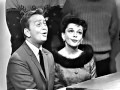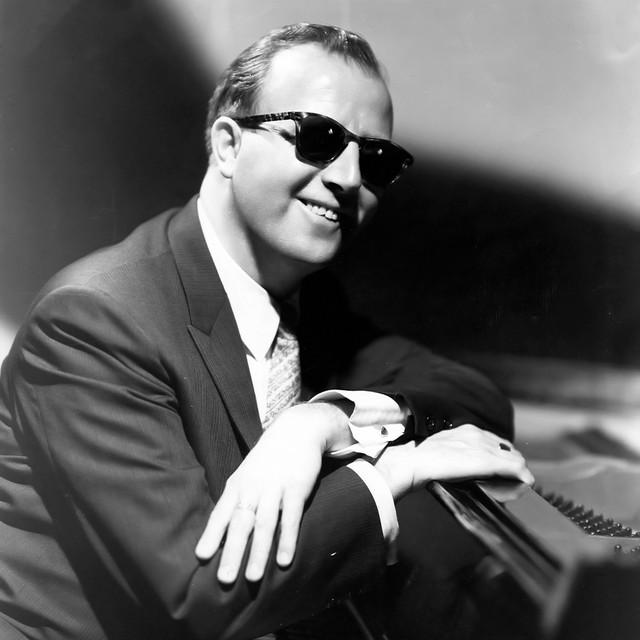
Mel Tormé

Jazz
Vocal jazz
Swing
 Viberate Rank: 30308
 Viberate Rank: 30308
 Monthly ListenersFollowers
 Subscribers
 Followers
 Followers
 FansTop Spotify SongsTop YouTube Videos
| Video | 7-Day Views | |
|---|---|---|
1 | 3.14K | |
2 | 1.13K | |
3 | 753 | |
4 | 148 | |
5 | 65 |
Monthly ListenersFeatured in Playlists| Playlist | Followers | |
|---|---|---|
1 |  All Out 60s Spotify | 3.19M |
2 |  World’s Best Christmas Playlist Henry Janzen | 1.27M |
3 |  An Elegant Affair Spotify | 1.22M |
4 |  Christmas Peaceful Piano Spotify | 750.26K |
5 |  Euphoria Soundtrack Season 1, 2 & 3 - All Songs JudasVargas | 749.88K |
Audience| City | Monthly Listeners | |
|---|---|---|
1 |  | 13.76K |
2 |  | 9.34K |
3 | | 8.99K |
4 | | 8.41K |
5 |  | 8.40K |
See full performance history, audience data, playlist activity, rankings, comparisons, and more in Viberate music analytics. Start with a free trial, then continue with a paid plan.
Mel Tormé’s Spotify BioMel Tormé was a jazz-oriented pop singer who worked at his craft steadily from the '40s to the '90s, primarily in nightclubs and concert halls. In his 1988 autobiography, It Wasn't All Velvet (its title a reference to his nickname, "The Velvet Fog," bestowed upon him by a disc jockey in the '40s to describe his husky, wide-ranging voice), he mentioned a wish that he had been born ten years earlier, that is, in 1915 rather than 1925. If he had had his wish, Tormé would have been an exact contemporary of Frank Sinatra, and like Sinatra, he might have had a full-fledged career as a big-band singer. In fact, given the breadth of his talents, he might have been a bandleader, since in addition to singing, he was also a drummer good enough to have gotten offers to go on the road as early as his teens, a songwriter responsible for one of the perennial Christmas standards, and an arranger who wrote the charts for much of the music he performed. Amazingly, this is still only a partial list of… his accomplishments, which also included acting in more than a dozen feature films and on radio and television; hosting radio and TV shows; and writing television dramas, numerous articles for periodicals including Down Beat and The New York Times, and six published books of fiction, biography, and music criticism.
Nevertheless, Tormé remains best-known as a singer, and as a singer his career was one of considerable artistic achievement and frequent commercial frustration, particularly on records. That 1925 birth date, despite his precocity, meant that, like such contemporaries as Tony Bennett, he grew up with a love for swing music and jazz in general, only to find that, as he became an adult, that music was pushed to the margins commercially and that as a performer he was faced with a choice between singing what he liked to a limited audience or compromising to appeal to a wider one, a choice that became even starker with the onset of the "rock era" in the mid-'50s. And like Bennett and only a few others, he succeeded largely through persistence, bending to the extent he had to, but weathering many lean years until the '80s, when he found a sympathetic record company and renewed popular interest in the kind of music he wanted to perform. Unlike Bennett, he persevered despite very limited commercial impact as a record seller. But he made up for that by being more appealing to the jazz audience, which responded to his obvious affection for the style and his talent for jazz singing (he was bested only by Louis Armstrong and Ella Fitzgerald in his ability to scat). Describing a low point in his life in his autobiography, he wrote that he came to feel he didn't have a career, only a series of jobs. If so, his singing and the wide variety of other talents he exhibited assured that he was never out of work.
Tormé was the descendant of Russian Jews who settled in Chicago. When he was born, his father owned a dry goods store, but both parents were musical: his father sang, and his mother played the piano. Tormé himself revealed his musical talent at an amazingly young age. According to his mother, he sang his first complete song at ten months. By the age of four, he would sing along with music on the radio, showing enough interest in the Coon-Sanders Orchestra on their remote broadcast from the Blackhawk Hotel in Chicago that his parents took him to see the band one Monday night. That was the beginning of his career. Bandleaders Joe Sanders and Carlton Coon took notice of him and had him sing with the band as a novelty for nearly six months, followed by engagements with other bands.
As a child, Tormé performed in local vaudeville troupes. He also took up the drums. In 1934, he won a competition at the Chicago World's Fair for potential child radio performers, and that led to a series of roles on radio dramas broadcast out of Chicago that lasted until his voice changed in his early teens. Meanwhile, he continued to sing and began writing his own songs. While attending Hyde Park High School, he played in bands with other students. In 1940, at the age of 15, he auditioned a song he had written, "Lament to Love," for bandleader Harry James, also playing drums at the audition. James initially invited him to join his band, but later decided he was too young. James did, however, record "Lament to Love" for Columbia Records, and it spent a week at number ten in the charts in August 1941. The success of the song led to a contact with bandleader Ben Pollack who, in 1942, was putting together a band to be fronted by comedian Chico Marx of the Marx Brothers at a time when many musicians were being drafted into the military to fight in World War II. Now, Tormé's age worked to his advantage. At 16, he was old enough to drop out of high school, but too young for military service, and in August 1942 he joined the band, leading its vocal group and later substituting as its drummer. (He went on to earn his diploma from Los Angeles High School in 1944, then spent a brief spell in the army before being discharged due to flat feet.) Two airchecks by this band, recorded December 20, 1942, constitute the earliest Tormé recordings. Tormé is heard singing the Irving Berlin song "Abraham" from the then-current movie Holiday Inn and playing a drum solo on "Pagliacci (Vesti la Giubba)."
While appearing with Chico Marx in New York, Tormé was auditioned by a movie scout for RKO Pictures, and when the band broke up in July 1943, he was cast in the movie musical Higher and Higher, which began shooting in August. Based on a Rodgers & Hart musical, but substituting a score by Jimmy McHugh and Harold Adamson, the film is remembered as Frank Sinatra's first featured appearance on screen. The 17-year-old Tormé's role was much smaller, but he was heard singing on four songs when it opened in December. Meanwhile, on Pollack's advice, he had begun working with a vocal group out of Los Angeles City College called the Schoolkids. He became the featured singer and arranger for the group, which was renamed Mel Tormé & His Mel-Tones. He also got his only starring role in a feature film with the B-picture Pardon My Rhythm, released by Universal in May 1944, which featured his compositions "Munchies" (co-written by Irving Bibo) and "Drummer Boy."
Mel Tormé & His Mel-Tones made their recording debut with the single "White Christmas"/"Where or When" cut for tiny Jewel Records in 1944. They also began appearing on the radio, notably on the comedy series Niles and Prindle, which ran from January to June 1945. And they appeared in the Columbia film Let's Go Steady in March 1945, singing several of Tormé's compositions. (Tormé continued to work without them as well, appearing in the B-picture Junior Miss in June.) Contracted to major-label Decca Records, the group sang background vocals on two singles, Eugenie Baird's "I Fall in Love Too Easily," which charted in October, and Bing Crosby's "Day by Day," in the charts in March 1946. They then moved to the newly formed Musicraft label, and their featured vocals on the Irving Berlin song "I Got the Sun in the Morning" from the new musical Annie Get Your Gun, as recorded by Artie Shaw & His Orchestra, gave them a chart entry in July. In the meantime, Tormé continued to make small or even cameo appearances in films, turning up in Warner Bros.' Janie Gets Married in June and the Cole Porter bio-pic Night and Day in July.
Tormé & the Mel-Tones released more records on Musicraft, including "It's Dreamtime," which became their only chart entry in May 1947, but by November 1946, Tormé had acceded to his manager Carlos Gastel's plan to launch a solo career. (He continued to do occasional work with the Mel-Tones for many years, however.) Gastel also managed Peggy Lee and Nat King Cole. It was Cole's group, the King Cole Trio, that made the first recording of "The Christmas Song (Merry Christmas to You)," which Tormé had written with his songwriting partner Robert Wells. Occasionally identified by its opening line, "Chestnuts roasting on an open fire," "The Christmas Song" peaked at number three for the trio in late December 1946, which was only the beginning of its success. Half a century later, Tormé estimated that there had been 1,700 recordings of it.
The solo career of the 21-year-old Mel Tormé was launched formally with his first nightclub engagement at the Bocage in Los Angeles in early 1947, the start of nearly 50 years of regular work for him. Gastel arranged a movie contract with MGM, and in February, Tormé began shooting a supporting role in Good News, based on the 1930 Henderson-DeSylva-Brown musical. He left before filming was completed to accept an offer to make his New York club debut at the Copacabana in May, then stayed on the East Coast when he was offered a 15-minute radio series, The Mel Tormé Show, on NBC. Back in Los Angeles later in 1947, he composed the title song for the RKO film Magic Town, released in August.
Good News opened in December 1947, and Tormé was next given a part in the Rodgers & Hart bio-pic Words and Music, singing "Blue Moon." In the summer of 1948, NBC revived The Mel Tormé Show as a half-hour situation comedy with music originating out of Los Angeles. Tormé also got another movie songwriting assignment; he and Wells wrote "The County Fair," for the Walt Disney Pictures animated film So Dear to My Heart, which, like Words and Music, was released in December 1948. Gastel arranged for Tormé to be signed to Capitol Records, the home of his clients Cole and Lee, and Tormé's second session for the label in January 1949 included "Careless Hands," which became a number one hit in April. He followed it with a double-sided hit, "Again," which reached number three, and "Blue Moon," which got to number 20. "The Four Winds and the Seven Seas," cut in May, peaked at number ten in July; "The Old Master Painter," a duet with Peggy Lee, got to number nine in January 1950; and the Rodgers & Hart song "Bewitched" (aka "Bewitched, Bothered and Bewildered") hit number eight in July 1950. But while Tormé's work as a recording artist was at its commercial apex, his film career slipped away. Cast in MGM's The Duchess of Idaho with Esther Williams, he found when it was released in June 1950 that his role had been trimmed to a handful of lines of dialogue, his one song left on the cutting-room floor.
In addition to his successful singles, Tormé conceived an ambitious musical work that was his answer to Gordon Jenkins' tone poem Manhattan Tower Suite. California Suite, with the Mel-Tones and an orchestra conducted by Jud Conlon (plus Peggy Lee performing under a pseudonym), was recorded in November 1949 and issued as Tormé's (and Capitol's) first LP in 1950.
Tormé scored his last chart entry for ten years with "Anywhere I Wander" in November 1952. It came from his final session for Capitol, after which he was without a label affiliation for a year before signing to the Coral subsidiary of Decca Records. Several singles sessions followed over the next year, and on December 15, 1954, Coral recorded a performance at the Crescendo Club in Los Angeles that resulted in the 1955 LP Gene Norman Presents Mel Tormé "Live" at the Crescendo, the first of many Tormé live albums. The singer moved to the small jazz label Bethlehem Records, starting with a ballad LP, It's a Blue World, recorded in August 1955. This was followed by the first of many recordings made in association with pianist/arranger Marty Paich, Mel Tormé and the Marty Paich Dek-Tette, recorded in January 1956, and by a studio-cast recording of Porgy and Bess in which Tormé sang the part of Porgy to Frances Faye's Bess, recorded in May.
Tormé had begun to expand his touring territory overseas, appearing in Australia in the fall of 1955, and in the spring of 1956, the Rodgers & Hart song "Mountain Greenery," excerpted from the Coral live album, was released as a single in the U.K., reaching the Top Ten in July, in time for the singer's first visit to Europe. Back in Los Angeles in November, he cut the LP Mel Tormé Sings Fred Astaire with Marty Paich and, on February 22, 1957, returned to the Crescendo Club for another live album, confusingly titled Gene Norman Presents Mel Tormé at the Crescendo. The following month, Bethlehem added to the confusion in the record racks by having Tormé recut California Suite. In its defense, the label was in trouble financially; after one more Tormé LP, Songs for Any Taste (actually consisting of leftover tracks from the Crescendo date), Bethlehem went out of business. Back in the U.K. in the summer of 1957, Tormé cut an album on Philips Records for his English fans, Tormé Meets the British. In the U.S. in November, he contracted to the tiny Tops label for Prelude to a Kiss, an album subsequently reissued over and over under various titles.
On February 14, 1957, Tormé had taken a non-singing acting role in the television drama The Comedian, broadcast live on the prestigious Playhouse 90 series. The appearance reawakened his film career, and he made a series of appearances as a straight actor in usually low-budget films: The Fearmakers (1958), The Big Operator (1959), Girls Town (1959), Walk Like a Dragon (1960) (for which he wrote the title song), and The Private Lives of Adam and Eve (1961). His recording career picked up in 1958, when he was signed to impresario Norman Granz's jazz-oriented Verve Records, the same label on which such peers as Ella Fitzgerald recorded. The result was eight albums over the next four years: Tormé; Olé Tormé: Mel Tormé Goes South of the Border with Billy May; Back in Town (with the Mel-Tones); Mel Tormé Swings Shubert Alley; Swingin' on the Moon; Broadway, Right Now! (with Margaret Whiting); I Dig the Duke! I Dig the Count!; and My Kind of Music. The albums were well received, especially by the jazz community, without being big sellers. But by the early '60s, Verve was the subsidiary of a large record company, no longer an independent jazz label, and Tormé accepted an offer from what he thought would be the more sympathetic Ertegun brothers, Ahmet and Nesuhi, and their Atlantic Records label.
Unfortunately, Atlantic wanted Tormé to make more pop-oriented music. His initial effort for them, the live album Mel Tormé at the Red Hill, cut in March 1962, was what he had in mind, but Atlantic got what it wanted with the bluesy single "Comin' Home Baby," cut in September 1962, which gave Tormé a Top 40 hit on both sides of the Atlantic Ocean and earned him his first two Grammy nominations (Best Solo Performance, Male, and Best Rhythm & Blues Recording), but which he did not care for. Atlantic rushed out a Comin' Home Baby! LP, but it did not chart.
In the spring of 1963, Tormé accepted an offer to serve as musical advisor for the upcoming television series The Judy Garland Show. He wrote arrangements and special material for the musical variety program, which broadcast 26 hour-long episodes beginning on Sunday night, September 29, 1963, and ending on March 29, 1964, when it was canceled. (He later recounted his experiences on the show in his first book, The Other Side of the Rainbow, published in 1970.) He took time out from the job in November 1963 to record the title song for the film Sunday in New York, which played under the credits when the picture was released the following month. Also in December he recorded an accompanying Atlantic LP, Mel Tormé Sings Sunday in New York & Other Songs About New York, marking the end of his association with the label.
Finished with The Judy Garland Show in the winter of 1964, Tormé returned to his main occupation, live performing. He signed to Columbia Records, for which he made a few singles during the year. And he took time out to play himself in the film The Patsy, released during the summer. He cut his first Columbia LP, That's All, in sessions conducted in December 1964 and March 1965. Unfortunately, he enjoyed his stay at Columbia even less than he had his time on Atlantic, especially as the label began pressuring him to record contemporary pop/rock songs. His 1966 sessions for the LP Right Now! included recent hits like "Homeward Bound," "Red Rubber Ball," and "Secret Agent Man," not his sort of thing at all. "Lover's Roulette" gave him a Top Ten hit on the Easy Listening chart in the summer of 1967, but it came from his next-to-last session for Columbia; by the end of the year he was off the label.
Tormé had appeared in another film, A Man Called Adam, in the summer of 1966, again playing himself, and cut the song "All That Jazz" (not to be confused with the song of the same title from the 1975 musical Chicago) for the soundtrack LP released on Reprise Records. He next began creating television roles for himself, writing an episode of the series Run for Your Life and guest-starring in it, then adapting Dollarhide, a Western novel he had written under a pseudonym in the '50s, into an episode of The Virginian and appearing on the show. He had, however, largely given up on his recordings, at least as a venue for work he liked, agreeing to record contracts as a necessary evil to help promote his live performances. Moving to Liberty Records in early 1968, he cut the LP A Day in the Life of Bonnie and Clyde, having composed the title song, the rest of the selections dating from the 1920s and '30s. In 1969, he was surprised to find himself back on Capitol Records, but dutifully cut what he called two "wonderfully forgettable" albums for the label, A Time for Us and Raindrops Keep Fallin' on My Head. After this he disappeared from the record shelves for several years, while continuing to perform regularly.
In May 1971, Tormé served as the host for an ABC documentary TV series, It Was a Very Good Year, each episode chronicling a year between 1919 and 1964. The series ran through the end of August. He returned to television in an acting role with his starring performance in the TV movie Snowman in 1974. He would continue to make occasional appearances in acting and singing roles on TV for the rest of his career. In September 1974, while appearing at the Maisonette Room in the St. Regis Hotel in New York with Al Porcino & His Orchestra, Tormé recorded a live album that was picked up by Atlantic Records and released as Live at the Maisonette in 1975. He claimed never to have seen any money from the LP, but it brought him his third Grammy nomination, not as a singer, but for Best Arrangement Accompanying Vocalist(s) for his "Gershwin Medley." In 1976, he finally signed a new record contract with Gryphon Records, recording the LP Tormé! A New Album in London in June 1977. It was followed by the January 1978 sessions for Together Again: For the First Time, on which he was co-billed with his longtime friend, drummer and bandleader Buddy Rich, actually released prior to Tormé! A New Album. The Rich LP earned Tormé his fourth Grammy nomination, in the Best Jazz Vocal Performance category in 1978 (the category had been created only two years earlier), while Tormé! A New Album brought him his fifth in the same category in 1979. There was a sixth Grammy nomination, again for Best Jazz Vocal Performance, for his next LP, Mel Tormé and Friends Recorded Live at Marty's New York City, which was released on Finesse Records in 1981 and reached number 44 in the Billboard jazz chart. Encore at Marty's followed in 1982 on Flair Records.
By the early '80s, with traditional pop music beginning to come back into vogue, Tormé had weathered a long drought and was becoming appreciated as a jazz singer, performing regularly at jazz festivals, in prestigious concert halls, and with symphony orchestras, along with yearly engagements at top clubs in major cities around the world. In April 1982, he appeared with jazz pianist George Shearing at the Peacock Court of the Hotel Mark Hopkins in San Francisco, their show recorded for the album An Evening with George Shearing & Mel Tormé, released by the jazz-oriented West Coast label Concord Records. Reaching number 34 in the jazz chart, it marked the beginning of felicitous and prolific associations with both Shearing and Concord. Tormé was nominated for his seventh Grammy, as usual for Best Jazz Vocal Performance, for 1982, and though he protested that Shearing deserved equal recognition, he won his first Grammy at the ceremony held in February 1983. The following month, he re-teamed with Shearing for the studio album Top Drawer, the title track of which won him a second Grammy Award in February 1984. Another live album with Shearing, An Evening at Charlie's, cut in Washington, D.C., in October 1983 and released in 1984, produced his ninth Grammy nomination, and another studio set with Shearing, An Elegant Evening, recorded in May 1985, brought a tenth nomination for 1986.
In May 1986, Tormé interrupted his string of duet albums with Shearing but maintained his association with Concord, recording Mel Tormé with Rob McConnell and the Boss Brass; it hit number 11 in the jazz chart. The Shearing pairing was resumed in August 1987 with a session for the album A Vintage Year. He renewed an older association in August 1988, cutting the LP Reunion with Marty Paich and a reconstituted Dek-tette. The reunion continued in Japan in December, producing the 1989 album In Concert Tokyo. Also in 1988, Tormé published his autobiography, It Wasn't All Velvet. A Tormé performance at the Concord Jazz Festival in August 1990 resulted in his next album, Night at the Concord Pavilion, and the following month the singer and Shearing got back together in the studio for a collection of 1940s songs, Mel and George "Do" World War II. Two months after that, he was captured live in Japan for the album Fujitsu-Concord Jazz Festival '90. He continued his busy recording schedule in March 1991, cutting a duet album with Cleo Laine, Nothing Without You. The year also brought the publication of his long-promised biography of his friend Buddy Rich, Traps, The Drum Wonder.
In 1992, Tormé interrupted his run with Concord to cut a holiday collection, Christmas Songs, for Telarc Records. Amazingly, it brought him his first-ever chart placing in the listings for pop albums that December. Also for Telarc, he cut the live album The Great American Songbook in October 1992. But he returned to Concord only a month later for Sing Sing Sing, recorded with an all-star quintet back at the Fujitsu-Concord Jazz Festival in Tokyo. That made for enough recordings for a while, and he stuck to live performances until May 1994, when he cut the studio album A Tribute to Bing Crosby. A year later, he reunited with Rob McConnell and the Boss Brass for Velvet & Brass.
With Tormé's assistance, Rhino Records mounted the first comprehensive box set of his recordings, The Mel Tormé Collection 1944-1985, in 1996, and in July he recorded the live album An Evening with Mel Tormé for the A&E network. The following month, on August 8, he suffered a stroke. While he had recovered sufficiently by November to be released from the hospital, he faced continuing medical challenges for the next three years and never returned to performing. In February 1999, Tormé was awarded the Grammy Lifetime Achievement Award. He died at 73 on June 5, 1999.
While Tormé disavowed some of his recordings in his autobiography, particularly the ones made with pop intentions in the 1960s, his more jazz-styled sides seem to have met his high standards, as well as those of critics and fans. In truth, Tormé brought his considerable skills to any material he tackled, and his large body of recordings fully justifies the assessment of him as a major jazz singer of the post-World War II era. ~ William Ruhlmann, Rovi
Viberate is a music analytics platform built for A&Rs, artist managers, labels, booking agents, marketers, and artists.
It helps music professionals track artist growth, analyze audience data, monitor playlist activity, compare artists, follow song performance, and identify opportunities across the music market.
Public artist pages provide a free preview of selected artist data. Paid plans provide access to deeper analytics, historical data, charts, comparisons, playlist tools, exports, alerts, reports, and additional professional features.
Yes. Public Viberate artist pages provide selected artist analytics and music data for free.
Viberate also offers a 7-day free trial of the full platform. A credit card is required to start the trial. The trial includes access to the complete product so users can test deeper artist analytics, historical views, playlist insights, comparisons, charts, exports, alerts, and reporting features before choosing a paid plan.
Viberate provides artist analytics across streaming, playlists, social media, video, radio airplay, songs, and audience markets.
Users can analyze Spotify performance, Spotify and Apple Music playlists, YouTube activity, TikTok and Instagram growth, radio spins, song performance, audience locations, demographics, rankings, and overall artist momentum.
Artist profiles also connect to music charts, similar artists, and comparison tools, helping users benchmark performance and evaluate artists in context.
Viberate updates key artist and track data daily.
For followed artists and tracks, selected data is refreshed multiple times per day. This helps teams monitor playlist changes, streaming movement, audience growth, releases, and campaign performance with more current data.
Update frequency can vary depending on the metric and data source.
Yes. Viberate lets users compare up to five artists side by side across streaming, social media, audience, and engagement metrics.
Users can compare fanbase growth, audience demographics, locations, Spotify performance, social metrics, and other artist data over selected time periods.
Artist comparison can be used for A&R scouting, benchmarking, booking decisions, campaign planning, and evaluating artists with similar audiences or market positions.