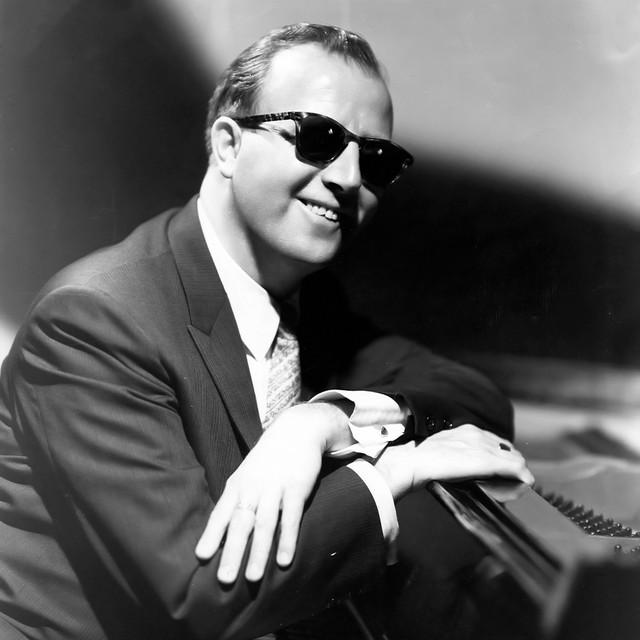
George Shearing

Jazz
Swing
Bossa Nova
 Viberate Rank: 47169
 Viberate Rank: 47169
 Monthly ListenersFollowers
 Subscribers
 Followers
 Followers
 FansTop Spotify Songs
| Track | 7-Day Streams | |
|---|---|---|
1 | 140.70K | |
2 | 67.96K | |
3 | 29.97K | |
4 | 19.69K | |
5 | 16.34K |
Top YouTube VideosMonthly ListenersFeatured in Playlists| Playlist | Followers | |
|---|---|---|
1 |  An Elegant Affair Spotify | 1.22M |
2 |  Crooner Classics Spotify | 518.21K |
3 |  jazz bar in nyc🎷 mishelle | 454.59K |
4 |  Sweet Jazz Spotify | 301.71K |
5 |  Classic Voices in Jazz Spotify | 250.32K |
Audience| City | Monthly Listeners | |
|---|---|---|
1 |  | 11.04K |
2 | | 7.57K |
3 | | 6.26K |
4 |  | 5.40K |
5 |  | 5.25K |
See full performance history, audience data, playlist activity, rankings, comparisons, and more in Viberate music analytics. Start with a free trial, then continue with a paid plan.
George Shearing’s Spotify BioFor a long stretch of time in the 1950s and early '60s, George Shearing had one of the most popular jazz combos on the planet -- so much so that, in the usual jazz tradition of distrusting popular success, he tended to be underappreciated. Shearing's main claim to fame was the invention of a unique quintet sound, derived from a combination of piano, vibraphone, electric guitar, bass, and drums. Within this context, Shearing would play in a style he called "locked hands," which he picked up and refined from Milt Buckner's early '40s work with the Lionel Hampton band, as well as from Glenn Miller's sax section and the King Cole Trio. Stating the melody on the piano with closely knit, harmonized block chords, with the vibes and guitar tripling the melody in unison, Shearing sold millions of records for MGM and Capitol in his heyday.
The wild success of this urbane sound obscured Shearing's other great contribution during this time, for he was also a pioneer of exciting, small-combo… Afro-Cuban jazz in the '50s. Cal Tjader first caught the Latin jazz bug while playing with Shearing, and the English bandleader also employed such esteemed congueros as Mongo Santamaria, Willie Bobo, and Armando Peraza. As a composer, Shearing was best known for the uniquely constructed bop standard "Lullaby of Birdland," as well as "Conception" and "Consternation." His solo style, though all his own, reflected the influences of the great boogie-woogie pianists and classical players as well as those of Fats Waller, Earl Hines, Teddy Wilson, Erroll Garner, Art Tatum, and Bud Powell -- and fellow pianists long admired his light, refined touch. He was also known to play accordion and sing on occasion.
Shearing, who was born blind, began playing the piano at the age of three, receiving some music training at the Linden Lodge School for the Blind in London as a teenager but picking up the jazz influence from Teddy Wilson and Fats Waller 78s. In the late '30s, he started playing professionally with the Ambrose dance band and made his first recordings in 1937 under the aegis of fellow Brit Leonard Feather. He became a star in Britain, performing for the BBC, playing a key role in the self-exiled Stéphane Grappelli's London-based groups of the early '40s, and winning seven consecutive Melody Maker polls before emigrating in New York City in 1947 at the prompting of Feather. Once there, Shearing quickly absorbed bebop, replacing Garner in the Oscar Pettiford Trio and leading a quartet in tandem with Buddy DeFranco. In 1949, he formed the first and most famous of his quintets, which included Marjorie Hyams on vibes, Chuck Wayne on guitar, John Levy on bass, and Denzil Best on drums. Recording briefly first for Discovery, then Savoy, Shearing settled into lucrative associations with MGM (1950-1955) and Capitol (1955-1969), the latter for which he made albums with Nancy Wilson, Peggy Lee, and Nat King Cole. He also made a lone album for Jazzland with the Montgomery Brothers (including Wes Montgomery) in 1961, and began playing concert dates with symphony orchestras.
After leaving Capitol, Shearing began to phase out his by-then-predictable quintet, finally breaking it up in 1978. He started his own label, Sheba, which lasted for a few years into the early '70s, and made some trio recordings for MPS later in the decade. In the '70s, his profile had been lowered considerably, but upon signing with Concord in 1979, Shearing found himself enjoying a renaissance. He made a number of acclaimed albums with Mel Tormé, raising the singer's profile in the process, and recorded with the likes of Ernestine Anderson, Jim Hall, Marian McPartland, Hank Jones, and classical French horn player Barry Tuckwell. He also recorded a number of solo piano albums where his full palette of influences came into play. He signed with Telarc in 1992 and, from that point through the early 2000s, continued to perform and record, most often appearing in a duo or trio setting. Shearing, who had remained largely inactive since 2004 after a fall in his New York City apartment, died of congestive heart failure at New York's Lenox Hill Hospital on February 14, 2011. He was 91. ~ Richard S. Ginell, Rovi
Viberate is a music analytics platform built for A&Rs, artist managers, labels, booking agents, marketers, and artists.
It helps music professionals track artist growth, analyze audience data, monitor playlist activity, compare artists, follow song performance, and identify opportunities across the music market.
Public artist pages provide a free preview of selected artist data. Paid plans provide access to deeper analytics, historical data, charts, comparisons, playlist tools, exports, alerts, reports, and additional professional features.
Yes. Public Viberate artist pages provide selected artist analytics and music data for free.
Viberate also offers a 7-day free trial of the full platform. A credit card is required to start the trial. The trial includes access to the complete product so users can test deeper artist analytics, historical views, playlist insights, comparisons, charts, exports, alerts, and reporting features before choosing a paid plan.
Viberate provides artist analytics across streaming, playlists, social media, video, radio airplay, songs, and audience markets.
Users can analyze Spotify performance, Spotify and Apple Music playlists, YouTube activity, TikTok and Instagram growth, radio spins, song performance, audience locations, demographics, rankings, and overall artist momentum.
Artist profiles also connect to music charts, similar artists, and comparison tools, helping users benchmark performance and evaluate artists in context.
Viberate updates key artist and track data daily.
For followed artists and tracks, selected data is refreshed multiple times per day. This helps teams monitor playlist changes, streaming movement, audience growth, releases, and campaign performance with more current data.
Update frequency can vary depending on the metric and data source.
Yes. Viberate lets users compare up to five artists side by side across streaming, social media, audience, and engagement metrics.
Users can compare fanbase growth, audience demographics, locations, Spotify performance, social metrics, and other artist data over selected time periods.
Artist comparison can be used for A&R scouting, benchmarking, booking decisions, campaign planning, and evaluating artists with similar audiences or market positions.