Matthew Shipp

Jazz
Free Jazz
Avant-garde Jazz
 Viberate Rank: 257074
 Viberate Rank: 257074
 Monthly ListenersFollowers
 Subscribers
 Followers
 Followers
 FansTop Spotify Songs
| Track | 7-Day Streams | |
|---|---|---|
1 | 2.60K | |
2 | 1.03K | |
3 | 791 | |
4 | 711 | |
5 | 687 |
Top YouTube Videos| Video | 7-Day Views | |
|---|---|---|
1 | 12 |
Monthly ListenersFeatured in Playlists| Playlist | Followers | |
|---|---|---|
1 |  Avant-Jazz Spotify | 70.76K |
2 |  🪐Floating Points Turntable🪐 Floating Points | 35.36K |
3 | El Convidat 3Cat | 24.98K |
4 |  NOIR JAZZ Public Stores | 12.76K |
5 |  NPR Music's Favorite Songs Of 2015 NPR Music | 12.64K |
Audience| City | Monthly Listeners | |
|---|---|---|
1 | | 140 |
2 |  | 120 |
3 | | 100 |
4 |  | 98 |
5 |  | 80 |
See full performance history, audience data, playlist activity, rankings, comparisons, and more in Viberate music analytics. Start with a free trial, then continue with a paid plan.
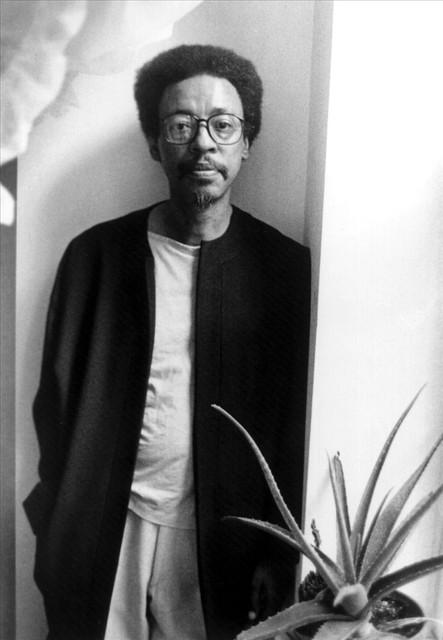
Matthew Shipp’s Spotify BioWith a unique, instantly recognizable style, pianist Matthew Shipp has been active on the international jazz scene since late 1980s. His boundary-less musical approach crisscrosses free jazz, elliptical post-bop, and modern classical music. He served as pianist in the David S. Ware Quartet during the early '90s before leading his own dates and recording duos with a variety of musicians. He released his solo debut, Symbol Systems, in 1995 as well as the quartet offering Critical Mass. He issued many recordings for Hat -- including 2001's Expansion, Power, Release -- and Thirsty Ear, including 2007's Piano Vortex and 2013's Piano Sutras. Shipp also records for France's Rogue Art label, which issued 2013's Rex, Wrecks & XXX with Evan Parker, and 2015's Our Lady of the Flowers. In 2016 Shipp began playing and recording in several bands for ESP-Disk with reedist Mat Walerian under the names Uppercut and Jungle; each released a Live at Okuden volume that year. In 2018, Shipp released the… solo Zero. 2020 saw the release of Welcome Adventure, Vol. 1, by a collective that included saxophonist Daniel Carter. In 2021, he issued the trio offering Village Mothership and the solo Codebreaker for Tao Forms. 2022 saw the release of Old Stories, a double-length duo set with saxophonist Chad Fowler, Welcome Adventure, Vol. 2, and the trio date World Construct for ESP-Disk. Shipp reunited his trio once more for 2024 set New Concepts in Piano Trio Jazz, again released with ESP-Disk.
Born in 1960 and raised in Wilmington, Delaware, Shipp grew up around '50s jazz recordings. He began playing piano at the young age of five and decided to focus on jazz by the time he was 12. He played a Fender Rhodes in rock bands while privately devouring recordings by a variety of jazz players. His first mentor was a man in his hometown named Sunyata, who was enthusiastic about a variety of subjects in addition to music. Shipp later studied music theory and improvisation under Clifford Brown's teacher Robert "Boisey" Lawrey, as well as classical piano and bass clarinet for the school band. After one year at the University of Delaware, Shipp left and took lessons with Dennis Sandole for a short time, after which he attended the New England Conservatory of Music for two years.
Shipp moved to N.Y.C. in 1984 and soon met bassist William Parker, among others. Both were playing with tenor saxophonist Ware by 1989. Meanwhile, Shipp had debuted as a recording artist in a duo with alto player Rob Brown on Sonic Explorations, recorded in November 1987 and February 1988. Shipp married singer Delia Scaife around 1990. He went on to lead his own trio with Parker and drummers Whit Dickey and Susie Ibarra. Shipp has led dates for a number of labels, including FMP, No More, Eremite, Thirsty Ear, and Silkheart. In 2000, he began acting as curator for Thirsty Ear's Blue Series, which hosted a number of Shipp's own recordings, as well as the recordings of William Parker, Tim Berne, Roy Campbell, Craig Taborn, Spring Heel Jack, and Mat Maneri. The following year saw the release of Nu Bop, an exploration into traditional jazz, followed closely by its 2003 counterpart, Equilibrium. In 2004, Shipp released Harmony and Abyss, a meditation on repetitive melodic and harmonic structures. One arrived in January 2006 and Piano Vortex followed a year later.
4D, featuring Shipp on solo piano, was released by Thirsty Ear early in 2010. It was one of several recordings from the pianist in the initial years of the 21st century, which included a two-disc solo piano recital entitled Creation Out of Nothing: Live in Moscow on the SoLyd Records imprint and the stellar trio set Night Logic, with Joe Morris and former Sun Ra saxophonist Marshall Allen, on the Rogue Art label. Shipp kept up the pace in 2011, kicking off the year with the double-CD offering Art of the Improviser, which showcased him in two different live settings: one solo and one in a trio with bassist Michael Bisio and drummer Whit Dickey. In the spring he released a duet recording with alto saxophonist Darius Jones titled Cosmic Lieder on the AUM Fidelity label. In 2012, he re-formed the trio with Bisio and Dickey for Elastic Aspects. Shipp entered into a prolific collaboration with saxophonist Ivo Perelman for a slew of projects that year, and 2013 included a duet, trios, and quartets with various personnel, all issued by Leo Records. Titles included The Gift, The Clairvoyant, The Foreign Legion, A Violent Dose of Anything, Enigma, The Art of the Duet, Vol. 1, The Edge, and Serendipity. In the fall of 2013, Shipp released the solo piano offering Piano Sutras for Thirsty Ear, as well as a retrospective for the label entitled Greatest Hits and a duet offering with saxophonist John Butcher, Fataka 2.
Shipp maintained a prolific release and touring pace in 2014. First to appear was the trio date The Roots of Things in February with Dickey and Bisio, followed by two more sets in various ensembles with Perelman. The first, titled The Other Edge, was issued in March and featured the pianist's quartet backing the saxophonist, while the second, released the same month, was Book of Sound, a collaborative recording between Perelman, Shipp, and Parker. Symbol Systems, a solo piano outing, appeared in May from Lithuania's No Business label, while The Darkseid Recital, a second chapter in Jones' and Shipp's "Cosmic Lieder," was released in August by AUM Fidelity, followed by the solo piano offering I've Been to Many Places on Thirsty Ear in September. That year, the French Rogue Art label issued no less than four Shipp-led dates compiled from several years of performances. They included the solo Piano (2008); a duet album with Evan Parker titled Rex, Wrecks & XXX (2013); Right Hemisphere with Brown, Dickey and Morris (2008); and Declared Enemy: Salute to the 100001 Stars: A Tribute to Jean Genet with Parker, Gerald Cleaver, Sabir Mateen, and Denis Lavant (2006).
The following year saw two more releases from the label. Our Lady of the Flowers was a Genet tribute follow-up a decade on (sans Lavant), and the controversial but still widely celebrated trio recording To Duke. Shipp also issued a pair of duet recordings: Live at Okuden: The Uppercut with Polish reed and woodwind master Mat Walerian on ESP-Disk, and Callas with Perelman for Leo.
Associations with both men produced more 13 more recordings in 2016 and 2017. Complementary Colors and Corpo were duo dates with Perelman (the pair released 13 albums together before 2017 was out), while Butterfly Whispers added Dickey to make it a trio. Live at Okuden: Jungle with Walerian and Hamid Drake, capturing a performance from 2012, was released by ESP-Disk. The pianist issued a trio date titled Piano Song in early 2017, with Michael Bisio on bass and drummer Newman Taylor Baker. Produced by Peter Gordon, it marked Shipp's swan song as a recording artist for Thirsty Ear, though he remained curator of its Blue Series imprint. An ESP-Disk trio date with Walerian and Parker was issued as Toxic: This Is Beautiful Because We Are Beautiful People during the late spring.
In early 2018, Shipp released three albums. In January, Accelerated Projection, a duo date with Roscoe Mitchell was issued by France's Rogue Art label. A month later, Shipp released two dates through ESP-Disk simultaneously: Sonic Fiction, a quartet date with Walerian, Bisio, and Dickey, and the solo piano offering Zero in February. In late 2018, Rogue Art issued a duo reunion by Shipp and Maneri titled Conference of the Mat/ts. In 2019, the label released three more Shipp titles: All Things Are, with Bisio and Newman Taylor Baker, Symbolic Reality, with Maneri and William Parker, and What If?, a duo offering with trumpeter Nate Wooley.
Though Shipp was unable to tour during the COVID-19 pandemic, he saw the release of eight recent archival projects. These included the duo outing Amalgam with Perelman; Welcome Adventure, Vol. 1 with Daniel Carter, Cleaver, and Parker, and two solo piano outings, The Piano Equation, and the epic The Reward (Solo Piano Suite in Four Movements). Okuden Quartet (Walerian, Hamid Drake, Parker and Shipp) released Every Dog Has Its Day But It Doesn't Matter Because Fat Cat Is Getting Fatter.
2021 was just as busy. He returned to touring, and he and Parker played on Francisco Mela's Music Frees Our Souls, Vol. 1. He issued two duo outings for Rogue Art -- Leonine Aspects with Evan Parker and Re-Union with William Parker. For the same label, he, Gerald Cleaver, and Joe Morris appeared in Paul Dunmall's quartet for The Bright Awakening. That July, he and Dickey issued the duos project Reels. In October, the Aum Fidelity-affiliated Tao Forms issued Village Mothership, a trio including Dickey, Shipp, and Parker, and in November, a solo Shipp put out Codebreaker. The following year, he collaborated with saxophonist Chad Fowler on the double-length, improvised duos set Old Stories for Mahakala Music. He also reprised his 577 Records collaboration with Carter, Parker, and Cleaver on Welcome Adventure, Vol. 2. In June he released the double-length set World Construct, his fifth set for ESP-Disk, accompanied by bassist Michael Bisio and drummer/percussionist Newman Taylor Baker. This trio reconvened the next year for the recording of New Concepts in Piano Trio Jazz, a set that found the trio's chemistry and interplay at new levels of group cohesion. The album was released in April of 2024 on ESP-Disk.~ Thom Jurek & Joslyn Lane
Viberate is a music analytics platform built for A&Rs, artist managers, labels, booking agents, marketers, and artists.
It helps music professionals track artist growth, analyze audience data, monitor playlist activity, compare artists, follow song performance, and identify opportunities across the music market.
Public artist pages provide a free preview of selected artist data. Paid plans provide access to deeper analytics, historical data, charts, comparisons, playlist tools, exports, alerts, reports, and additional professional features.
Yes. Public Viberate artist pages provide selected artist analytics and music data for free.
Viberate also offers a 7-day free trial of the full platform. A credit card is required to start the trial. The trial includes access to the complete product so users can test deeper artist analytics, historical views, playlist insights, comparisons, charts, exports, alerts, and reporting features before choosing a paid plan.
Viberate provides artist analytics across streaming, playlists, social media, video, radio airplay, songs, and audience markets.
Users can analyze Spotify performance, Spotify and Apple Music playlists, YouTube activity, TikTok and Instagram growth, radio spins, song performance, audience locations, demographics, rankings, and overall artist momentum.
Artist profiles also connect to music charts, similar artists, and comparison tools, helping users benchmark performance and evaluate artists in context.
Viberate updates key artist and track data daily.
For followed artists and tracks, selected data is refreshed multiple times per day. This helps teams monitor playlist changes, streaming movement, audience growth, releases, and campaign performance with more current data.
Update frequency can vary depending on the metric and data source.
Yes. Viberate lets users compare up to five artists side by side across streaming, social media, audience, and engagement metrics.
Users can compare fanbase growth, audience demographics, locations, Spotify performance, social metrics, and other artist data over selected time periods.
Artist comparison can be used for A&R scouting, benchmarking, booking decisions, campaign planning, and evaluating artists with similar audiences or market positions.