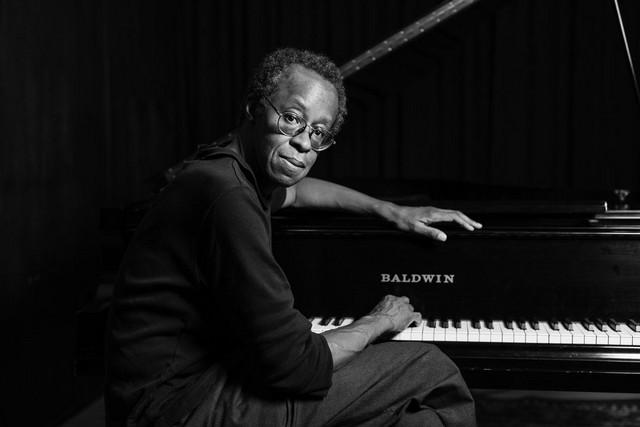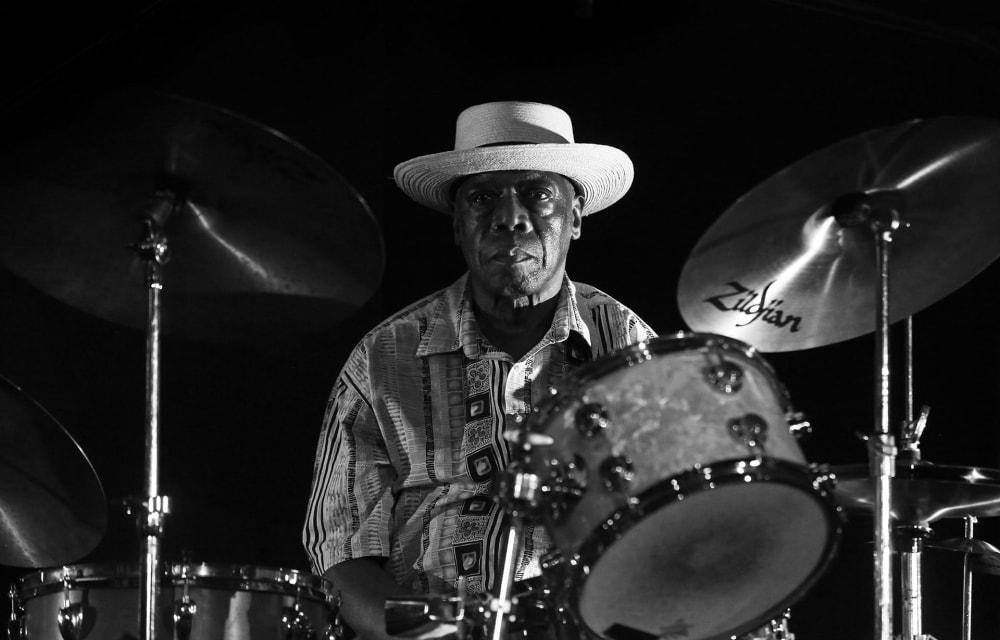
Andrew Cyrille

Jazz
Free Jazz
Avant-garde Jazz
 Viberate Rank: 318055
 Viberate Rank: 318055
 Monthly ListenersFollowers
 Subscribers
 Followers
 Followers
 FansTop Spotify Songs
| Track | 7-Day Streams | |
|---|---|---|
1 | 308 | |
2 | 248 | |
3 | 231 | |
4 | 221 | |
5 | 208 |
Top YouTube VideosMonthly ListenersFeatured in Playlists| Playlist | Followers | |
|---|---|---|
1 |  Avant-Jazz Spotify | 70.77K |
2 |  This Is Lee Konitz Spotify | 11.49K |
3 |  Jrapzz - Modern Jazz Trends H-MUSIC FR | 10.66K |
4 |  The Sound of Free Jazz The Sounds of Spotify | 10.46K |
5 |  ECM New & Forthcoming ECM Records | 9.45K |
Audience| City | Monthly Listeners | |
|---|---|---|
1 | | 95 |
2 |  | 87 |
3 |  | 72 |
4 | | 62 |
5 |  | 51 |
See full performance history, audience data, playlist activity, rankings, comparisons, and more in Viberate music analytics. Start with a free trial, then continue with a paid plan.
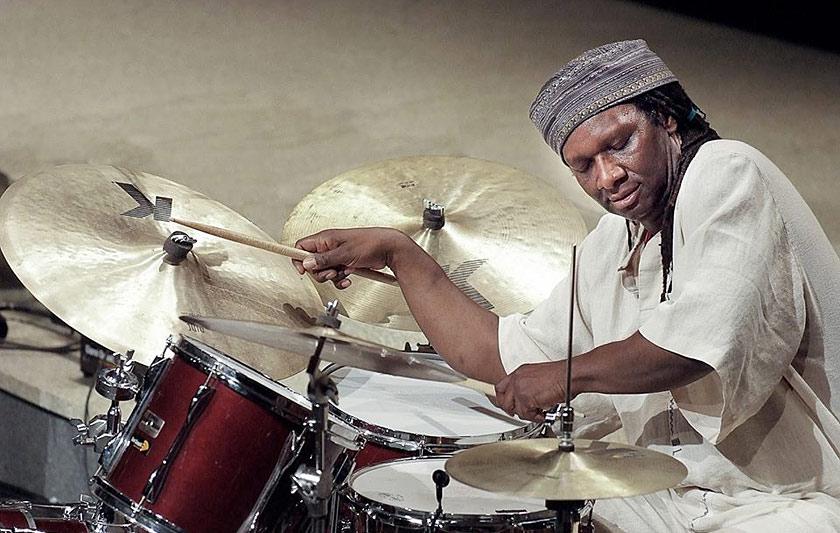
Andrew Cyrille’s Spotify BioAndrew Cyrille is among the pre-eminent free jazz percussionists to emerge from the 1960s. Initially, he anchored bands led by vibraphonist Walt Dickerson, and during the '70s, pianist Cecil Taylor. Few vanguard drummers can play with his grace, authority, unflagging energy, and power tempered by a trademark sense of propriety. Cyrille's 1969 debut What About? and 1974's Dialogue of the Drums offer ample proof of his musical strengths: he has released more than 80 albums. His association with Italian labels Soul Note and Black Saint began on 1979's Nuba with Jeanne Lee and Jimmy Lyons. 1982's Life Rays was from a trio with Dickerson and bassist Sirone. Two years later, Pieces of Time with Kenny Clarke, Graves, and Famoudou Don Moye appeared. In 1993 he began a critically celebrated association with pianist Borah Bergman on The Human Factor. In the 21st century, Cyrille participated in dozens of collaborative recordings, including 2014's Us Free: Fish Stories (with Bill McHenry and Henr…y Grimes). On 2016's The Declaration of Musical Independence, he led a quartet with Ben Street, Bill Frisell, and Richard Teitelbaum. In 2018, the trio effort Lebroba included Frisell and Wadada Leo Smith. Cyrille's quartet returned with The News in 2021. 2 Blues for Cecil, with Enrico Rava and William Parker, appeared in 2022. The next year, Cyrille issued the completely solo, Music Delivery/Percussion, followed by 2024's Breaking the Shell with Frisell and pianist Kit Downes.
Cyrille began playing drums in a drum and bugle corps at the age of 11. At 15, he played in a trio with guitarist Eric Gale. For a period in his teens, Cyrille studied chemistry before enrolling in Juilliard School of Music in 1958. In the late '50s and early '60s, he worked with such mainstream jazzers as Mary Lou Williams, Roland Hanna, Roland Kirk, Coleman Hawkins, and Junior Mance. He recorded with Hawkins and with tenor saxophonist Bill Barron for the Savoy label. Cyrille succeeded Sunny Murray as Cecil Taylor's drummer in 1964. He stayed with the pianist until 1975, during which time he played on many of Taylor's classic albums. He also played with a good many other top musicians, including Marion Brown, Grachan Moncur III, and Jimmy Giuffre. He also served for a time as artist in residence at Antioch College and recorded a solo percussion album, 1969's What About?, on BYG. Cyrille, Rashied Ali, and Milford Graves collaborated on a series of mid-'70s concerts entitled "Dialogue of the Drums." Beginning in 1975 and lasting into the '80s, Cyrille led his own group called Maono, which included tenor saxophonist David S. Ware, trumpeter Ted Daniel, pianist Sonelius Smith and, at various times, bassists Lisle Atkinson and Nick DiGeronimo. During this period, Cyrille also played with the Group, a band that included violinist Billy Bang, bassist Sirone, altoist Brown, and trumpeter Ahmed Abdullah. With Graves, Don Moye, and Kenny Clarke, Cyrille recorded the all-percussion album Pieces of Time on Soul Note in 1983. When not leading his own bands, he worked ubiquitously as a sideman with, among others, John Carter, Muhal Richard Abrams, and Jimmy Lyons. Cyrille continued as a leading player into the late '90s, recording rather prolifically for Black Saint/Soul Note, FMP, and DIW.
That activity continued well into the 21st century. In 2000, he released the trio date C/D/E in collaboration with bassist Mark Dresser and saxophonist Marty Ehrlich. In 2002 he played duo concerts with Anthony Braxton, which were released in two volumes on Intact as Duo Palindrome 2002. Two years later he was part of the Mary Lou Williams Collective with pianist Geri Allen, bassist Buster Williams, and fellow drummer Billy Hart for the album Zodiac Suite: Revisited. That same year, he issued Blue Flame in duet with saxophonist Greg Osby and the trio date Witch's Scream with John Tchicai and Reggie Workman, both issued on TUM. Between 2008 and 2011 he issued two recordings with pianist David Haney on CIMP, and three trio offerings with Danish pianist Søren Kjærgaard and bassist Ben Street for ILK. With Eric Revis and Kris Davis, he released 2013's City of Asylum for Clean Feed before revisiting the Street-Kjærgaard trio for Syvmileskridt. Cyrille, ever the picture of musical diversity, played in a trio with saxophonist Bill McHenry and bassist Henry Grimes for 2014's Us Free: Fish Stories on Fresh Sound New Talent, and the following year with saxophonist Mikko Innanen and bassist William Parker on the double-length set Song for a New Decade for TUM. In 2016 he debuted the Andrew Cyrille Quartet on ECM with Street, guitarist Bill Frisell, and pianist Richard Teitelbaum for the critically acclaimed Declaration of Musical Independence. Cyrille returned to CIMP in May of 2018 for another two recordings with Haney: the duo offering Clandestine and a trio set that included bassist Dominic Duval titled Conspiracy a Go Go. Later that year, Cyrille released his sophomore leader date for ECM. Titled Lebroba, the drummer's collaborators included Frisell and trumpeter Wadada Leo Smith.
In 2020, Cyrille and Cécile McLorin Salvant were the jazz artists who received the Doris Duke Charitable Foundation Awards. It marked the first time the institution upped its recipient total from six artists to eight -- the others were from the worlds of theater and dance. In August of 2021, Cyrille released his second quartet offering for ECM, The News. In January 2022, he, trumpeter Enrico Rava, and bassist William Parker issued 2 Blues for Cecil on Finland's TUM label. That year he also played on the trio sessions for Evocation with Teitelbaum and Elliott Sharp, and joined trumpEter Smith and drummer Qasim Naqvi on Two Centuries.
The following year Cyrille released the completely solo
Music Delivery/Percussion for Germany's Intakt Records and played shows with various ensembles and soloists. In 2024, with saxophonist Ivo Perelman and bassist Reggie Workman, he collaborated on Embracing the Unknown for Arkansas' independent Mahakala Music. He also reteamed with Frisell and enlisted pianist/keyboardist Kit Downes for Breaking the Shell on Red Hook Records. ~ Chris Kelsey & Thom Jurek, Rovi
Viberate is a music analytics platform built for A&Rs, artist managers, labels, booking agents, marketers, and artists.
It helps music professionals track artist growth, analyze audience data, monitor playlist activity, compare artists, follow song performance, and identify opportunities across the music market.
Public artist pages provide a free preview of selected artist data. Paid plans provide access to deeper analytics, historical data, charts, comparisons, playlist tools, exports, alerts, reports, and additional professional features.
Yes. Public Viberate artist pages provide selected artist analytics and music data for free.
Viberate also offers a 7-day free trial of the full platform. A credit card is required to start the trial. The trial includes access to the complete product so users can test deeper artist analytics, historical views, playlist insights, comparisons, charts, exports, alerts, and reporting features before choosing a paid plan.
Viberate provides artist analytics across streaming, playlists, social media, video, radio airplay, songs, and audience markets.
Users can analyze Spotify performance, Spotify and Apple Music playlists, YouTube activity, TikTok and Instagram growth, radio spins, song performance, audience locations, demographics, rankings, and overall artist momentum.
Artist profiles also connect to music charts, similar artists, and comparison tools, helping users benchmark performance and evaluate artists in context.
Viberate updates key artist and track data daily.
For followed artists and tracks, selected data is refreshed multiple times per day. This helps teams monitor playlist changes, streaming movement, audience growth, releases, and campaign performance with more current data.
Update frequency can vary depending on the metric and data source.
Yes. Viberate lets users compare up to five artists side by side across streaming, social media, audience, and engagement metrics.
Users can compare fanbase growth, audience demographics, locations, Spotify performance, social metrics, and other artist data over selected time periods.
Artist comparison can be used for A&R scouting, benchmarking, booking decisions, campaign planning, and evaluating artists with similar audiences or market positions.