Math and Physics Club

Pop
Indie Pop
Indie Rock
 Viberate Rank: 309737
 Viberate Rank: 309737
 Monthly ListenersFollowers
 Subscribers
 Followers
 Followers
 FansTop Spotify Songs
| Track | 7-Day Streams | |
|---|---|---|
1 | 608 | |
2 | 413 | |
3 | 213 | |
4 | 208 | |
5 | 194 |
Top YouTube Videos| Video | 7-Day Views | |
|---|---|---|
1 | 4 | |
2 | 2 |
Monthly ListenersFeatured in Playlists| Playlist | Followers | |
|---|---|---|
1 | El Convidat 3Cat | 24.98K |
2 |  KEXP's Song of the Day 2020 KEXP | 9.42K |
3 |  mental health☁️ Sabrina Carpenter | 9.37K |
4 |  The Sound of Twee Pop The Sounds of Spotify | 7.05K |
5 |  the jangle pop masterlist Arielle | 5.97K |
Audience| City | Monthly Listeners | |
|---|---|---|
1 | | 54 |
2 |  | 47 |
3 |  | 45 |
4 | | 42 |
5 | | 39 |
See full performance history, audience data, playlist activity, rankings, comparisons, and more in Viberate music analytics. Start with a free trial, then continue with a paid plan.
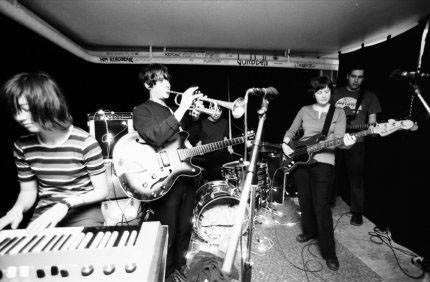
Math and Physics Club’s Spotify BioMath and Physics Club are an indie pop group that formed in Seattle in 2004, when guitarist James Werle and vocalist Charles Bert, who had been collaborating on various recordings up until that point, started working with drummer Kevin Emerson, violinist Saundrah Humphrey, and bassist Ethan Jones. Sounding something like a cross between the Smiths, the Field Mice, and Belle and Sebastian, MAPC were snapped up by Matinée by the end of the year. Their debut EP on that label, Weekends Away, came out in February 2005; the disc enjoyed quite a bit of critical buzz, and was in regular rotation on Seattle's KEXP that year. Proving that they were anything if not prolific, MAPC had another EP, Movie Ending Romance, out on Matinée by the time summer rolled around. Their self-titled debut full-length, produced by Kevin Suggs, came out a little over a year later, and they followed it up with a modest East Coast tour. Having taken a quick breather at the beginning of the year, MAPC returned with… another Matinée EP, Baby I'm Yours, in the summer of 2007.
During a long break between releases, Humphrey and Emerson left the band (though Emerson stuck around to play drums on future albums). I Shouldn't Look as Good as I Do was released in early summer 2010. The group toured the U.K. in 2011, then headed to the Dub Narcotic Studio to work on its next record. Produced by the band's longtime bassist Jones and Bob Schwenkler, Our Hearts Beat Out Loud was released by Matinée in late 2013. That same year they released a single, "Long Drag," and in 2014 were on a split single with former Lucksmiths member Mark Monnone. After that the band took a bit of a break, with Bert forming Unlikely Friends with BOAT's D. Crane and Chris McFarlane, who had spent time as MAPC's drummer at one point. They released an album, Solid Gold Cowboys, in 2015. By this time Math and Physics Club were working on new songs, one of which ("Coastal California, 1985") ended up on 2016's In This Together, a collection of early songs from the EPs, non-LP songs, and unreleased tracks issued jointly by Matinée and Fika Recordings.
They soon hit the recording studio to work on another album, this time enlisting producer Chris Hanzsek (who was known for running C/Z Records during grunge's heyday) to help mold their sound into something a little more powerful, though still pretty and sweetly sad. After releasing the "All the Mains are Down" single in late 2017 and doing a quick tour of Australia with labelmates Last Leaves, the band's fourth album, Lived Here Before, was issued by the team of Matinée and Fika once again. ~ Tim Sendra, Rovi
Viberate is a music analytics platform built for A&Rs, artist managers, labels, booking agents, marketers, and artists.
It helps music professionals track artist growth, analyze audience data, monitor playlist activity, compare artists, follow song performance, and identify opportunities across the music market.
Public artist pages provide a free preview of selected artist data. Paid plans provide access to deeper analytics, historical data, charts, comparisons, playlist tools, exports, alerts, reports, and additional professional features.
Yes. Public Viberate artist pages provide selected artist analytics and music data for free.
Viberate also offers a 7-day free trial of the full platform. A credit card is required to start the trial. The trial includes access to the complete product so users can test deeper artist analytics, historical views, playlist insights, comparisons, charts, exports, alerts, and reporting features before choosing a paid plan.
Viberate provides artist analytics across streaming, playlists, social media, video, radio airplay, songs, and audience markets.
Users can analyze Spotify performance, Spotify and Apple Music playlists, YouTube activity, TikTok and Instagram growth, radio spins, song performance, audience locations, demographics, rankings, and overall artist momentum.
Artist profiles also connect to music charts, similar artists, and comparison tools, helping users benchmark performance and evaluate artists in context.
Viberate updates key artist and track data daily.
For followed artists and tracks, selected data is refreshed multiple times per day. This helps teams monitor playlist changes, streaming movement, audience growth, releases, and campaign performance with more current data.
Update frequency can vary depending on the metric and data source.
Yes. Viberate lets users compare up to five artists side by side across streaming, social media, audience, and engagement metrics.
Users can compare fanbase growth, audience demographics, locations, Spotify performance, social metrics, and other artist data over selected time periods.
Artist comparison can be used for A&R scouting, benchmarking, booking decisions, campaign planning, and evaluating artists with similar audiences or market positions.