Marley Marl

Hip Hop
Contemporary Hip Hop
 Viberate Rank: 62027
 Viberate Rank: 62027
 Monthly ListenersFollowers
 Subscribers
 Followers
 Followers
 FansTop Spotify Songs
| Track | 7-Day Streams | |
|---|---|---|
1 | 99.47K | |
2 | 14.91K | |
3 | 10.84K | |
4 | 9.09K | |
5 | 2.11K |
Top YouTube VideosMonthly ListenersFeatured in Playlists| Playlist | Followers | |
|---|---|---|
1 |  Old School Hip Hop Filtr Sweden | 779.20K |
2 |  I Love My '80s Hip-Hop Spotify | 459.58K |
3 |  The Bear Soundtrack Brendan Noone | 200.66K |
4 |  The Prose of Rhyming in Rap Estelle Caswell | 108.59K |
5 |  THROWBACKS - OG HIP-HOP ENERGY RIGHT NOW! | 107.43K |
Audience| City | Monthly Listeners | |
|---|---|---|
1 | | 8.65K |
2 | | 7.02K |
3 |  | 6.76K |
4 | | 5.96K |
5 | | 5.35K |
See full performance history, audience data, playlist activity, rankings, comparisons, and more in Viberate music analytics. Start with a free trial, then continue with a paid plan.
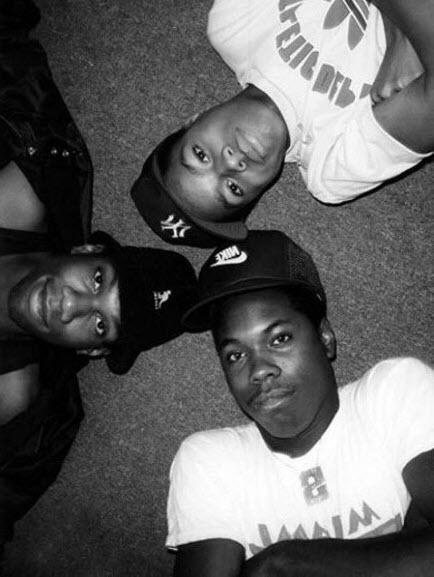
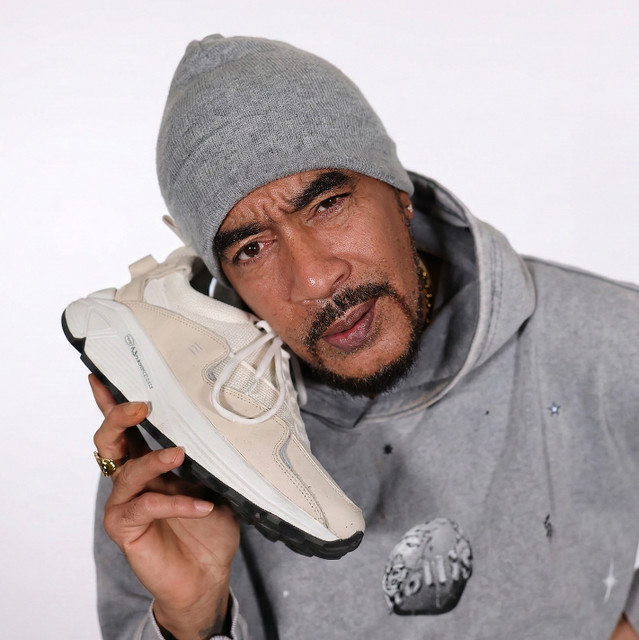
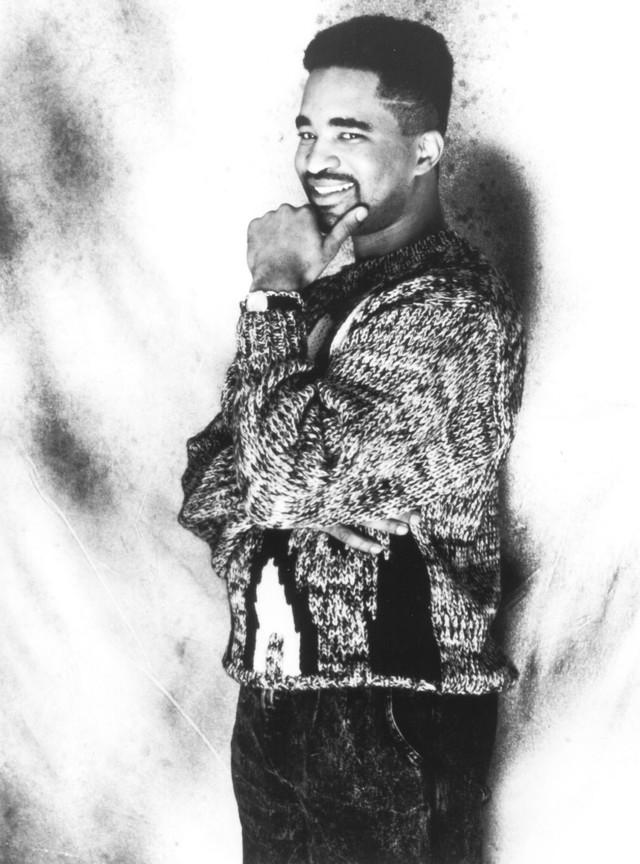
Marley Marl’s Spotify BioA hip-hop pioneer, Marley Marl is a DJ and superproducer whose enduring influence can be heard in virtually any rap track classified as boom bap. An early innovator in the art of sampling, the Queens native developed techniques that resulted in some of the sharpest beats of rap's Golden Age. He broke through in 1984 with Roxanne Shanté's "Roxanne's Revenge," and subsequently became the in-house producer for Cold Chillin', where he collaborated with some of the finest hip-hop talent in New York, including MC Shan ("The Bridge"), Kool G Rap & DJ Polo ("Rikers Island"), Biz Markie ("Nobody Beats the Biz"), Shanté ("Have a Nice Day"), and Big Daddy Kane ("Raw"). His production work for those and many other artists generally boasted a gritty and robust sound that -- along with his ear for a catchy sample -- helped move street-level hip-hop's sonic blueprint into more accessible territory. Most important, though, were his skills as a beatmaker; Marl was among the first to mine James Brown re…cords for grooves and also learned how to craft his own drum loops through sampling, which decreased hip-hop's reliance on drum machines and gave his productions a fresh, modern flavor. Marl has operated primarily behind the scenes throughout his career. He first moved to the spotlight with the classic In Control, Vol. 1 (1988), issued its sequel three years later -- after he co-produced LL Cool J's Mama Said Knock You Out -- and at the turn of the millennium returned with a pair of projects including Re-Entry (2001). He later teamed with KRS-One for Hip Hop Lives (2007) and with Craig G for Operation Take Back Hip Hop (2008). Marl was honored with the I Am Hip Hop Award at the 2023 BET Hip Hop Awards, and the next year returned to BBE with "Joy," a gospel-house single recorded with Lady Alma and Kenny Bobien.
Marl was born Marlon Williams on September 30, 1962, and grew up in the Queensbridge housing project in New York City's Queens borough. He became interested in music through local talent shows and neighborhood parties and became an accomplished DJ during rap's early days. He did mixing work on a number of singles for the old-school hip-hop/electro label Tuff City and became the in-house producer for the Cold Chillin' label. Marl set about recruiting for what became one of rap's first talent collectives, the Juice Crew. He caught his first big break in 1984 when he produced Roxanne Shanté's "Roxanne's Revenge," one of many answer singles inspired by U.T.F.O.'s underground smash "Roxanne, Roxanne"; luckily, "Roxanne's Revenge" was the biggest and it put artist, label, and producer on the map. Marl trumped it by helming "The Bridge," an ode to Queensbridge by his cousin MC Shan that became the unofficial Queens rap anthem and inspired a spirited feud with Bronx native KRS-One. With Marl's success came the opportunity to produce artists outside the Cold Chillin' stable, which he did with the monumental Eric B. & Rakim single "Eric B. Is President," as well as full-length albums by Heavy D & the Boyz.
The end of the '80s is often referred to as hip-hop's Golden Age, a time when the form's creativity was expanding by leaps and bounds. Marl's Juice Crew was an important force in ushering in this era thanks to its advances in lyrical technique and the distinctive personalities of emerging stars like Biz Markie and Big Daddy Kane. With business at Cold Chillin' booming, Marl put out the first full-length release under his own name in 1988 (he'd previously recorded the single "DJ Cuttin'" in 1985 with the alias NYC Cutter). In Control, Vol. 1 was mostly a showcase for various Juice Crew affiliates to strut their stuff, most thrillingly on the legendary, larger-than-life posse cut "The Symphony." Marl scored his greatest crossover success in 1990 by helming LL Cool J's Mama Said Knock You Out; bolstered by Marl's state-of-the-art production, the album restored LL's street cred while becoming his biggest seller ever, making Marl an in-demand remixer. 1991 brought the release of In Control, Vol. 2, promoted with singles "The Symphony, Pt. 2" and "Check the Mirror." Many Juice Crew associates took part in the album, as did the likes of LL, Chuck D, and Intelligent Hoodlum.
After working with TLC on their 1992 debut, Marl remained mostly quiet for a few years; 1995 saw the release of House of Hits, an excellent retrospective of his best productions over the years. Splitting off from Cold Chillin', Marl spent several years in a legal battle over money and ownership rights that, in 1998, finally resulted in his being awarded control of all the songs he'd produced for the label. In the late '90s, Marl's status as a high-profile producer was restored thanks to his work with artists like Rakim, Queensbridge's own Capone-N-Noreaga, and Fat Joe. In 2001, Marl put together another compilation of original productions with guest rappers for the BBE label, titled Re-Entry. Marl releases became less frequent, though they weren't without significance. Hip Hop Lives (2007) was a full-length collaboration with onetime rival KRS-One. For Operation Take Back Hip-Hop (2008), he reconvened with the Juice Crew's Craig G and involved Talib Kweli and Sadat X. Into the next decade, he and Roxanne Shanté co-hosted the Golden Era Radio program on WBLS, the historic New York station that had previously showcased his DJ skills on Mr. Magic's Rap Attack show. At the 2023 BET Hip Hop Awards, Marl was given the I Am Hip Hop Award and was paid tribute with a performance featuring Rakim and LL Cool J. The next year, he, Lady Alma, and Kenny Bobien issued the "Joy" single on BBE. ~ Steve Huey & Andy Kellman, Rovi
Viberate is a music analytics platform built for A&Rs, artist managers, labels, booking agents, marketers, and artists.
It helps music professionals track artist growth, analyze audience data, monitor playlist activity, compare artists, follow song performance, and identify opportunities across the music market.
Public artist pages provide a free preview of selected artist data. Paid plans provide access to deeper analytics, historical data, charts, comparisons, playlist tools, exports, alerts, reports, and additional professional features.
Yes. Public Viberate artist pages provide selected artist analytics and music data for free.
Viberate also offers a 7-day free trial of the full platform. A credit card is required to start the trial. The trial includes access to the complete product so users can test deeper artist analytics, historical views, playlist insights, comparisons, charts, exports, alerts, and reporting features before choosing a paid plan.
Viberate provides artist analytics across streaming, playlists, social media, video, radio airplay, songs, and audience markets.
Users can analyze Spotify performance, Spotify and Apple Music playlists, YouTube activity, TikTok and Instagram growth, radio spins, song performance, audience locations, demographics, rankings, and overall artist momentum.
Artist profiles also connect to music charts, similar artists, and comparison tools, helping users benchmark performance and evaluate artists in context.
Viberate updates key artist and track data daily.
For followed artists and tracks, selected data is refreshed multiple times per day. This helps teams monitor playlist changes, streaming movement, audience growth, releases, and campaign performance with more current data.
Update frequency can vary depending on the metric and data source.
Yes. Viberate lets users compare up to five artists side by side across streaming, social media, audience, and engagement metrics.
Users can compare fanbase growth, audience demographics, locations, Spotify performance, social metrics, and other artist data over selected time periods.
Artist comparison can be used for A&R scouting, benchmarking, booking decisions, campaign planning, and evaluating artists with similar audiences or market positions.