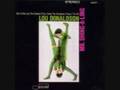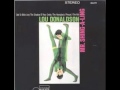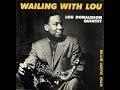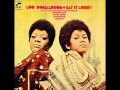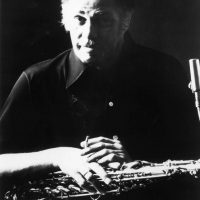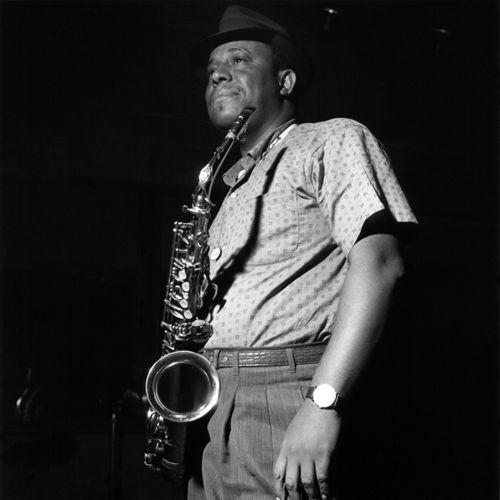
Lou Donaldson

Jazz
Bebop
Jazz Blues
 Viberate Rank: 48470
 Viberate Rank: 48470
 Monthly ListenersFollowers
 Subscribers
 Followers
 Followers
 FansTop Spotify Songs
| Track | 7-Day Streams | |
|---|---|---|
1 | 191.93K | |
2 | 53.33K | |
3 | 39.35K | |
4 | 31.04K | |
5 | 26.30K |
Top YouTube Videos| Video | 7-Day Views | |
|---|---|---|
1 | 325 | |
2 | 318 | |
3 | 265 | |
4 | 51 | |
5 | 42 |
Monthly ListenersFeatured in Playlists| Playlist | Followers | |
|---|---|---|
1 |  Jazz Classics Spotify | 5.08M |
2 |  Feel Good Jazz Spotify | 549.61K |
3 |  Jazz Classics Blue Note Edition Spotify | 549.38K |
4 |  Dark Academia Jazz Spotify | 283.00K |
5 |  Jazz Bar Spotify | 208.17K |
Audience| City | Monthly Listeners | |
|---|---|---|
1 | | 14.60K |
2 | | 12.31K |
3 | | 10.81K |
4 | | 9.21K |
5 |  | 8.66K |
See full performance history, audience data, playlist activity, rankings, comparisons, and more in Viberate music analytics. Start with a free trial, then continue with a paid plan.
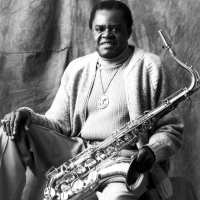
Lou Donaldson’s Spotify BioA gregariously soulful, yet sweet-toned improviser, alto saxophonist Lou Donaldson helped to define the sound of swinging hard bop and groove-based soul-jazz. Nicknamed "Sweet Poppa Lou," Donaldson built upon the bebop style of his idol Charlie Parker, emerging from the seminal Art Blakey group of the '50s alongside trumpeter Clifford Brown. He released a slew of his own iconic Blue Note albums, peaking with 1958's Blues Walk and 1967's Alligator Boogaloo; both spawned two classic title-track anthems. Donaldson's groups had a crossover appeal, showcasing equally soulful luminaries like guitarist Grant Green, pianist Herman Foster, organist Big John Patton, and drummer Idris Muhammad. His was a lyrically urbane, yet eminently bluesy and genre-crossing style, one that influenced both the funk-jazz of the '70s and the crate-diving hip-hop artists of generations to come. He remained a vital performer into his later years, returning to small group hard bop on albums like 1981's Forgotten… Man, 1992's Birdseed, and 1994's Sentimental Journey. A 2013 NEA Jazz Master, Donaldson had largely retired from performing by the time he passed in 2024.
Born in 1926 in Badin, North Carolina, Donaldson grew up the second of four children with his father, Louis Sr., a minister, and his mother, Lucy, a music teacher, music director, and concert pianist. It was Lucy who first introduced Donaldson to music, starting him out on clarinet at a young age. By age 15, he was already attending North Carolina A&T College in Greensboro and playing in the marching band. With the outbreak of World War II in 1945, he was drafted into the Navy where he served as a member of the Great Lakes Navy Band. It was during this period that he switched to alto saxophone, inspired by the bebop playing of Charlie Parker. Upon his military discharge, he returned to Greensboro where he earned a Bachelor of Science degree. While in school, he performed with the jazz combo the Rhythm Vets, even recording the soundtrack to the 1947 comedy featurette Pitch a Boogie Woogie.
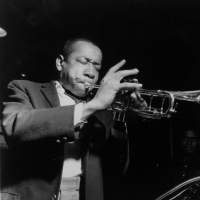
In 1949, he moved to New York City where he attended the Darrow Institute of Music. There, he appeared on records with Milt Jackson and Thelonious Monk. He also joined an early, pre-Jazz Messengers version of Art Blakey's Quintet, playing alongside trumpeter Clifford Brown, pianist Horace Silver, and bassist Curly Russell on the classic A Night at Birdland albums for Blue Note. He also recorded on several other Brown albums and appeared on notable sessions with Blue Mitchell, Philly Joe Jones, and organist Jimmy Smith, the latter of which featured Donaldson on his own landmark sessions House Party and The Sermon!
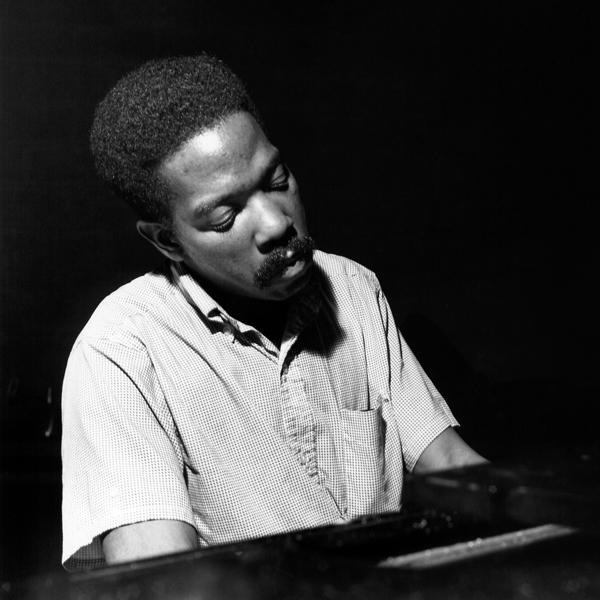
As a leader, Donaldson made his debut alongside Clifford Brown with 1952's New Faces New Sounds on Blue Note, which also featured pianist Elmo Hope, bassist Percy Heath, and drummer Philly Joe Jones. A string of hard bop albums followed on Blue Note, including Wailing with Lou and Swing and Soul, which featured his main quartet with pianist Herman Foster. He also released 1957's Lou Takes Off, backed by an all-star ensemble with trumpeter Donald Byrd and trombonist Curtis Fuller, pianist Sonny Clark, bassist Jamil Nasser, and drummer Art Taylor.
In 1958, he added conga player Ray Barretto to his group with Foster, bassist Peck Morrison, and drummer Dave Bailey for Blues Walk. Anchored by the coolly swaggering, minor blues title-track, the album showcased Donaldson's creative evolution away from straight-ahead hard bop and toward a funkier, R&B-informed style that would become known as soul-jazz.
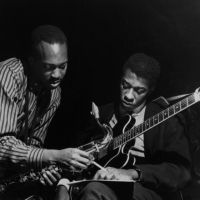
Throughout the '60s, Donaldson further developed his style, embracing a more groove-oriented, organ-based sound that would help to define the soul-jazz approach. He recorded often with guitarist Grant Green and released other Blue Note albums like Here 'Tis, The Natural Soul, and 1963's Goodness Gracious. He also released a handful of albums on Argo and Cadet, including Signifyin' and Possum Head. He capped the era with a handful of classic soul-jazz albums, beginning with 1967's Alligator Boogaloo, whose bluesy title-track, an improvised riff Donaldson played as a last minute addition, became a surprise radio hit. He followed with Mr. Shing-A-Ling, Midnight Creeper, Say It Loud!, Hot Dog, and 1969's Everything I Play Is Funky.
While he never fully embraced electric fusion, Donaldson's '70s Blue Note albums, including Cosmos, Sophisticated Lou, Sassy Soul Strut, and Sweet Lou, had a more commercial bent, evincing the influence of funk and soul with nods to bebop and standards. It was during this period that he was purportedly given the nickname of "Sweet Poppa Lou" by producer Bob Porter, in honor of his sweet, yet soulful style. Both Donaldson's '60s soul-jazz recordings and his '70s LPs had a lasting influence, often getting sampled by a bevy of hip-hop artists, including Tribe Called Quest, Dr. Dre, Kanye West, and others. His cross-genre aesthetic also prefigured the acid jazz movement of the '90s.
Following some time away, Donaldson returned to the spotlight in the early '80s, leading a small acoustic quartet with longtime pianist Herman Foster and others. With the group, he delivered a string of well received albums in 1981, including Sweet Poppa Lou, Forgotten Man, and Back Street, all of which found him returning to the more hard-swinging bop approach of his classic Blue Note period. Riding a wave of renewed public attention, he delivered 1990's Play the Right Thing, 1992's Birdseed, 1993's Caracas, and 1994's Sentimental Journey.
Along with having already received the Charlie Parker Memorial Medal in 1975 and aiding in setting up the Charlie Parker Foundation, Donaldson garnered yet more accolades, including being awarded an honorary Doctorate of Humanities by North Carolina A&T University. He was also inducted to a number of jazz Hall of Fame organizations, including the Oklahoma Jazz Hall of Fame, the North Carolina Music Hall of Fame, and the International Jazz Hall of Fame. In 2013, he was named a Jazz Master by the National Endowment for the Arts and in 2017, Donaldson played his final show, officially retiring the following year. He died on November 9, 2024, in Daytona Beach, Florida from pneumonia at the age of 98. ~ Matt Collar, Rovi
Viberate is a music analytics platform built for A&Rs, artist managers, labels, booking agents, marketers, and artists.
It helps music professionals track artist growth, analyze audience data, monitor playlist activity, compare artists, follow song performance, and identify opportunities across the music market.
Public artist pages provide a free preview of selected artist data. Paid plans provide access to deeper analytics, historical data, charts, comparisons, playlist tools, exports, alerts, reports, and additional professional features.
Yes. Public Viberate artist pages provide selected artist analytics and music data for free.
Viberate also offers a 7-day free trial of the full platform. A credit card is required to start the trial. The trial includes access to the complete product so users can test deeper artist analytics, historical views, playlist insights, comparisons, charts, exports, alerts, and reporting features before choosing a paid plan.
Viberate provides artist analytics across streaming, playlists, social media, video, radio airplay, songs, and audience markets.
Users can analyze Spotify performance, Spotify and Apple Music playlists, YouTube activity, TikTok and Instagram growth, radio spins, song performance, audience locations, demographics, rankings, and overall artist momentum.
Artist profiles also connect to music charts, similar artists, and comparison tools, helping users benchmark performance and evaluate artists in context.
Viberate updates key artist and track data daily.
For followed artists and tracks, selected data is refreshed multiple times per day. This helps teams monitor playlist changes, streaming movement, audience growth, releases, and campaign performance with more current data.
Update frequency can vary depending on the metric and data source.
Yes. Viberate lets users compare up to five artists side by side across streaming, social media, audience, and engagement metrics.
Users can compare fanbase growth, audience demographics, locations, Spotify performance, social metrics, and other artist data over selected time periods.
Artist comparison can be used for A&R scouting, benchmarking, booking decisions, campaign planning, and evaluating artists with similar audiences or market positions.