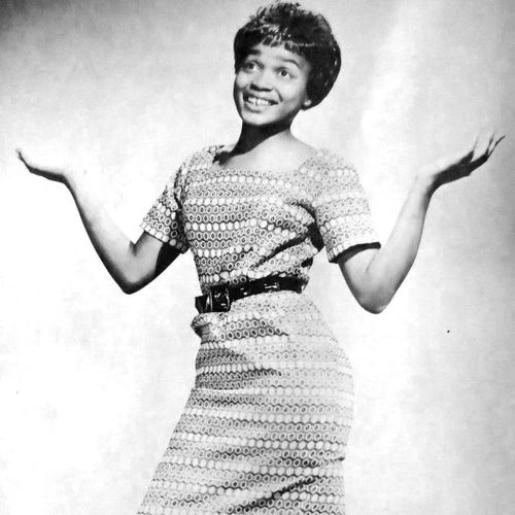
Little Eva

Pop
Mainstream Pop
Contemporary R&B
Soul
 Viberate Rank: 35690
 Viberate Rank: 35690
 Monthly ListenersFollowers
 Subscribers
 Followers
 Followers
 FansTop Spotify Songs
| Track | 7-Day Streams | |
|---|---|---|
1 | 342.73K | |
2 | 342.73K | |
3 | 25.63K | |
4 | 4.25K | |
5 | 4.18K |
Top YouTube Videos| Video | 7-Day Views | |
|---|---|---|
1 | 30.79K | |
2 | 4.76K | |
3 | 1.26K | |
4 | 595 | |
5 | 328 |
Monthly ListenersFeatured in Playlists| Playlist | Followers | |
|---|---|---|
1 |  Vietnam War Music Extra Music | 754.34K |
2 |  Easy 60s Spotify | 366.21K |
3 | Golden Oldies 50's & 60's - Best of 50s/60s. EN Greatest hits - Grandes éxitos de los años 50 y 60. Leticia-Recopilatorios | 198.74K |
4 | All 80 s Rock & Classic Hits Peter Bakker | 135.74K |
5 |  Années 60 Spotify | 112.57K |
Audience| City | Monthly Listeners | |
|---|---|---|
1 |  | 12.10K |
2 | | 11.68K |
3 |  | 10.50K |
4 | | 9.48K |
5 |  | 6.50K |
See full performance history, audience data, playlist activity, rankings, comparisons, and more in Viberate music analytics. Start with a free trial, then continue with a paid plan.
Little Eva’s Spotify BioLittle Eva Narcissus Boyd was a babysitter for Carole King and Gerry Goffin when the songwriting team was inspired to write "The Loco-Motion," a song based on a dance that Eva would do around the house. Eva also got to sing on their demo, which impressed Don Kirshner enough to release it as it was. One of the greatest girl group hits, "The Loco-Motion" hit number one in 1962; the follow-up, "Keep Your Hands Off My Baby," was also written by Goffin-King. Almost as good as her debut, it reached the Top 20, and was even covered by the Beatles on-stage in their early days (though they never recorded it in the studio). Unfortunately, Eva was then pigeonholed as a dance-craze singer and given inferior material. She never again reached the soulful heights of her first two singles; "Let's Turkey Trot" (1963) was her only other Top 20 hit, although she continued working until October 2001. She succumbed to cervical cancer in April of 2003. ~ Richie Unterberger, Rovi
Viberate is a music analytics platform built for A&Rs, artist managers, labels, booking agents, marketers, and artists.
It helps music professionals track artist growth, analyze audience data, monitor playlist activity, compare artists, follow song performance, and identify opportunities across the music market.
Public artist pages provide a free preview of selected artist data. Paid plans provide access to deeper analytics, historical data, charts, comparisons, playlist tools, exports, alerts, reports, and additional professional features.
Yes. Public Viberate artist pages provide selected artist analytics and music data for free.
Viberate also offers a 7-day free trial of the full platform. A credit card is required to start the trial. The trial includes access to the complete product so users can test deeper artist analytics, historical views, playlist insights, comparisons, charts, exports, alerts, and reporting features before choosing a paid plan.
Viberate provides artist analytics across streaming, playlists, social media, video, radio airplay, songs, and audience markets.
Users can analyze Spotify performance, Spotify and Apple Music playlists, YouTube activity, TikTok and Instagram growth, radio spins, song performance, audience locations, demographics, rankings, and overall artist momentum.
Artist profiles also connect to music charts, similar artists, and comparison tools, helping users benchmark performance and evaluate artists in context.
Viberate updates key artist and track data daily.
For followed artists and tracks, selected data is refreshed multiple times per day. This helps teams monitor playlist changes, streaming movement, audience growth, releases, and campaign performance with more current data.
Update frequency can vary depending on the metric and data source.
Yes. Viberate lets users compare up to five artists side by side across streaming, social media, audience, and engagement metrics.
Users can compare fanbase growth, audience demographics, locations, Spotify performance, social metrics, and other artist data over selected time periods.
Artist comparison can be used for A&R scouting, benchmarking, booking decisions, campaign planning, and evaluating artists with similar audiences or market positions.