Leopold Godowsky

Classical
Classical Crossover
 Viberate Rank: 212347
 Viberate Rank: 212347
 Monthly ListenersFollowers
 Subscribers
 Followers
 Followers
 FansTop Spotify Songs
| Track | 7-Day Streams | |
|---|---|---|
1 | 25.71K | |
2 | 15.01K | |
3 | 11.63K | |
4 | 11.63K | |
5 | 1.27K |
Top YouTube VideosMonthly ListenersFeatured in Playlists| Playlist | Followers | |
|---|---|---|
1 |  Classical Reading Spotify | 634.33K |
2 |  Classical Piano Spotify | 352.16K |
3 |  Classroom Classical Spotify | 77.53K |
4 |  Piano & Classical Jacob | 60.64K |
5 |  Piano for studying/reading Alda | 19.19K |
Audience| City | Monthly Listeners | |
|---|---|---|
1 |  | 1.15K |
2 |  | 973 |
3 |  | 947 |
4 |  | 792 |
5 |  | 729 |
See full performance history, audience data, playlist activity, rankings, comparisons, and more in Viberate music analytics. Start with a free trial, then continue with a paid plan.
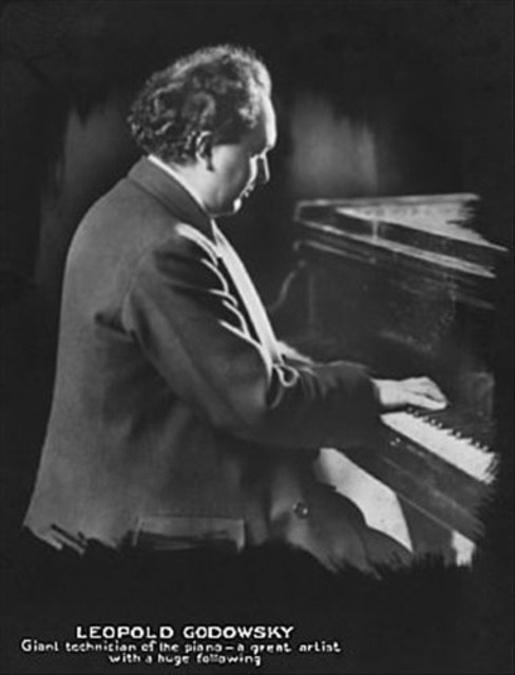
Leopold Godowsky’s Spotify BioLeopold Godowsky was one of the most astonishing piano virtuosos of all time and a composer of remarkably difficult polyphonic music. His father was a physician who contracted cholera tending patients during an epidemic, dying when his son was only 18 months old. Godowsky and his mother were taken in by friends, who soon realized the toddler was exceptionally musical. He played violin and piano longer from an age earlier than he could remember, but he was told he played before he was two. He said he had no teacher that he could remember, certainly none past the age of four. He composed a minuet when he was five, with the middle section being a strict canon, "This is noteworthy," he said, "because up to that time I had never heard a canon." It was good enough that he was able to use it in a fully mature composition 23 years later.
Leopold's adoptive father, Louis Passinock, promoted his fame as a Wunderkind. To forestall his exploitation, a banker named Feinberg offered to finance his… study at the Hochschule für Musik in Berlin. Leopold studied under Ernst Rudorff, but could only take three months of regimentation. He, his mother, and his "uncle" Passinock went to New York where he began to concertize at the age of thirteen. They booked him onto a tour of the West that eventually went bust, stranding the boy, who worked his way back to New York.
Again, a wealthy arts patron sought to "rescue" him. Leon Saxe arranged for him to go to Europe to study with the virtuoso Franz Liszt. By the time Leopold's ship reached Europe, Liszt was dead. But Camille Saint-Saëns, who had lost his children, became a mentor, mostly discussing interpretation and other esthetic manners. Godowsky had some success in Europe, but not enough to satisfy him, and returned to America.
There he had a career as a respected piano teacher in New York, Philadelphia, and Chicago. He developed the modern approach to piano playing, emphasizing economy of motion and release of weight (rather than direct muscle power) as the basis for playing. He began to arrange other composers' music, including a set of 53 exceptional etudes on Chopin's etudes, as well as other music. While teaching in Chicago, he gained a strong local reputation by giving recitals. An eight-recital set in 1897 and 1898 surveyed the history of nineteenth century piano literature.
Soon his fame spread, and he had triumphal performances in the U.S. and Europe. His December 6, 1900, concert at Beethoven Hall in Berlin was a triumph where he was acclaimed one of the greatest living pianists. Soon, he was the highest-paid solo instrumentalist in the world. He continued to write original piano music and his free adaptations of other music. In 1909, he became director of the Piano School of the Imperial Academy of Music in Vienna, the first Jew to take this post.
He was visiting Belgium for vacation in 1914 when the Germans invaded. He escaped to England and returned to the United States, where he made his home for the rest of his life. He moved his residence frequently and traveled widely, giving concerts in Mexico, South America, Yokohama, and Asia. His trip to Java inspired him to try to capture the sound of the gamelan orchestra in his suite Phonoramas. He lost much of his fortune in the 1929 stock market crash, then the next year had a severe stroke that ended his public career. He declined into depression and further illness before his death.
Viberate is a music analytics platform built for A&Rs, artist managers, labels, booking agents, marketers, and artists.
It helps music professionals track artist growth, analyze audience data, monitor playlist activity, compare artists, follow song performance, and identify opportunities across the music market.
Public artist pages provide a free preview of selected artist data. Paid plans provide access to deeper analytics, historical data, charts, comparisons, playlist tools, exports, alerts, reports, and additional professional features.
Yes. Public Viberate artist pages provide selected artist analytics and music data for free.
Viberate also offers a 7-day free trial of the full platform. A credit card is required to start the trial. The trial includes access to the complete product so users can test deeper artist analytics, historical views, playlist insights, comparisons, charts, exports, alerts, and reporting features before choosing a paid plan.
Viberate provides artist analytics across streaming, playlists, social media, video, radio airplay, songs, and audience markets.
Users can analyze Spotify performance, Spotify and Apple Music playlists, YouTube activity, TikTok and Instagram growth, radio spins, song performance, audience locations, demographics, rankings, and overall artist momentum.
Artist profiles also connect to music charts, similar artists, and comparison tools, helping users benchmark performance and evaluate artists in context.
Viberate updates key artist and track data daily.
For followed artists and tracks, selected data is refreshed multiple times per day. This helps teams monitor playlist changes, streaming movement, audience growth, releases, and campaign performance with more current data.
Update frequency can vary depending on the metric and data source.
Yes. Viberate lets users compare up to five artists side by side across streaming, social media, audience, and engagement metrics.
Users can compare fanbase growth, audience demographics, locations, Spotify performance, social metrics, and other artist data over selected time periods.
Artist comparison can be used for A&R scouting, benchmarking, booking decisions, campaign planning, and evaluating artists with similar audiences or market positions.