Charles-Valentin Alkan

Classical
Classical Crossover
 Viberate Rank: 197062
 Viberate Rank: 197062
 Monthly ListenersFollowers
 Subscribers
 Followers
 Followers
 FansTop Spotify Songs
| Track | 7-Day Streams | |
|---|---|---|
1 | 21.70K | |
2 | 7.46K | |
3 | 6.71K | |
4 | 4.47K | |
5 | 3.72K |
Top YouTube VideosMonthly ListenersFeatured in Playlists| Playlist | Followers | |
|---|---|---|
1 |  Best Classical Music Peaceful Classics | 857.56K |
2 |  Epic Classical Spotify | 705.92K |
3 |  Classical Piano Spotify | 352.11K |
4 |  Classical Garden Spotify | 244.59K |
5 |  Classical Study Music for Focus 🎻🎶 Prime Feelings | 191.75K |
Audience| City | Monthly Listeners | |
|---|---|---|
1 |  | 1.45K |
2 |  | 1.19K |
3 |  | 1.05K |
4 |  | 1.04K |
5 |  | 1.03K |
See full performance history, audience data, playlist activity, rankings, comparisons, and more in Viberate music analytics. Start with a free trial, then continue with a paid plan.
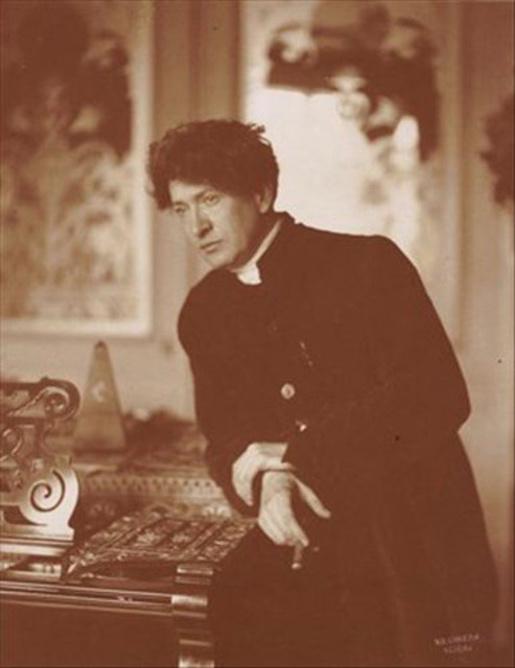
Charles-Valentin Alkan’s Spotify BioCharles-Valentin Alkan was one of the great composer/pianists of the nineteenth century and a major influence on many subsequent musicians. He wrote some of the most unusual and technically difficult music of his time, an output that no less an authority than Ferruccio Busoni called "the greatest achievement in piano music after Liszt."
Alkan was an extraordinary prodigy: he entered the Paris Conservatoire when he was 6 years old and won first prizes for solfège at age 7, for piano at 11, for harmony at 14, and for organ at 21. He quickly made a name for himself in the Paris salons as a gifted young pianist and played some London concerts in 1833 to great acclaim. From 1829 to 1836, he was a part-time teacher at the Paris Conservatoire, but he never joined the regular staff.
Alkan was well known in intellectual circles -- he counted among his friends Victor Hugo, George Sand, and Frédéric Chopin -- but he was always something of an introvert and misanthrope; at age 25 he dropped out of… society, the first of his frequent and sometimes lengthy withdrawals. Over the next 35 years he appeared in public only rarely; not very much is known about his life in those years. Only in 1873 did he make a return to the concert stage, playing a series of Petits concerts at the Salle Erard (where he also taught classes in the afternoons).
Alkan was devoted to his Jewish faith and was quite a scholar on the subject. One curious, but untrue, legend has it that he died when, as he reached for a copy of the Talmud on top of a large shelf, the bookcase fell over and he was crushed to death.
Alkan published his first music at age 14; ultimately his catalog extended to 76 opus numbers, most of them works for solo piano. The earliest of his compositions were in the familiar forms of the day: opera paraphrases and collections of studies that showed off his unusual facility. His compositions started to get more ambitious in the 1840s -- the harmonies bolder, the rhythms more irregular -- and many of the works called for extravagant, nearly superhuman technique. These works range from larger works like the Grande sonate "Les quatre âges," Op. 33 (1848), to shorter pieces like Le chemin de fer, Op. 27 (1844), the first musical portrait of the railroad, and the humorous and peculiar Funeral March for a Dead Parrot.
Perhaps his most ambitious opus is the set of Twelve Études in all the minor keys, Op. 39 (1857). The 12 pieces aggregate to form (in order) a four-movement symphony, a three-movement concerto, a set of variations, an overture, and three independent pieces. They are very demanding of a performer -- pianist Raymond Lewenthal has called them "a ride in Hell." The first movement of the concerto alone contains 1,343 measures (more than the entirety of Beethoven's Hammerklavier Sonata) and lasts half an hour.
Alkan played his own works very rarely in public. He did however play a range of music unusual for his time, including the then-unfashionable late Beethoven sonatas, various Schubert sonatas, and much Baroque music. His playing style was noted for its clarity, its restraint in rhythm and dynamics, and its intellectual quality.
Alkan and his music were largely neglected during his lifetime, and he was nearly forgotten upon his death. But with the attention of Ferruccio Busoni, Kaikhosru Sorabji, Egon Petri, and other giants of the early-to-middle twentieth century, as well as the later advocacy via recordings of Petri, Lewenthal, and Ronald Smith, Alkan's position in music history has been assured.
Viberate is a music analytics platform built for A&Rs, artist managers, labels, booking agents, marketers, and artists.
It helps music professionals track artist growth, analyze audience data, monitor playlist activity, compare artists, follow song performance, and identify opportunities across the music market.
Public artist pages provide a free preview of selected artist data. Paid plans provide access to deeper analytics, historical data, charts, comparisons, playlist tools, exports, alerts, reports, and additional professional features.
Yes. Public Viberate artist pages provide selected artist analytics and music data for free.
Viberate also offers a 7-day free trial of the full platform. A credit card is required to start the trial. The trial includes access to the complete product so users can test deeper artist analytics, historical views, playlist insights, comparisons, charts, exports, alerts, and reporting features before choosing a paid plan.
Viberate provides artist analytics across streaming, playlists, social media, video, radio airplay, songs, and audience markets.
Users can analyze Spotify performance, Spotify and Apple Music playlists, YouTube activity, TikTok and Instagram growth, radio spins, song performance, audience locations, demographics, rankings, and overall artist momentum.
Artist profiles also connect to music charts, similar artists, and comparison tools, helping users benchmark performance and evaluate artists in context.
Viberate updates key artist and track data daily.
For followed artists and tracks, selected data is refreshed multiple times per day. This helps teams monitor playlist changes, streaming movement, audience growth, releases, and campaign performance with more current data.
Update frequency can vary depending on the metric and data source.
Yes. Viberate lets users compare up to five artists side by side across streaming, social media, audience, and engagement metrics.
Users can compare fanbase growth, audience demographics, locations, Spotify performance, social metrics, and other artist data over selected time periods.
Artist comparison can be used for A&R scouting, benchmarking, booking decisions, campaign planning, and evaluating artists with similar audiences or market positions.