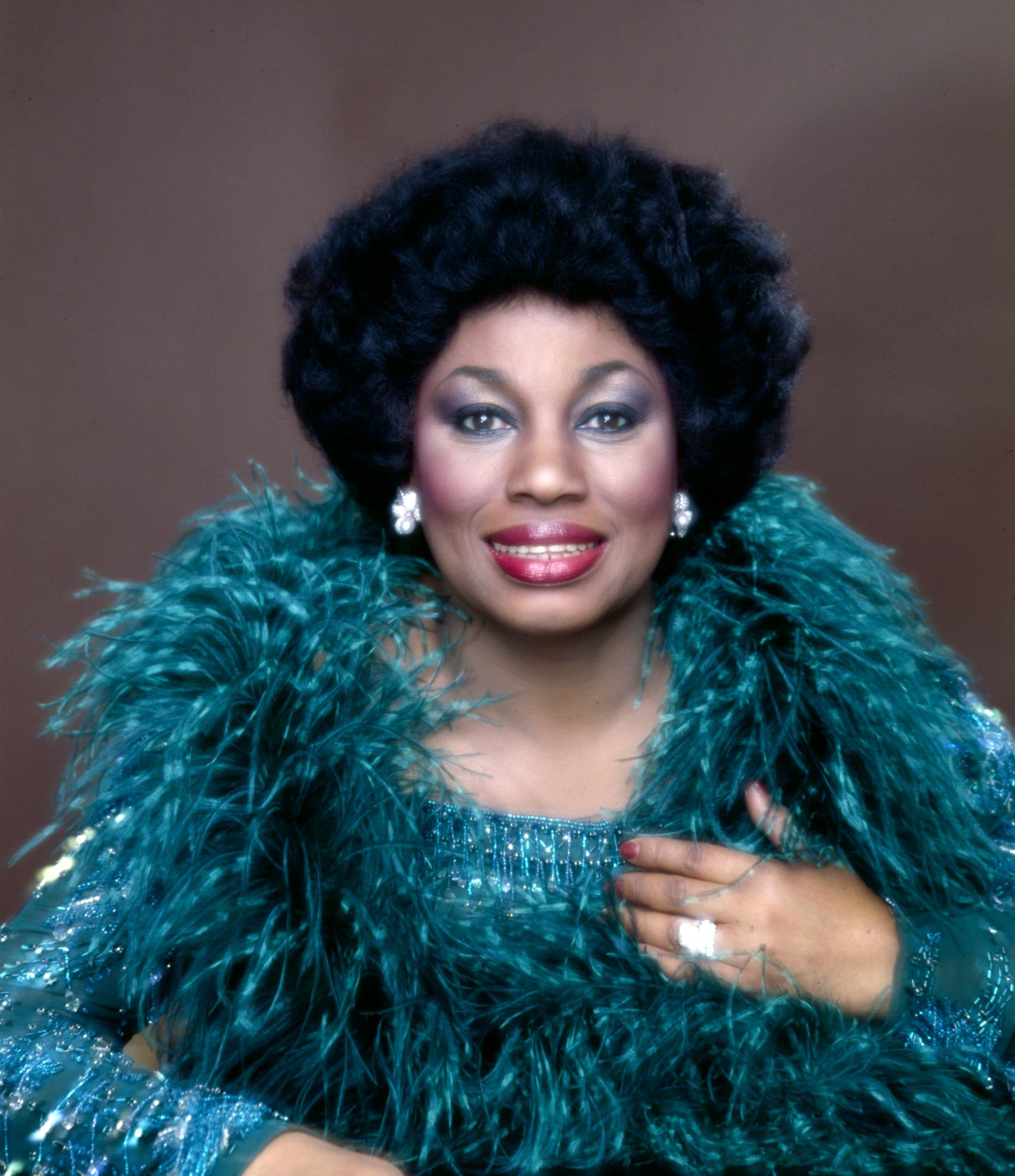
Leontyne Price

Classical
Opera
Orchestral
 Viberate Rank: 102125
 Viberate Rank: 102125
 Monthly ListenersFollowers
 Subscribers
 Followers
 Followers
 FansTop Spotify SongsTop YouTube VideosMonthly ListenersFeatured in Playlists
| Playlist | Followers | |
|---|---|---|
1 |  Opera Classics Spotify | 605.55K |
2 | phillysblunt | 127.21K |
3 |  1000 Recordings to Hear Before You Die (Tom Moon): Album Index Ulysses' Classical | 94.29K |
4 | Johns Hopkins Psychedelic Therapy Playlist SoundMind Psychedelics | 70.21K |
5 |  ÓPERAS FAMOSAS Opera Playlist | 63.71K |
Audience| City | Monthly Listeners | |
|---|---|---|
1 |  | 965 |
2 |  | 699 |
3 | | 663 |
4 |  | 644 |
5 |  | 518 |
See full performance history, audience data, playlist activity, rankings, comparisons, and more in Viberate music analytics. Start with a free trial, then continue with a paid plan.
Leontyne Price’s Spotify BioThe daughter of a carpenter and a midwife, African-American soprano Leontyne Price (born Mary Violet) studied piano and singing with the assistance of a local family that recognized her innate talents. After earning her degree from College of Education and Industrial Arts at Wilberforce, OH (where she studied with Catherine Van Buren), Price was awarded a scholarship to attend the Juilliard School of Music where she continued vocal training with Florence Page Kimball. Upon hearing her there, Virgil Thomson invited her to sing Saint Cecilia in the 1952 revival of his Four Saints in Three Acts. She then toured the United States and Europe as Bess in Gershwin's Porgy and Bess (1952-1955); on this tour she met and married bass-baritone William Warfield who was singing the role of Porgy.
In October 1953, Price sang the premiere of Samuel Barber's Hermit Songs at the Library of Congress in Washington, D.C., and she gave her first New York recital in November 1954; in December of the same year… she sang Barber's Prayers of Kierkegaard with the Boston Symphony Orchestra. Her appearances in Tosca, Die Zauberflöte, Dialogues des Carmelites, and Don Giovanni on television brought her to wide attention for both her outstanding singing, and for being the first African American leading soprano of note.
In the following seasons, she made her debuts at San Francisco, Chicago, Vienna, London, and Milan. This culminated in her first appearance at the Metropolitan Opera House as Leonore in Il trovatore, an evening that garnered a front page review in The New York Times. The Metropolitan would soon become her favored opera house; she sang most of her wide repertoire there, including Aida, Tosca, Madama Butterfly, Leonore in La Forza del Destino, Ernani, Amelia in Un ballo in maschera, Donna Anna (Don Giovanni), Pamina (Die Zauberflöte), Fiorgiligi (Così), Ariadne (Ariadne auf Naxos), and Tatiana in Eugene Onegin. She sang her last operatic performance there in 1985 as Aida.
Price was known as much for her concert and recital appearances as for those in opera. Besides performances of common repertory works, such as Beethoven's Missa Solemnis and the Verdi Requiem, she also undertook Honegger's rather obscure Jeanne d'Arc (with the New York Philharmonic) and Bruckner's Te Deum (at Salzburg). Her solo concerts often featured lesser-known arias and excerpts, including the "Awakening of Helen" from Strauss' Egyptian Helen, selections from Barber's Anthony and Cleopatra and The Songs of the Rose of Sharon by John La Montaine.
She gave annual recitals throughout North America and was also heard regularly in Europe, being a special favorite at the Salzburg Festival. Her recital repertoire was extensive, ranging from the songs of Poulenc, Hahn, and Marx, to traditional spirituals; her final encore was often "This little light of mine" -- one of her mother's favorite pieces.
Leontyne Price's voice was a spinto soprano of great beauty. She had a wonderful feeling for the sweep of the long phrases of Verdi and her technique allowed her to encompass all of the difficulties of Donna Anna (Don Giovanni) and Elvira (Ernani). Her lower register had a quality often described as "dusky" which many listeners found quite sensual. Most of her important operatic roles were recorded by RCA, but only a small fraction of her recital repertoire found its way onto disc. Leontyne Price will always be remembered as one of the greatest Verdi sopranos of the twentieth century.
Viberate is a music analytics platform built for A&Rs, artist managers, labels, booking agents, marketers, and artists.
It helps music professionals track artist growth, analyze audience data, monitor playlist activity, compare artists, follow song performance, and identify opportunities across the music market.
Public artist pages provide a free preview of selected artist data. Paid plans provide access to deeper analytics, historical data, charts, comparisons, playlist tools, exports, alerts, reports, and additional professional features.
Yes. Public Viberate artist pages provide selected artist analytics and music data for free.
Viberate also offers a 7-day free trial of the full platform. A credit card is required to start the trial. The trial includes access to the complete product so users can test deeper artist analytics, historical views, playlist insights, comparisons, charts, exports, alerts, and reporting features before choosing a paid plan.
Viberate provides artist analytics across streaming, playlists, social media, video, radio airplay, songs, and audience markets.
Users can analyze Spotify performance, Spotify and Apple Music playlists, YouTube activity, TikTok and Instagram growth, radio spins, song performance, audience locations, demographics, rankings, and overall artist momentum.
Artist profiles also connect to music charts, similar artists, and comparison tools, helping users benchmark performance and evaluate artists in context.
Viberate updates key artist and track data daily.
For followed artists and tracks, selected data is refreshed multiple times per day. This helps teams monitor playlist changes, streaming movement, audience growth, releases, and campaign performance with more current data.
Update frequency can vary depending on the metric and data source.
Yes. Viberate lets users compare up to five artists side by side across streaming, social media, audience, and engagement metrics.
Users can compare fanbase growth, audience demographics, locations, Spotify performance, social metrics, and other artist data over selected time periods.
Artist comparison can be used for A&R scouting, benchmarking, booking decisions, campaign planning, and evaluating artists with similar audiences or market positions.