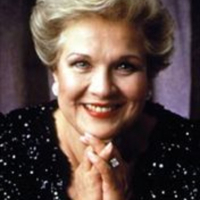
Marilyn Horne

Classical
Opera
Classical Crossover
 Viberate Rank: 157256
 Viberate Rank: 157256
 Monthly ListenersFollowers
 Subscribers
 Followers
 Followers
 FansTop Spotify Songs
| Track | 7-Day Streams | |
|---|---|---|
1 | 3.19K | |
2 | 3.19K | |
3 | 1.57K | |
4 | 1.52K | |
5 | 1.25K |
Top YouTube VideosMonthly ListenersFeatured in Playlists| Playlist | Followers | |
|---|---|---|
1 |  This Is Pavarotti Spotify | 238.37K |
2 |  This Is Rossini Spotify | 43.35K |
3 |  Opera Arias: Best of Udiscovermusic classical | 42.80K |
4 |  Mozart in the Jungle Ezgi Varol | 31.88K |
5 |  This Is Bizet Spotify | 28.83K |
Audience| City | Monthly Listeners | |
|---|---|---|
1 |  | 789 |
2 |  | 629 |
3 |  | 623 |
4 | | 616 |
5 | | 495 |
See full performance history, audience data, playlist activity, rankings, comparisons, and more in Viberate music analytics. Start with a free trial, then continue with a paid plan.
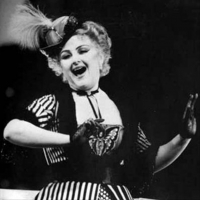
Marilyn Horne’s Spotify BioMarilyn Horne was one of the most admired singers of her generation, and was a major factor in the bel canto revival of the 1960s. While she was especially associated with the works of Rossini and Handel (she persuaded the Metropolitan Opera to mount Rinaldo for her in 1984, making it the first time the house had ever performed a Handel opera), she was no less adept in Vivaldi and Bellini operas, lieder (especially Mahler), French roles such as Fidès in Meyerbeer's Le Prophete and the title role of Thomas' Mignon; she even took on some Verdi roles, but public reception for those was mixed. Her highly flexible and powerful voice had a certain metallic quality that was especially effective in trouser roles, particularly the martial ones, such as Rinaldo and Tancredi -- earning her the sometime nickname of "General Horne." She possessed an extraordinary range, and in concert even performed Brünnhilde's Immolation Scene.
Horne's father was an amateur singer and her first teacher. Her… professional debut was at the age of four -- at a picnic rally for Franklin Delano Roosevelt's presidential re-election, where she sang "Believe me, if all those endearing young charms," and received a can of soda as her salary!. As her vocal potential became clearer still, she began studies with Edna Luce, whom she credits for the extraordinary breathing technique formed the foundation of her bel canto excellence. In 1951, she was awarded a scholarship to the University of Southern California, Long Beach, sang part-time in the noted Roger Wagner Chorale, and also participated in Lotte Lehmann's master classes. In 1954, she made her opera debut as Hata in The Bartered Bride with the Guild Opera Company, and came to national fame by providing the singing voice for Dorothy Dandridge in the film Carmen Jones.
In 1956, she went to Europe to continue her studies and, in 1957, joined the opera company at Gehenkirchen, Germany, as a soprano. There she sang such lyric soprano roles as Mimi in La Bohème, Amelia in Simon Boccanegra, and Tatiana in Eugene Onegin. She returned to the United States in 1960, and made her San Francisco debut as Marie in Alban Berg's Wozzeck. The next year, she made her New York debut at the American Opera Society, singing a concert performance of Bellini's Beatrice di Tenda in a cast featuring another singer making her New York debut, Joan Sutherland. The two of them became the soprano/mezzo pairing for bel canto operas such as Norma, Semiramide, and Anna Bolena. In 1969, she made her La Scala debut as Neocles in Rossini's The Siege of Corinth, and her Met debut as Adalgisa in Norma followed in 1970. In 1982, the Rossini Foundation awarded her its first Golden Plaque, acclaiming her as "the greatest Rossini singer in the world." In 1999, she announced her retirement from classical music. From 1960 to 1976, Horne was married to the African American conductor Henry Lewis (They met while in college; he was in the orchestra for The Bartered Bride, and upon hearing her powerful low register emerge from the chorus, he leaned over to ask a friend "who's that tenor?").
Viberate is a music analytics platform built for A&Rs, artist managers, labels, booking agents, marketers, and artists.
It helps music professionals track artist growth, analyze audience data, monitor playlist activity, compare artists, follow song performance, and identify opportunities across the music market.
Public artist pages provide a free preview of selected artist data. Paid plans provide access to deeper analytics, historical data, charts, comparisons, playlist tools, exports, alerts, reports, and additional professional features.
Yes. Public Viberate artist pages provide selected artist analytics and music data for free.
Viberate also offers a 7-day free trial of the full platform. A credit card is required to start the trial. The trial includes access to the complete product so users can test deeper artist analytics, historical views, playlist insights, comparisons, charts, exports, alerts, and reporting features before choosing a paid plan.
Viberate provides artist analytics across streaming, playlists, social media, video, radio airplay, songs, and audience markets.
Users can analyze Spotify performance, Spotify and Apple Music playlists, YouTube activity, TikTok and Instagram growth, radio spins, song performance, audience locations, demographics, rankings, and overall artist momentum.
Artist profiles also connect to music charts, similar artists, and comparison tools, helping users benchmark performance and evaluate artists in context.
Viberate updates key artist and track data daily.
For followed artists and tracks, selected data is refreshed multiple times per day. This helps teams monitor playlist changes, streaming movement, audience growth, releases, and campaign performance with more current data.
Update frequency can vary depending on the metric and data source.
Yes. Viberate lets users compare up to five artists side by side across streaming, social media, audience, and engagement metrics.
Users can compare fanbase growth, audience demographics, locations, Spotify performance, social metrics, and other artist data over selected time periods.
Artist comparison can be used for A&R scouting, benchmarking, booking decisions, campaign planning, and evaluating artists with similar audiences or market positions.