Leon Fleisher

Classical
Classical Crossover
Chamber Music
 Viberate Rank: 196560
 Viberate Rank: 196560
 Monthly ListenersFollowers
 Subscribers
 Followers
 Followers
 FansTop Spotify Songs
| Track | 7-Day Streams | |
|---|---|---|
1 | 1.69K | |
2 | 725 | |
3 | 713 | |
4 | 495 | |
5 | 476 |
Top YouTube VideosMonthly ListenersFeatured in Playlists| Playlist | Followers | |
|---|---|---|
1 |  NPR Classical NPR Music | 14.44K |
2 | Classical Piano keesgroot | 11.66K |
3 |  Mozart - Complete Chronological Catalogue based on Köchel catalogue K6 Ulysses' Classical | 9.54K |
4 | Bass Jazz Sebastian Ortega | 7.09K |
5 | FLOORTJE Naar Het Einde Van De Wereld Jochem Schoonenberg | 6.71K |
Audience| City | Monthly Listeners | |
|---|---|---|
1 |  | 1.76K |
2 |  | 1.53K |
3 |  | 1.23K |
4 | | 1.21K |
5 |  | 1.16K |
See full performance history, audience data, playlist activity, rankings, comparisons, and more in Viberate music analytics. Start with a free trial, then continue with a paid plan.
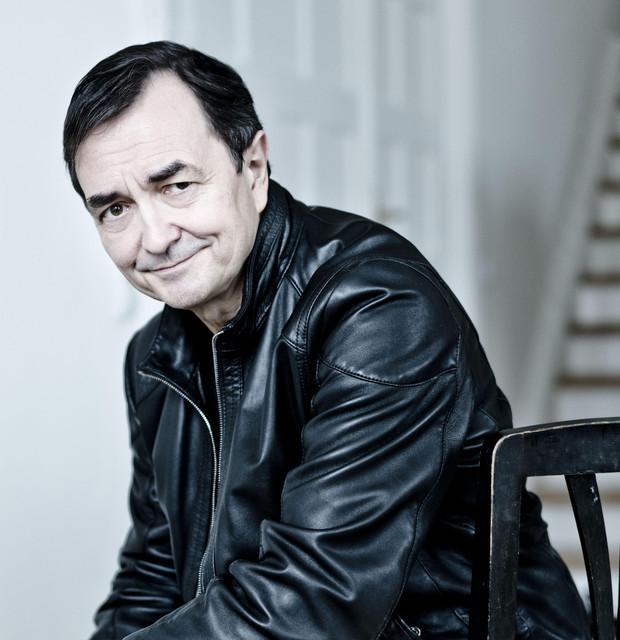
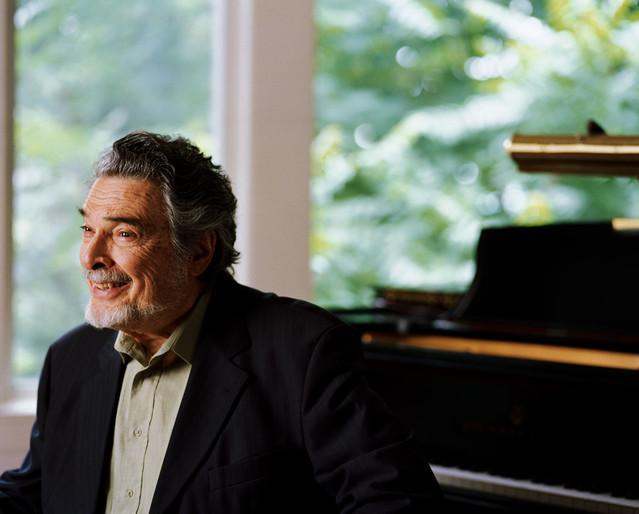
Leon Fleisher’s Spotify BioLeon Fleisher was among the leading American pianists of his generation but was stricken with a debilitating condition in his right hand, which forced him to withdraw from public performance in 1965. He soon reappeared in repertory for the left hand alone and also turned to conducting, but until the late 1990s rarely performed music for two hands; around 1995, he became active again as a two-handed pianist. Early in his career, Fleisher had become identified with the concertos of Beethoven and Brahms, the sonatas of Mozart and Schubert, and works by American composers, such as Kirchner, Copland, and Sessions. In his one-hand period, he often turned to the Prokofiev Fourth and Ravel D major, both for left hand, and after his rehabilitation in the 1990s, Fleisher returned to much of his earlier repertory. Fleisher's recordings are available on many labels, including Sony, Deutsche Grammophon, Vanguard, Albany, Orfeo, and Archipel.
Fleisher was born in San Francisco on July 23, 1928. He… began playing the piano at four and gave his first recital at six. He studied with keyboard icon Artur Schnabel from 1938-1948 and gave several remarkable debut concerts, including with the San Francisco Symphony in 1942 and the New York Philharmonic in 1944, both under Pierre Monteux. Fleisher would later study conducting with Monteux.
Having won the Queen Elizabeth Competition in Belgium in 1952, Fleisher went on to achieve international acclaim over the next decade. In 1965, he withdrew from concertizing and sought out medical attention for his then-undiagnosed condition. Fleisher began conducting in 1967, founding the Washington, D.C.-based Theater Chamber Players of the Kennedy Center. In 1970, he was appointed the music director of the Annapolis Symphony and three years later became the associate conductor of the Baltimore Symphony Orchestra.
In the early 1990s, Fleisher was finally correctly diagnosed with focal dystonia and began receiving effective treatments in 1995. Botox injections were added to his regimen in the new century, bringing further improvement. Fleisher gave his first recital at Carnegie in four decades in 2003, and the following year Vanguard released Two Hands, his first two-handed album in more than 40 years. In 2006, a documentary about Fleisher bearing the same title was released and nominated for an Academy Award. He received the Kennedy Center Honors the following year, and in 2010 published a memoir, My Nine Lives. Fleisher was on the faculty of the Peabody Conservatory (now Institute) from 1959 until his death and had also taught at Curtis Institute of Music and Toronto's Royal Conservatory of Music. Fleisher died in Baltimore on August 2, 2020.
Viberate is a music analytics platform built for A&Rs, artist managers, labels, booking agents, marketers, and artists.
It helps music professionals track artist growth, analyze audience data, monitor playlist activity, compare artists, follow song performance, and identify opportunities across the music market.
Public artist pages provide a free preview of selected artist data. Paid plans provide access to deeper analytics, historical data, charts, comparisons, playlist tools, exports, alerts, reports, and additional professional features.
Yes. Public Viberate artist pages provide selected artist analytics and music data for free.
Viberate also offers a 7-day free trial of the full platform. A credit card is required to start the trial. The trial includes access to the complete product so users can test deeper artist analytics, historical views, playlist insights, comparisons, charts, exports, alerts, and reporting features before choosing a paid plan.
Viberate provides artist analytics across streaming, playlists, social media, video, radio airplay, songs, and audience markets.
Users can analyze Spotify performance, Spotify and Apple Music playlists, YouTube activity, TikTok and Instagram growth, radio spins, song performance, audience locations, demographics, rankings, and overall artist momentum.
Artist profiles also connect to music charts, similar artists, and comparison tools, helping users benchmark performance and evaluate artists in context.
Viberate updates key artist and track data daily.
For followed artists and tracks, selected data is refreshed multiple times per day. This helps teams monitor playlist changes, streaming movement, audience growth, releases, and campaign performance with more current data.
Update frequency can vary depending on the metric and data source.
Yes. Viberate lets users compare up to five artists side by side across streaming, social media, audience, and engagement metrics.
Users can compare fanbase growth, audience demographics, locations, Spotify performance, social metrics, and other artist data over selected time periods.
Artist comparison can be used for A&R scouting, benchmarking, booking decisions, campaign planning, and evaluating artists with similar audiences or market positions.