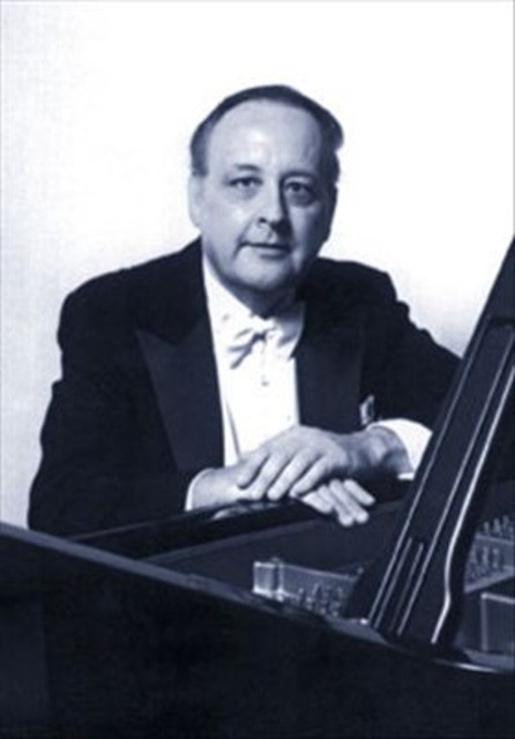
Ivan Moravec

Classical
Classical Crossover
Chamber Music
 Viberate Rank: 158674
 Viberate Rank: 158674
 Monthly ListenersFollowers
 Subscribers
 Followers
 Followers
 FansTop Spotify Songs
| Track | 7-Day Streams | |
|---|---|---|
1 | 71.55K | |
2 | 5.98K | |
3 | 5.98K | |
4 | 1.84K | |
5 | 1.01K |
Top YouTube VideosMonthly ListenersFeatured in Playlists| Playlist | Followers | |
|---|---|---|
1 |  This Is Chopin Spotify | 684.59K |
2 |  Música Clásica Que Sí Es Clásica José Gonzales | 339.69K |
3 |  Classical Study Music for Focus 🎻🎶 Prime Feelings | 191.80K |
4 | Wasteland Radio Expanded Neale Christopher Zeringue | 76.98K |
5 | Beautiful, Calming Classical Music vcmstow | 72.65K |
Audience| City | Monthly Listeners | |
|---|---|---|
1 |  | 4.46K |
2 |  | 2.95K |
3 |  | 2.75K |
4 |  | 2.60K |
5 |  | 2.57K |
See full performance history, audience data, playlist activity, rankings, comparisons, and more in Viberate music analytics. Start with a free trial, then continue with a paid plan.
Ivan Moravec’s Spotify BioAlthough scarcely unknown to a broader audience, Czech pianist Ivan Moravec was considered by many to be a connoisseur's artist. Certainly, his performances were anything but routine, his firm, pearlescent legato reminding some of the great Dinu Lipatti. His singular touch, he stated on several occasions, was a matter of necessity after an ice-skating fall at age ten that left him with a neck and spine injury. Thus, the intelligent use of his hands formed the basis for a sound decidedly unlike that of any of his younger colleagues. Growing up in a household where music was valued and a constant presence, Moravec began piano lessons at age seven. Since his father was an amateur violinist, the youth was already familiar with chamber works by Mozart, Beethoven, and Brahms and did not have to be forced to practice. The years of WWII were difficult ones, even though public music performances continued. After the war, Moravec made his formal debut, a small recital on a radio broadcast in… 1946. He underwent further training with Madame Stepánova-Kurzová, the daughter of Professor Kurz who had taught Rudolf Firkusny, before a momentous break materialized in 1957. Moravec was invited to attend Arturo Benedetti Michelangeli's master classes in Arezzo -- and the invitation came from Michelangeli himself. Moravec learned more about surmounting the mechanical reality of his instrument and producing a flowing legato sound from the iconoclastic Italian. Although his lessons at the keyboard were brief, Moravec spent a great deal of time with Michelangeli drinking wine and discussing music. Moravec made his London debut in 1959 and his New York debut in 1964, when he performed with George Szell and his superbly disciplined Cleveland Orchestra. That first New York appearance presaged subsequent American tours through which Moravec developed a following among those who valued musical integrity, beautiful sound, and a devotion to a conservative but full repertory. As one might expect, two Czech composers, Smetana and Dvorák, held a central position among those he played regularly. Considered one of the foremost Chopin artists of the day, Moravec also counted Mozart, Beethoven, Schumann, Brahms, Debussy, and Ravel among his other favored composers. A frequent, though reluctant visitor to the recording studio, Moravec placed on disc many performances prized by discerning listeners. He expressed his distaste for recording in brief takes, insisting that he was unable to play short stretches for patching. His best work, he felt, was the result of working through an entire work start to finish. It was a non-professional recording, actually, that opened the door to a productive recording career: a friend taped a 1956 Prague recital before leaving Czechoslovakia and passed it about in the West. When a copy came to the attention of the co-founders of the Connoisseur Society, they invited Moravec to come to the United States in 1962 to make the first of what would become a legendary series of recordings. Moravec also developed a reputation as a piano's best friend. He spent time with a technician in each venue, sharing specific observations about the voicing, encouraging that technician to make adjustments that would enhance the quality of sound not only for his own use, but also for other pianists who would approach it in the future.
Viberate is a music analytics platform built for A&Rs, artist managers, labels, booking agents, marketers, and artists.
It helps music professionals track artist growth, analyze audience data, monitor playlist activity, compare artists, follow song performance, and identify opportunities across the music market.
Public artist pages provide a free preview of selected artist data. Paid plans provide access to deeper analytics, historical data, charts, comparisons, playlist tools, exports, alerts, reports, and additional professional features.
Yes. Public Viberate artist pages provide selected artist analytics and music data for free.
Viberate also offers a 7-day free trial of the full platform. A credit card is required to start the trial. The trial includes access to the complete product so users can test deeper artist analytics, historical views, playlist insights, comparisons, charts, exports, alerts, and reporting features before choosing a paid plan.
Viberate provides artist analytics across streaming, playlists, social media, video, radio airplay, songs, and audience markets.
Users can analyze Spotify performance, Spotify and Apple Music playlists, YouTube activity, TikTok and Instagram growth, radio spins, song performance, audience locations, demographics, rankings, and overall artist momentum.
Artist profiles also connect to music charts, similar artists, and comparison tools, helping users benchmark performance and evaluate artists in context.
Viberate updates key artist and track data daily.
For followed artists and tracks, selected data is refreshed multiple times per day. This helps teams monitor playlist changes, streaming movement, audience growth, releases, and campaign performance with more current data.
Update frequency can vary depending on the metric and data source.
Yes. Viberate lets users compare up to five artists side by side across streaming, social media, audience, and engagement metrics.
Users can compare fanbase growth, audience demographics, locations, Spotify performance, social metrics, and other artist data over selected time periods.
Artist comparison can be used for A&R scouting, benchmarking, booking decisions, campaign planning, and evaluating artists with similar audiences or market positions.