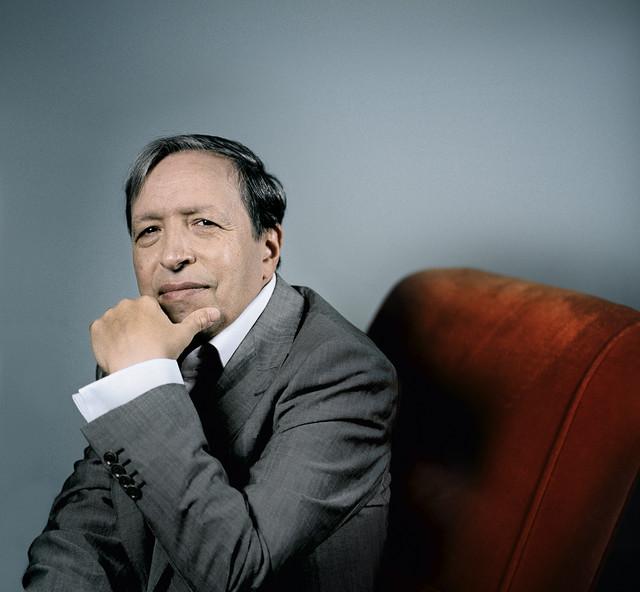
Simone Dinnerstein

Classical
Classical Crossover
Chamber Music
 Viberate Rank: 114473
 Viberate Rank: 114473
 Monthly ListenersFollowers
 Subscribers
 Followers
 Followers
 FansTop Spotify SongsTop YouTube Videos
| Video | 7-Day Views | |
|---|---|---|
1 | 112 | |
2 | 42 | |
3 | 33 | |
4 | 26 | |
5 | 22 |
Monthly ListenersFeatured in Playlists| Playlist | Followers | |
|---|---|---|
1 |  Classical Music for Reading Filtr Legacy Sweden | 144.36K |
2 |  Baroque Classics Sony Classical & Jazz Sweden | 131.09K |
3 |  Focus Music - Work | Studying | Concentration Kroschi | 112.12K |
4 |  Women of Classical Spotify | 101.99K |
5 |  Piano Classics: Top 100 Kroschi | 47.46K |
Audience| City | Monthly Listeners | |
|---|---|---|
1 |  | 3.00K |
2 |  | 2.66K |
3 |  | 2.62K |
4 |  | 2.36K |
5 |  | 2.33K |
See full performance history, audience data, playlist activity, rankings, comparisons, and more in Viberate music analytics. Start with a free trial, then continue with a paid plan.
Simone Dinnerstein’s Spotify BioPianist Simone Dinnerstein rose quickly as a classical performer in the early 21st century, with a flourishing international career as a soloist and a number of popular and award-winning recordings to her credit. Although her repertoire is broad, ranging from the Baroque to contemporary premieres, she has gained a reputation as a musician with an affinity for the music of Johann Sebastian Bach. Dinnerstein was an inspiration for composer Richard Danielpour during the coronavirus shutdowns of 2020, and she issued an album of his works written that year in 2021.
Dinnerstein was born on September 18, 1972, in New York City. She studied at the Manhattan School of Music, graduated from the Juilliard School, where she was a student of Peter Serkin, and she was a fellow at the Tanglewood Music Center. Her breakthrough came with her 2005 New York debut at Carnegie Hall, where she played Bach's Goldberg Variations. Her 2007 recording of the piece on the Telarc label went to the top of the U.S.… Billboard Classical Chart in the first week of its commercial release. It received numerous critical accolades, including a Diapason d'Or Award and a place on many prestigious "Best of the Year" lists. Her second recording, of a live 2007 recital in Berlin featuring works by Bach, Beethoven, and Philip Lasser, was released in 2008 and also shot to the number one spot on the U.S. Billboard Classical Chart in its first week. Signing with Sony Classical in 2010, Dinnerstein's third recording, Bach: A Strange Beauty, was released in 2011; it not only topped the classical chart but became one of the top sellers of the year in any genre. A follow-up appeared one year later, Something Almost Being Said: Music of Bach and Schubert. Early in 2013, Dinnerstein collaborated with singer/songwriter Tift Merrit on a song cycle titled Night. That same year, she also released a purely classical album, Bach: Inventions & Sinfonias.
In her performance career, Dinnerstein has developed an impressive international résumé both as a recitalist and concerto soloist. She has performed recitals at London's Wigmore Hall, Lincoln Center's Mostly Mozart Festival, and the Kennedy Center, among others throughout the U.S., Europe, Asia, and Australia. Orchestras she has performed with include the New York Philharmonic, the Orchestra of St. Luke's, and the Tokyo Symphony. She has gained wide public exposure through profiles in a broad range of print, broadcast, and web-based media, including Gramophone, The New York Times, and the Howard Stern Show. In addition to her traditional concert and recording career, Dinnerstein has devoted considerable time to volunteering as a performer in unconventional venues such as nursing homes, public schools, and state prisons. She organized and led the effort to bring the Havana Lyceum Orchestra to the U.S. for the first time following her 2017 album Mozart in Havana. Dinnerstein founded the string ensemble Baroklyn, which she directs from the piano. She issued An American Mosaic in 2021, featuring music by Richard Danielpour.
Viberate is a music analytics platform built for A&Rs, artist managers, labels, booking agents, marketers, and artists.
It helps music professionals track artist growth, analyze audience data, monitor playlist activity, compare artists, follow song performance, and identify opportunities across the music market.
Public artist pages provide a free preview of selected artist data. Paid plans provide access to deeper analytics, historical data, charts, comparisons, playlist tools, exports, alerts, reports, and additional professional features.
Yes. Public Viberate artist pages provide selected artist analytics and music data for free.
Viberate also offers a 7-day free trial of the full platform. A credit card is required to start the trial. The trial includes access to the complete product so users can test deeper artist analytics, historical views, playlist insights, comparisons, charts, exports, alerts, and reporting features before choosing a paid plan.
Viberate provides artist analytics across streaming, playlists, social media, video, radio airplay, songs, and audience markets.
Users can analyze Spotify performance, Spotify and Apple Music playlists, YouTube activity, TikTok and Instagram growth, radio spins, song performance, audience locations, demographics, rankings, and overall artist momentum.
Artist profiles also connect to music charts, similar artists, and comparison tools, helping users benchmark performance and evaluate artists in context.
Viberate updates key artist and track data daily.
For followed artists and tracks, selected data is refreshed multiple times per day. This helps teams monitor playlist changes, streaming movement, audience growth, releases, and campaign performance with more current data.
Update frequency can vary depending on the metric and data source.
Yes. Viberate lets users compare up to five artists side by side across streaming, social media, audience, and engagement metrics.
Users can compare fanbase growth, audience demographics, locations, Spotify performance, social metrics, and other artist data over selected time periods.
Artist comparison can be used for A&R scouting, benchmarking, booking decisions, campaign planning, and evaluating artists with similar audiences or market positions.