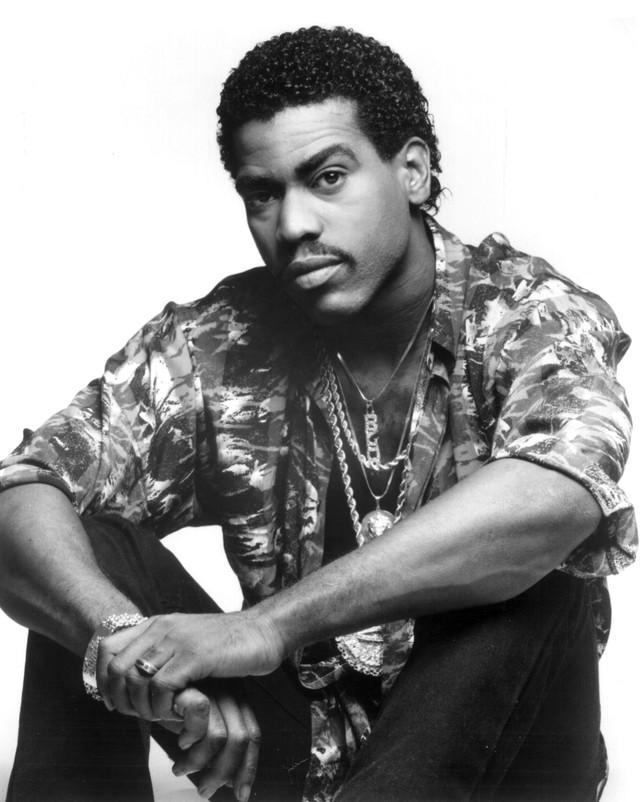
Kurtis Blow

Hip Hop
Contemporary Hip Hop
 Viberate Rank: 35882
 Viberate Rank: 35882
 Monthly ListenersFollowers
 Subscribers
 Followers
 Followers
 FansTop Spotify Songs
| Track | 7-Day Streams | |
|---|---|---|
1 | 40.08K | |
2 | 20.80K | |
3 | 13.51K | |
4 | 3.00K | |
5 | 1.96K |
Top YouTube VideosMonthly ListenersFeatured in Playlists| Playlist | Followers | |
|---|---|---|
1 |  I Love My '80s Hip-Hop Spotify | 459.55K |
2 |  Fidi & Bumsi Spotify | 353.23K |
3 |  Hip-Hop Holiday Spotify | 132.61K |
4 |  Clean Hip-Hop Classics Spotify | 128.19K |
5 |  GTA Vice City Radio batu_26 | 92.54K |
Audience| City | Monthly Listeners | |
|---|---|---|
1 |  | 6.01K |
2 | | 2.75K |
3 |  | 2.70K |
4 | | 2.30K |
5 | | 2.05K |
See full performance history, audience data, playlist activity, rankings, comparisons, and more in Viberate music analytics. Start with a free trial, then continue with a paid plan.
Kurtis Blow’s Spotify BioAs the first commercially successful rap artist, Kurtis Blow is a towering figure in hip-hop history. His popularity and charisma helped prove that rap music was something more than a flash-in-the-pan novelty, paving the way for the even greater advances of Grandmaster Flash and Run-D.M.C. Blow was the first rapper to sign with (and release an album for) a major label; the first to have a single certified gold (1980's landmark "The Breaks"); the first to embark on a national (and international) concert tour; and the first to cement rap's mainstream marketability by signing an endorsement deal. For that matter, he was really the first significant solo rapper on record, and as such he was a natural focal point for many aspiring young MCs in the early days of hip-hop. For all his immense importance and influence, many of Blow's records haven't dated all that well; his rapping technique, limber for its time, simply wasn't as evolved as the more advanced MCs who built upon his style and… followed him up the charts. But at his very best, Blow epitomizes the virtues of the old school: ingratiating, strutting party music that captures the exuberance of an art form still in its youth.
Kurtis Blow was born Kurtis Walker in Harlem in 1959. He was in on the earliest stages of hip-hop culture in the '70s -- first as a breakdancer, then as a block-party and club DJ performing under the name Kool DJ Kurt; after enrolling at CCNY in 1976, he also served as program director for the college radio station. He became an MC in his own right around 1977, and changed his name to Kurtis Blow (as in a body blow) at the suggestion of his manager, future Def Jam founder and rap mogul Russell Simmons. Blow performed with legendary DJs like Grandmaster Flash, and for a time his regular DJ was Simmons' teenage brother Joseph -- who, after changing his stage name from "Son of Kurtis Blow," would go on to become the first half of Run-D.M.C. Over 1977-1978, Blow's club gigs around Harlem and the Bronx made him an underground sensation, and Billboard magazine writer Robert Ford approached Simmons about making a record. Blow cut a song co-written by Ford and financier J.B. Moore called "Christmas Rappin'," and it helped him get a deal with Mercury once the Sugarhill Gang's "Rapper's Delight" had climbed into the R&B Top Five.
Blow's second single, "The Breaks," was an out-of-the-box smash, following "Rapper's Delight" into the Top Five of the R&B chart in 1980 and eventually going gold; it still ranks as one of old school rap's greatest and most enduring moments. The full-length album Kurtis Blow was also released in 1980, and made the R&B Top Ten in spite of many assumptions that the Sugarhill Gang's success was a one-time fluke. Although the album's attempts at soul crooning and rock covers haven't dated well, the poverty-themed "Hard Times" marked perhaps the first instance of hip-hop's social consciousness, and was later covered by Run-D.M.C. Blow initially found it hard to follow up "The Breaks," despite releasing nearly an album a year for most of the '80s. 1981's Deuce and 1982's Tough weren't huge sellers, and 1983's Party Time EP brought D.C. go-go funksters E.U. on board for a stylistic update. Around this time, Blow was also making his mark as a producer, working with a variety of hip-hop and R&B artists; most notably, he helmed most of the Fat Boys' records after helping them get a record deal. 1984's Ego Trip sold respectably well on the strength of cuts like the DJ tribute "AJ Scratch," the agreeably lightweight "Basketball," and the Run-D.M.C. duet "8 Million Stories." Blow followed it with an appearance in the cult hip-hop film Krush Groove, in which he performed "If I Ruled the World," his biggest hit since "The Breaks."
"If I Ruled the World" proved to be the last gasp of Blow's popularity, as hip-hop's rapid growth made his style seem increasingly outdated. 1985's America was largely ignored, and 1986's Kingdom Blow was afforded an icy reception despite producing a final chart hit, "I'm Chillin'." Critics savaged his final comeback attempt, 1988's Back by Popular Demand, almost invariably pointing out that the title, at that point, was not true. In its wake, Blow gave up the ghost of his recording career, but found other ways to keep the spirit of the old school alive. In the early '90s, he contributed rap material to the TV soap opera One Life to Live, and later spent several years hosting an old-school hip-hop show on Los Angeles radio station Power 106. In 1997, Rhino Records took advantage of his status as a hip-hop elder statesmen by hiring him to produce, compile, and write liner notes for the three-volume series Kurtis Blow Presents the History of Rap. The same year, he was a significant presence in the rap documentary Rhyme and Reason. Blow's music has also been revived by younger artists seeking to pay tribute; Nas referenced "If I Ruled the World" on 1996's It Was Written, and R&B group Next sampled "Christmas Rappin'" for their 1998 smash "Too Close." The following decade, Blow founded the Hip Hop Church in New York, became an ordained minister, and recorded religious rap albums with the Trinity. ~ Steve Huey, Rovi
Viberate is a music analytics platform built for A&Rs, artist managers, labels, booking agents, marketers, and artists.
It helps music professionals track artist growth, analyze audience data, monitor playlist activity, compare artists, follow song performance, and identify opportunities across the music market.
Public artist pages provide a free preview of selected artist data. Paid plans provide access to deeper analytics, historical data, charts, comparisons, playlist tools, exports, alerts, reports, and additional professional features.
Yes. Public Viberate artist pages provide selected artist analytics and music data for free.
Viberate also offers a 7-day free trial of the full platform. A credit card is required to start the trial. The trial includes access to the complete product so users can test deeper artist analytics, historical views, playlist insights, comparisons, charts, exports, alerts, and reporting features before choosing a paid plan.
Viberate provides artist analytics across streaming, playlists, social media, video, radio airplay, songs, and audience markets.
Users can analyze Spotify performance, Spotify and Apple Music playlists, YouTube activity, TikTok and Instagram growth, radio spins, song performance, audience locations, demographics, rankings, and overall artist momentum.
Artist profiles also connect to music charts, similar artists, and comparison tools, helping users benchmark performance and evaluate artists in context.
Viberate updates key artist and track data daily.
For followed artists and tracks, selected data is refreshed multiple times per day. This helps teams monitor playlist changes, streaming movement, audience growth, releases, and campaign performance with more current data.
Update frequency can vary depending on the metric and data source.
Yes. Viberate lets users compare up to five artists side by side across streaming, social media, audience, and engagement metrics.
Users can compare fanbase growth, audience demographics, locations, Spotify performance, social metrics, and other artist data over selected time periods.
Artist comparison can be used for A&R scouting, benchmarking, booking decisions, campaign planning, and evaluating artists with similar audiences or market positions.