K.T. Oslin

Country
Contemporary Country
 Viberate Rank: 68252
 Viberate Rank: 68252
 Monthly ListenersFollowers
 Subscribers
 Followers
 Followers
 FansTop Spotify Songs
| Track | 7-Day Streams | |
|---|---|---|
1 | 34.08K | |
2 | 23.62K | |
3 | 9.65K | |
4 | 8.46K | |
5 | 8.44K |
Top YouTube Videos| Video | 7-Day Views | |
|---|---|---|
1 | 2.30K | |
2 | 1.12K | |
3 | 773 | |
4 | 461 | |
5 | 398 |
Monthly ListenersFeatured in Playlists| Playlist | Followers | |
|---|---|---|
1 |  80s Country Spotify | 756.00K |
2 |  Legendary Women of Country Spotify | 309.56K |
3 |  80's Country (Top 100) aly.matthews16 | 75.12K |
4 |  This Is Alabama Spotify | 53.07K |
5 | Alabama – All Greatest Hits Nicole Bimber | 36.54K |
Audience| City | Monthly Listeners | |
|---|---|---|
1 | | 3.71K |
2 | | 2.47K |
3 | | 1.94K |
4 | | 1.82K |
5 | | 1.74K |
See full performance history, audience data, playlist activity, rankings, comparisons, and more in Viberate music analytics. Start with a free trial, then continue with a paid plan.
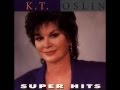
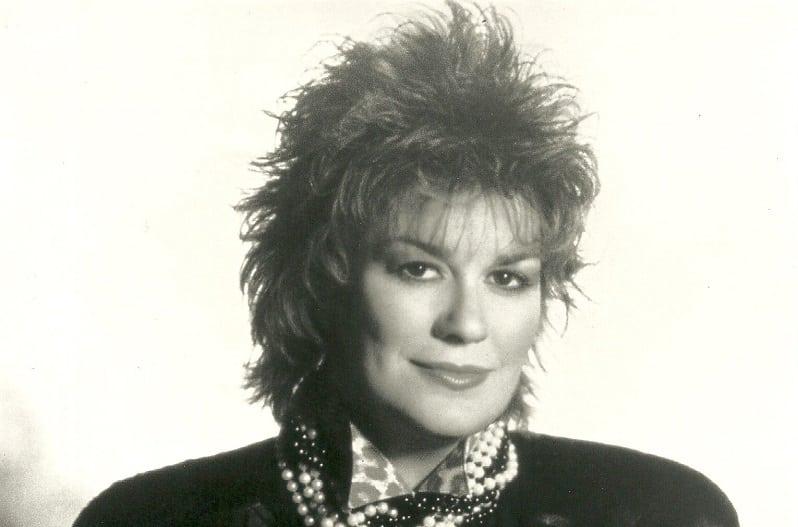
K.T. Oslin’s Spotify BioK.T. Oslin's breakthrough hit was "80's Ladies," a 1987 smash that defined a generation at a precise moment in time: survivors of the 1960s finding their way in the overblown 1980s, embracing their middle age with a soulful bent and wry sense of humor. Oslin suited that description exactly, spending years singing professionally on Broadway stages and in commercial studios before landing a deal with RCA Records in 1987 when she was 45 years old. Success came quickly, with Oslin scoring four number one hits--"Do Ya," "I'll Always Come Back," "Hold Me" and "Come Next Monday"--by 1990, by which time her moment suddenly came to a close as country moved toward the younger, bigger arena-filling sounds of Garth Brooks. K.T. Oslin continued to perform and occasionally record but her trio of albums from the late 1980s captured some of the progressive mainstream country of the 1980s, music that embraced all the conflicting emotions and production excesses of the era.
Born Kay Toinette Oslin on May… 15, 1942, in Crossett, Arkansas, she soon moved to Mobile, Alabama, and at age five settled in Houston after the death of her father. Oslin's mother had been an aspiring country singer before being forced to support her family, and she passed along her love of music to her daughter. Oslin studied drama at junior college and during the '60s performed in a folk trio with singer/songwriter Guy Clark and producer David Jones. She later went to Los Angeles to work on an album with Frank Davis, but the sessions were never completed, and she returned to Houston and worked in musical theater.
A part in the national touring company of Hello, Dolly! led to a trip to Manhattan and a spot in the chorus of the Broadway version. Oslin remained in New York for a time, appearing in shows, singing demos and commercial jingles, and working on her songwriting. In 1978, she sang harmony on a Guy Clark album and in 1981 released two singles on Elektra as Kay T. Oslin. Neither "Clean Up Your Own Tables" nor "Younger Men (Are Startin' to Catch My Eye)" did well at country radio, which simply wasn't ready for such a feisty, feminist-minded woman -- who was pushing 40 at that. However, Oslin's original compositions were becoming popular with other artists; her songs were recorded by Gail Davis, Dottie West, and Judy Rodman, among others. She appeared on a live radio broadcast alongside more established musicians in 1984, and two years later she staged her own showcase performance in Nashville. Alabama producer Harold Shedd was in attendance and helped her land a deal with RCA.
Oslin debuted in 1987 with 80's Ladies, whose anthemic title track made the country Top Ten and won her a Grammy for Best Female Country Vocal. The follow-up singles "Do Ya" and "I'll Always Come Back" both hit number one and so did the album, which went on to sell over a million copies. 1988's This Woman was another chart-topping platinum smash, paced by the number one, double-Grammy-winning hit "Hold Me" and the Top Five singles "This Woman" and "Hey Bobby." Her third album, 1990's Love in a Small Town, was something of a concept record about, well, exactly what the title said. "Come Next Monday" became her fourth number one hit, but Oslin abruptly slowed down afterward, partly because menopause was sapping some of the stamina she needed for touring.
Oslin took several years off from music, in the meantime issuing the compilation Greatest Hits: Songs from an Aging Sex Bomb in 1993. She tried her hand at acting, appearing in the films The Thing Called Love and Murder So Sweet. Contemplating a singing comeback in 1995, Oslin experienced chest pains while mowing her lawn and was soon in the hospital for a quadruple bypass. Fortunately, she made a full recovery and signed with the smaller BNA label for a covers album, My Roots Are Showing, that drew selections from across the spectrum of 20th century popular music. After another recording hiatus, she teamed up with co-producer Raul Malo of the Mavericks for 2001's Live Close By, Visit Often, which inched into the country Top 40.
In 2015, after 14 years away from the studio, Oslin returned with the album Simply, which featured one new song ("Do You Think About Me," written by Oslin and Al Anderson) and new interpretations of eight of her best-known tunes. It was her final album; K.T. Oslin died in Nashville on December 21, 2020, due to complications from Parkinson's disease. She was 78 years old. ~ Steve Huey, Rovi
Viberate is a music analytics platform built for A&Rs, artist managers, labels, booking agents, marketers, and artists.
It helps music professionals track artist growth, analyze audience data, monitor playlist activity, compare artists, follow song performance, and identify opportunities across the music market.
Public artist pages provide a free preview of selected artist data. Paid plans provide access to deeper analytics, historical data, charts, comparisons, playlist tools, exports, alerts, reports, and additional professional features.
Yes. Public Viberate artist pages provide selected artist analytics and music data for free.
Viberate also offers a 7-day free trial of the full platform. A credit card is required to start the trial. The trial includes access to the complete product so users can test deeper artist analytics, historical views, playlist insights, comparisons, charts, exports, alerts, and reporting features before choosing a paid plan.
Viberate provides artist analytics across streaming, playlists, social media, video, radio airplay, songs, and audience markets.
Users can analyze Spotify performance, Spotify and Apple Music playlists, YouTube activity, TikTok and Instagram growth, radio spins, song performance, audience locations, demographics, rankings, and overall artist momentum.
Artist profiles also connect to music charts, similar artists, and comparison tools, helping users benchmark performance and evaluate artists in context.
Viberate updates key artist and track data daily.
For followed artists and tracks, selected data is refreshed multiple times per day. This helps teams monitor playlist changes, streaming movement, audience growth, releases, and campaign performance with more current data.
Update frequency can vary depending on the metric and data source.
Yes. Viberate lets users compare up to five artists side by side across streaming, social media, audience, and engagement metrics.
Users can compare fanbase growth, audience demographics, locations, Spotify performance, social metrics, and other artist data over selected time periods.
Artist comparison can be used for A&R scouting, benchmarking, booking decisions, campaign planning, and evaluating artists with similar audiences or market positions.